Fidelity Charitable has suspended donor-advised fund distributions to the Southern Poverty Law Center (SPLC) in the wake of a federal indictment unsealed by the Justice Department, accusing the civil rights organization of bank and wire fraud. The move, confirmed in an email obtained by The New York Times, cites an ongoing government investigation as the reason for the block.
“Fidelity Charitable is aware of an ongoing governmental investigation into Southern Poverty Law Center,” the email states. “Consistent with our grant-making standards and practices, the organization is not an eligible grant recipient during the ongoing investigation.” Donor-advised funds allow individuals to contribute cash or appreciated assets to a charitable account, receiving tax deductions while directing grants to approved nonprofits.
The SPLC, which has tracked hate groups and pursued civil rights litigation for over five decades, has forcefully denied the charges. Interim CEO and President Bryan Fair called the allegations “false” and politically motivated, asserting that the organization’s work combating white supremacy and extremism has saved lives. “Taking on violent hate and extremist groups is among the most dangerous work there is, and we believe it is also among the most important work we do,” Fair said in a statement.
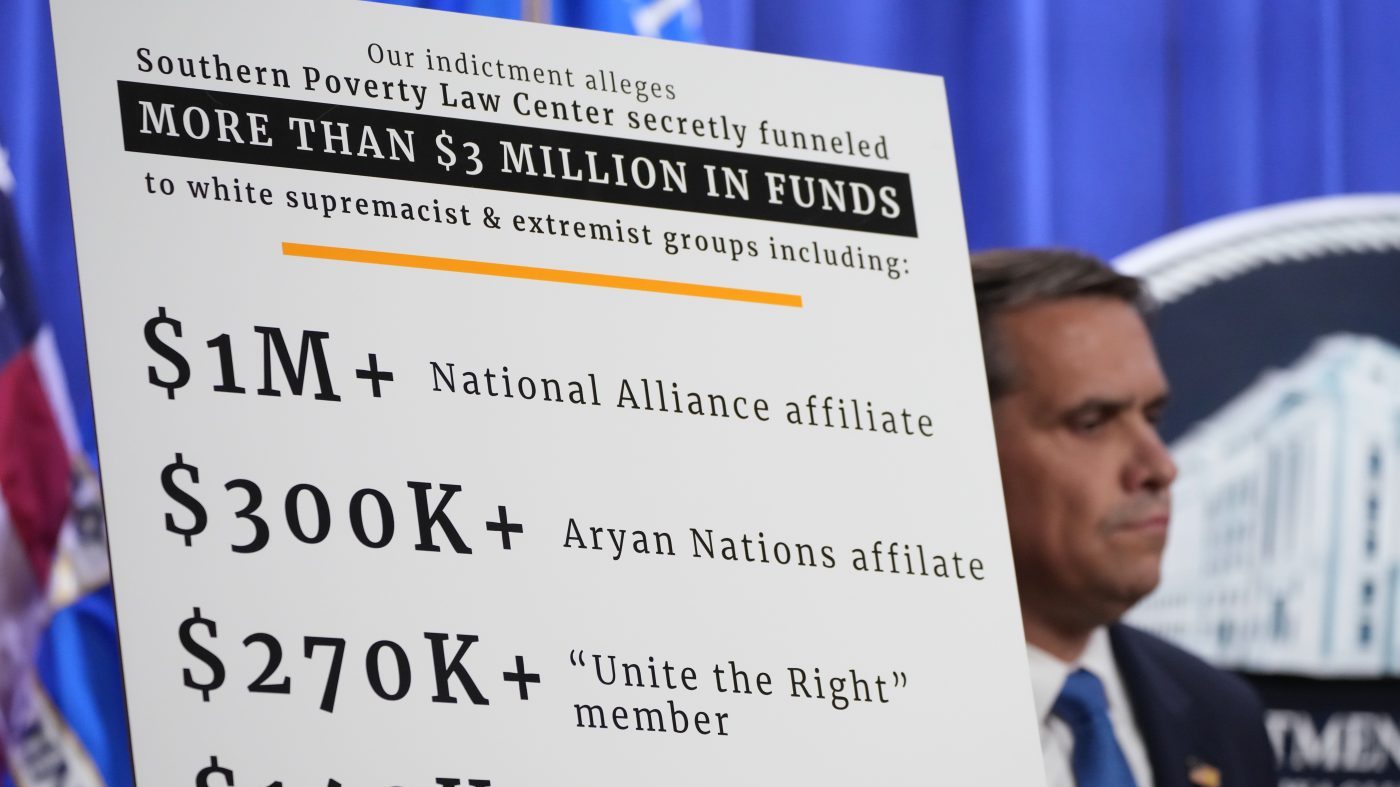
The indictment, brought by Acting Attorney General Todd Blanche, alleges that the SPLC funneled payments to informants through shell accounts, including one informant who received $270,000 over eight years. Blanche claimed the nonprofit was not dismantling extremism but “funding it,” and that it created bank accounts for at least five fictitious entities with no legitimate purpose.
Critics, however, see the DOJ’s action as a politically charged attack. National Urban League President Marc Morial argued on MSNBC’s “Morning Joe” that the indictment is “nakedly political” and undermines years of collaboration between federal law enforcement and the SPLC to identify domestic terror threats. The Justice Department had previously severed its relationship with the center.
The SPLC countered in a press release that its informant program—now disbanded—was not secret and was aimed at preventing violence by infiltrating hate groups. The organization vowed to fight the charges in court, framing the case as a test of whether the government can penalize nonprofits for undercover work against extremists.
Fidelity, which manages 350,000 charitable giving accounts, did not respond to requests for comment. The block on SPLC grants adds a financial dimension to the controversy, potentially chilling donations to the group as it prepares to defend itself.
The case arrives amid broader scrutiny of DOJ actions under the current administration. Blanche has denied that the indictment of former FBI Director James Comey was a bid for the attorney general role, but critics, including some lawmakers, have warned of a dangerously low bar for prosecution. Senator Thom Tillis recently urged caution on the Comey case, echoing concerns that the DOJ’s aggressive posture risks politicizing the justice system.
As the SPLC braces for a legal battle, the Fidelity decision underscores the ripple effects of federal charges on nonprofit funding. Whether the indictment holds up in court or is dismissed as a political vendetta remains to be seen, but the case has already deepened divisions over the role of civil rights organizations in monitoring extremism.