Survivors of the late financier Jeffrey Epstein are approaching former Attorney General Pam Bondi's scheduled testimony before the House Oversight and Government Reform Committee with deep skepticism, believing it will do little to resolve lingering questions about the Justice Department's release of Epstein-related documents.
Bondi, who was removed from her post earlier this year, is set to appear Friday to answer questions about how the DOJ managed the disclosure of thousands of files tied to Epstein's sex trafficking network. The hearing comes amid mounting frustration from victims who say the process has been opaque and harmful.
Danielle Bensky, who was trafficked by Epstein in 2004 and 2005, told NewsNation she has a long list of concerns. Chief among them: why perpetrators' names were redacted while survivors' personal information—including addresses, phone numbers, and explicit photos—was released without protection. She also questioned the repeated delays in the document release and demanded transparency about who made those decisions.
“Why are perpetrators and abusers redacted, when survivors' personal information including addresses, phone numbers, intimate details of abuse and nude photos were released. Why was the release deadline delayed, if not for the protection of victims? What was the point of the slow rollout? Who were the lawyers involved in charge of redacting? The list goes on,” Bensky said.
Bensky previously told NewsNation in February that her name appeared unredacted in a trove of 3.5 million documents, a move she described as “egregious” and an apparent effort to discredit her and other survivors. She added that neither she nor 14 other survivors she has spoken with were contacted by the DOJ before the release. Lawyers for nearly 100 victims later told a New York judge that the department had failed in its duty to protect them.
“We hope that she will be honest about the fact that there are real investigative leads the DOJ should be following,” Bensky said this week. “Where are the rest of the files? Why are certain files being held? She is no longer the AG but she was at the time and survivors deserve answers from her.”
A committee aide confirmed that Bondi, like all witnesses, will be required to verbally acknowledge her obligation to tell the truth, and that false statements or withholding information could lead to criminal charges. Bondi's attorney did not respond to a request for comment.
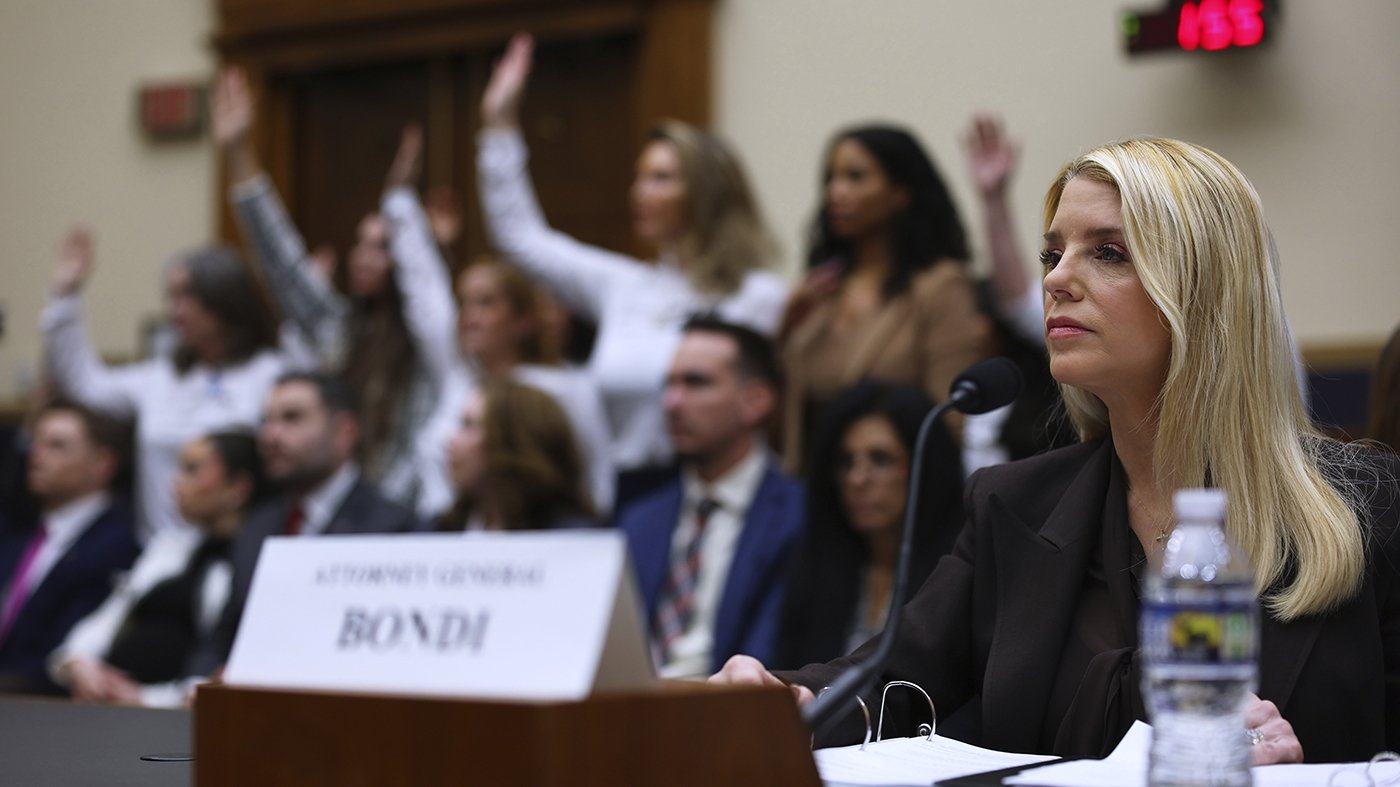
This is not the first time Bondi has faced accusations of ignoring survivors. During a prior congressional hearing on the Epstein files, she was criticized for failing to acknowledge 10 survivors who were present in the room, wearing shirts that highlighted redactions in the documents. Jess Michaels, a survivor of Epstein's abuse in 1991 and an advocate, called the interaction “dehumanizing.”
“I can't begin to explain why Pam Bondi chose to pretend we weren't even in the room,” Michaels said. “It's not her deposition that would feel retraumatizing. It's the lack of humanity, lack of compassion for crime victims' rights; something she's professionally and legally required to take responsibility for, that continues to inflict the same harm we've experienced for decades.”
Michaels said she has lost faith in the DOJ to help Epstein survivors, accusing the department of repeating the failures of past administrations. “This DOJ wants to pretend it's not doing exactly what all five administrations have done—protect sex trafficking network criminals,” she said.
Rachel Fischer, a forensic nurse and sexual assault nurse examiner specializing in antitrafficking, warned that Bondi's testimony could be retraumatizing for survivors if the hearing becomes more about political blame-shifting than accountability. “Survivors of trafficking and sexual abuse are often re-injured when institutions minimize harm, expose sensitive details, delay answers, or speak around survivors instead of directly acknowledging them,” Fischer said.
She emphasized that trauma extends beyond the initial abuse. “For many survivors, the trauma is not only what Epstein did. It is the years of institutional failure afterward—the sense that powerful people were protected, records were mishandled, names were hidden, and survivors had to keep reliving their abuse publicly just to be believed.”
In April, Acting Attorney General Todd Blanche denied that Bondi's removal was linked to the Epstein file release. The hearing Friday is expected to be a key moment for survivors seeking accountability, but many remain unconvinced that real answers will emerge.
Related reading: Massie Accuses Top DOJ Officials of Perjury Over Epstein Files Cover-Up and Epstein Survivor-Turned-Recruiter Names Three Abusers in Closed House Testimony.