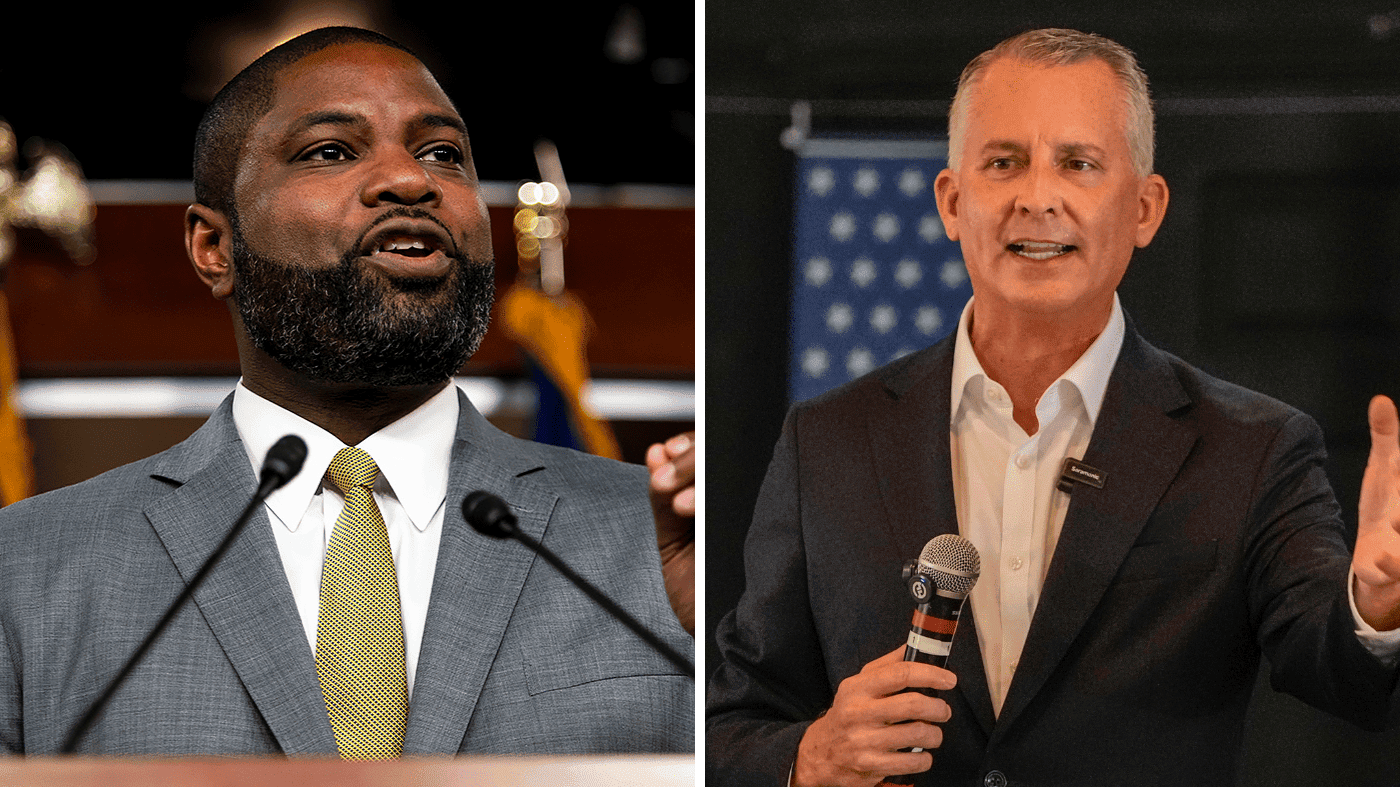
Florida's Republican and Democratic primaries have set the stage for a November contest between two familiar political figures: Rep. Byron Donalds and former Rep. David Jolly. Decision Desk HQ projects that Donalds, who has represented a Southwest Florida district since 2021, will be the GOP nominee, while Jolly, a former Republican who switched to the Democratic Party, will carry the Democratic banner. The winner will succeed Gov. Ron DeSantis, who is term-limited and cannot seek another term.
Donalds emerged from a crowded field of 11 Republicans, while Jolly defeated five Democratic rivals. The general election will test whether Florida's recent Republican dominance can be broken—a feat Democrats have not achieved in a governor's race since Lawton Chiles won a second term in 1994.
Florida's shift to the right has been pronounced. The state has not backed a Democrat for president since Barack Obama in 2012, and no Democrat has won statewide office since Nikki Fried captured the agriculture commissioner post in 2018. This trend has made Florida a hub of GOP power, producing national figures like Donald Trump, Jeb Bush, and Secretary of State Marco Rubio.
Donalds, a staunch Trump ally, has positioned himself as a rising star in the party. He backed Trump over DeSantis in the 2024 presidential primary, a decision that highlighted the intra-GOP dynamics. His campaign has focused on conservative priorities, including tax cuts, education reform, and election integrity.
Jolly, who served in Congress from 2014 to 2017, left the GOP in 2018 after becoming a vocal critic of Trump. He later became an independent and then a Democrat. His platform emphasizes bipartisan governance, environmental protection, and expanding healthcare access.
Despite recent Democratic wins in some legislative special elections, the party faces an uphill battle. The Cook Political Report rates the governor's race as "solid Republican," reflecting the state's current partisan lean. However, Jolly's crossover appeal could make the race more competitive than recent statewide contests.
The primary results also underscored broader trends in Florida politics. In other races, Rogers won the GOP nod in Florida's 2nd District, while Nixon upset Vindman in the Senate Democratic primary. These outcomes signal the ongoing realignment of the state's political landscape.
As the general election approaches, both candidates will need to appeal to a diverse electorate. Donalds will likely emphasize his alignment with Trump and the national GOP agenda, while Jolly will attempt to court moderate Republicans and independents disenchanted with the current direction. The race will be closely watched as a bellwether for Florida's political future.