The Justice Department moved late Monday to dissolve a nationwide injunction blocking the Trump administration’s mail-in voting restrictions, arguing that a Supreme Court ruling earlier in the day effectively stripped the lower court of jurisdiction to keep the ban in place.
In a six-page filing submitted to U.S. District Judge Indira Talwani in Massachusetts, DOJ civil division chief Brett Shumate and other department attorneys wrote that the high court’s decision in a related challenge to President Trump’s executive order “leaves no room for further dispute” over the legality of the preliminary injunction. The filing calls the case “a textbook case for reconsideration.”
The Supreme Court, in a 6-3 ruling issued Monday, held that Judge Talwani lacked authority to block the president’s directive because the Postal Service had not yet finalized its new ballot-handling regulations when the initial lawsuit was filed by a coalition of Democratic-led states. The conservative majority wrote that “federal courts review final rules, not proposed rules—and certainly not antecedent internal directives to propose a rule. If the Postal Service’s final rule harms the States, they may challenge that rule.”
Seizing on that language, the DOJ contends the Supreme Court’s reasoning “plainly bars” the continued nationwide injunction. “Because it is now clear that this Court lacked jurisdiction to issue the preliminary injunction in this case, it must be vacated immediately,” the department’s filing states.
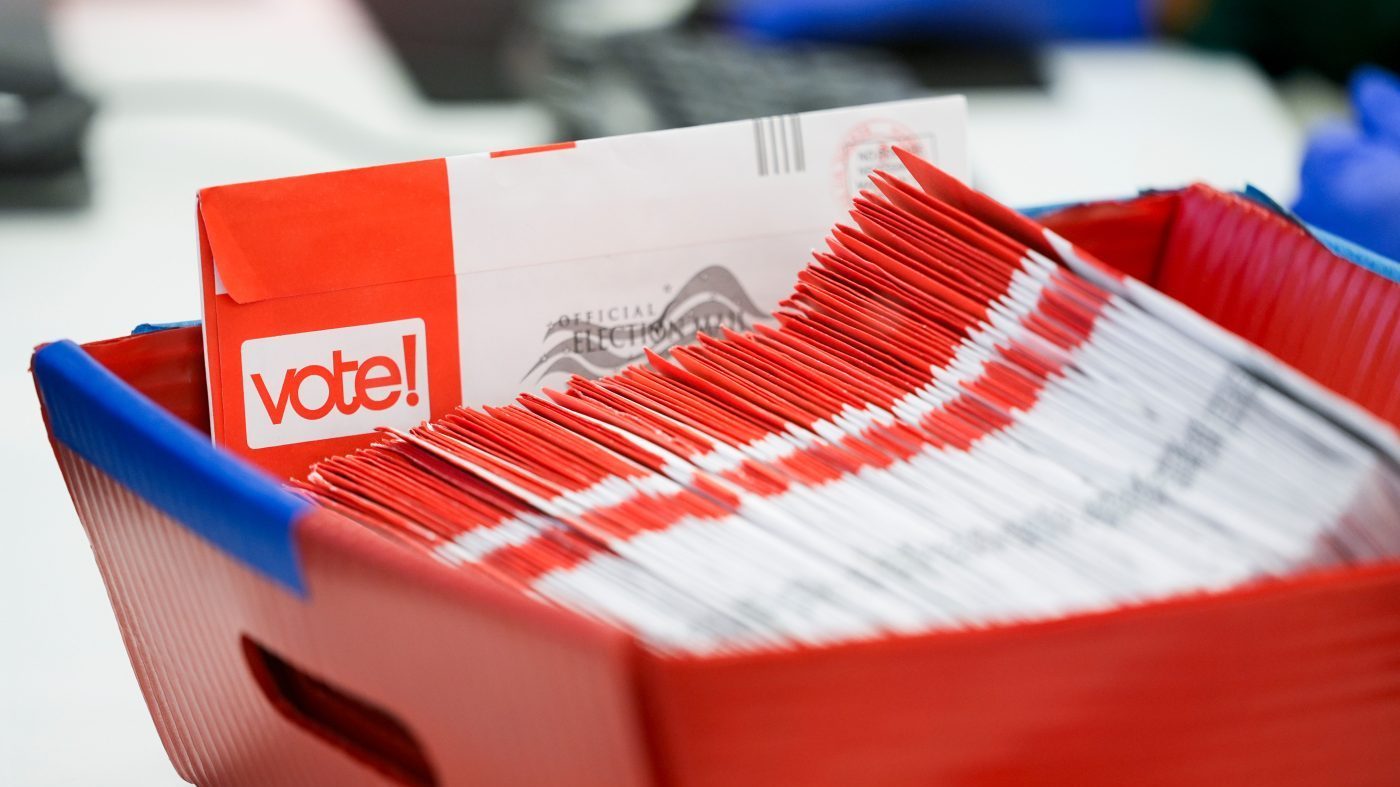
The litigation stems from Trump’s March executive order, which directed federal agencies to compile a list of verified U.S. citizens eligible to vote and instructed USPS to adopt stricter standards for handling mail-in ballots. Nearly two dozen states, the District of Columbia, and several voting rights groups sued, arguing the order was unlawful and could disenfranchise thousands of voters. The Postal Service has since published a final rule implementing those requirements, though it is not scheduled to take effect until after the November midterms unless the court injunctions are lifted.
Voting rights advocates warn that the timing creates chaos for election officials. Absentee and overseas ballots are due to be mailed in some states within days, and the groups argue that the “fast-approaching deadline” leaves no room for error. In an emergency motion filed Saturday, they said that “the issuance of the Final Rule with immediate effect will also sow widespread confusion among election officials and the public, thereby undermining voter confidence and disrupting the administration of elections.”
The dispute is part of a broader legal battle over election administration. Earlier this month, a federal judge allowed USPS to proceed with its new ballot rules despite the ongoing injunction, creating a patchwork of conflicting rulings. Meanwhile, other challenges to Trump’s executive actions—such as the visa suspension struck down by a federal judge—have also tested the limits of judicial authority over presidential directives.
Legal experts say the Supreme Court’s ruling could have implications beyond this case, signaling that courts should be more hesitant to intervene before agencies finalize their rules. But voting rights groups argue that the urgency of election deadlines demands immediate judicial oversight, and they are expected to ask the Supreme Court to reconsider or at least clarify its position.
Judge Talwani has not yet ruled on the DOJ’s motion. With the midterms fast approaching, the decision could determine whether states must scramble to comply with new federal ballot-handling requirements or continue operating under existing rules.