Buoyed by surprisingly strong numbers in Republican-leaning states, Democratic strategists are increasingly confident that the party can capture the Senate alongside the House in November. A wave of recent surveys suggests that voter anger over the economy and the ongoing conflict in Iran is eroding GOP support in races that were once considered safely Republican.
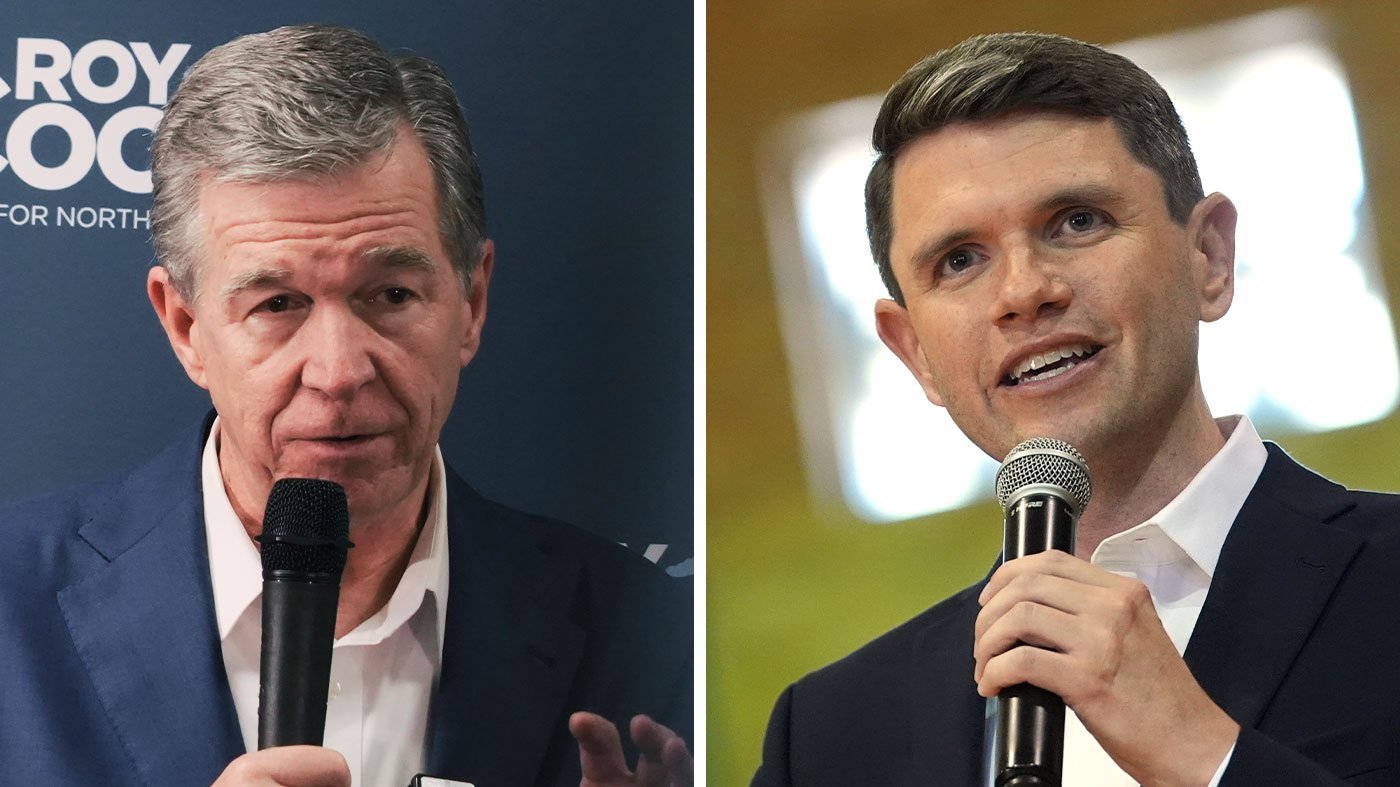
The most striking data point came from an AARP poll released Monday showing Democrat Roy Cooper, the former governor, leading Republican Michael Whatley by 11 points in the North Carolina Senate race. In Texas, recent polls show Democrat James Talarico either tied with or ahead of Republican Ken Paxton, a result that would have been unthinkable just a few months ago.
Republicans still see opportunities to expand the map in states like Michigan, New Hampshire, and Minnesota, but the overall trajectory has shifted. Nonpartisan handicapper Charlie Cook, founder of the Cook Political Report, told ABC News's "This Week" that the Senate is now "very realistic" for Democrats, a dramatic reversal from a year ago.
"I don't feel good about the election as a Republican," said Brian Darling, a former aide to Sen. Rand Paul (R-Ky.). "I think it's going to be a bad day."
Forecasters are now split on the upper chamber. Inside Elections projects Democrats will pick up two to four seats, while Decision Desk HQ gives the party a 54 percent chance of taking control. Cook himself suggested Democrats could net four or five seats, which would be enough to flip the majority. A Democratic takeover requires a net gain of four seats.
The optimism is underpinned by a broad national shift. An Emerson College poll shows Democrats leading Republicans by 11 points on the generic congressional ballot. Strategists attribute the trend to persistent inflation and public fatigue with the Trump administration's handling of the war in Iran.
Some Republicans believe a diplomatic breakthrough on Iran could still turn the tide, but with no end in sight, the party is scrambling. "If a deal was cut on the Iran war, and if there was an actual winding down and an end game that was presented to the American people, I think that would be very helpful to Republicans," Darling said. "I think that is the one issue that would move a lot of voters back over into the Republican fold."
In Texas, the TPOR poll released Friday showed Talarico leading Paxton by 5 points, just outside the margin of error. A separate Marist poll had Talarico ahead by 6 points, and he leads among independents by a wide margin. In Iowa, a Marist poll shows Democrat Josh Turek leading Republican Ashley Hinson by 8 points, while the Trafalgar Group has Hinson up by only 2. Even South Carolina is in play, with Sen. Darline Graham polling within the margin of error against Democrat Annie Andrews.
Iowa has not sent a Democrat to the Senate in 18 years, and South Carolina has not done so since 1998. The fact that these states are now competitive underscores the depth of the GOP's troubles. "Republicans' scandal-plagued candidates are facing backlash for making everything cost more — and Democrats are well-positioned to flip seats and win the majority," said Maeve Coyle, a spokeswoman for the Senate Democrats' campaign arm.
Longtime Democratic strategist Steve Jarding goes further, estimating the party could win six or seven seats. He argues that unless Republicans inject massive cash into competitive races, it is nearly impossible to reverse the narrative this late. "If you're the party in power, and your message isn't working for you, it's almost too late by June. But certainly, you get into the first of October where we're at—it's almost impossible to change that narrative," he said.
Republicans caution against overreading polls, noting that surveys missed badly in Democratic primaries in Wisconsin and Michigan this summer. "Democrats should think twice before relying too heavily on the same rosy polling that grossly overestimated socialist Abdul El-Sayed in last month's Michigan primary," said Bernadette Breslin, a spokeswoman for the Senate Republicans' campaign arm.
Still, GOP pollster Whit Ayres concedes that the environment is challenging. "It's overwhelmingly the increase in inflation and an economy that can't seem to get going that has created an environment that's favorable for the party out of power at the moment," he said. Republicans do hold a cash advantage, with ad-tracking firm AdImpact showing the GOP outspending Democrats on future reservations in eight of nine competitive races.
As the House remains out of session and the Senate prepares to leave town, the burden may fall on President Trump to rescue his party. But with no clear off-ramp on the war or the economy, Democrats see an opening. Related coverage on why forecasters say this polling is real and the historic headwinds facing the GOP underscores the stakes.