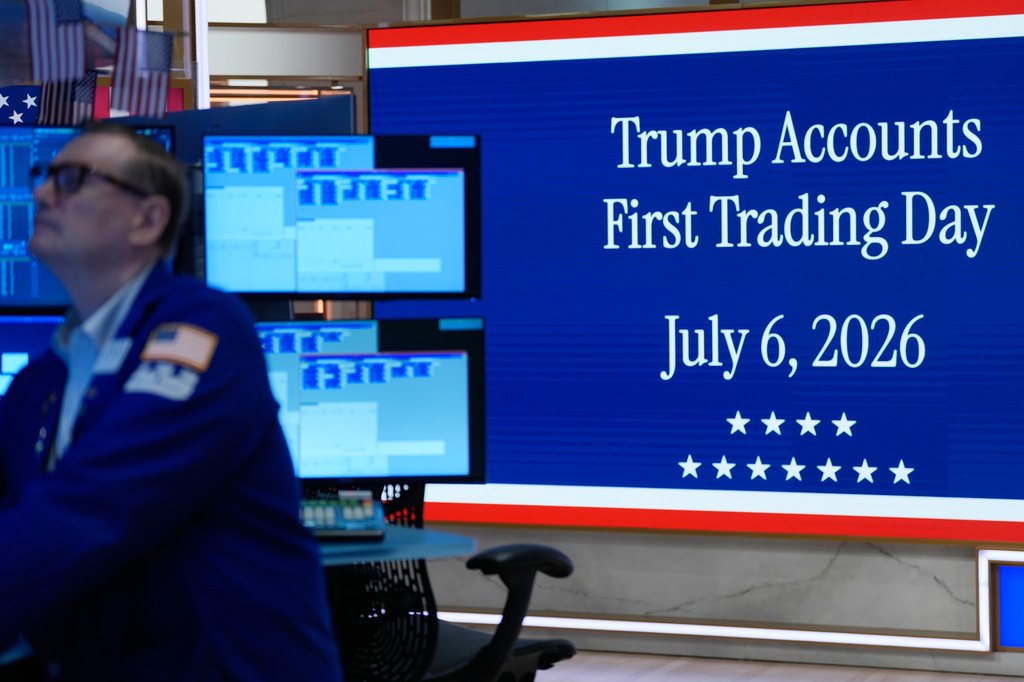
The Fourth of July marked the launch of so-called “Trump accounts,” a new savings vehicle that Sen. Ted Cruz (R-Texas) hopes will be the first step toward privatizing Social Security. If successful, the program could become one of President Trump’s most significant economic legacies.
Social Security’s financial foundation is eroding. The system pays current retirees with payroll taxes from workers and employers, but the math no longer works. In 1960, there were 5.1 workers per beneficiary; today, it’s 2.8 and falling. The trust fund began paying out more than it took in back in 2010, and the latest trustees report shows reserves dropped by $160 billion in 2025, leaving $2.56 trillion. Projections show the fund will be exhausted by 2034, at which point only 83% of promised benefits could be paid.

Congress is unlikely to let that happen, but there’s no consensus on a fix. Proposals to cut benefits for higher-income retirees, raise taxes, or push back the retirement age are all short-term patches. They don’t address the core problem: an aging population and low birth rates mean fewer workers supporting more retirees.
Privatization, Cruz argues, is the only real solution. Under a private system, workers and employers would contribute to individual retirement accounts similar to IRAs, allowing savings to grow over a lifetime. Trump accounts, he says, could be the vehicle.
Here’s how they work: anyone—employers, states, nonprofits, family members—can contribute up to $5,000 annually per child, with states and nonprofits exempt from that cap. Tech billionaire Michael Dell has already donated $6.25 billion for low-income children, and Texas has expressed interest in contributing for its residents. The money must be invested in approved broad-based mutual funds or ETFs and cannot be withdrawn until age 18, though penalty-free withdrawals are allowed for specific purposes or after age 59½.
A key feature is a $1,000 government deposit for every child born between 2025 and 2028. That has fiscal conservatives worried, given the federal deficit is already $2 trillion this year and the national debt stands at $39 trillion. Cruz defended the expenditure at the Milken Institute’s Global Conference, saying bluntly, “How did we get it done this time? It’s because we gave the money to babies so the old people didn’t get pissed.”
So far, about 6 million children have been enrolled, though only 1.5 million are newborns eligible for the taxpayer-funded $1,000. That’s a fraction of the under-18 population, but supporters expect numbers to grow as the program matures.
Critics note the branding could be a liability. Many Americans may resist anything tied to Trump, and a future Democratic Congress could rename the accounts, refuse to renew the $1,000 contributions after 2028, or scrap the program entirely. Still, Cruz sees it as a foot in the door. In 50 years, when the first cohort of account holders retires, even modest contributions could yield substantial wealth thanks to decades of compound returns in the stock market.
If the program succeeds, it could reshape the politics of retirement. Traditional Social Security might survive as a safety net for those unable to accumulate assets, but most Americans—even those with modest incomes—could retire with significant savings. That’s something the current system can’t deliver.
The broader context includes ongoing battles over executive power and institutional independence. The Supreme Court’s recent term has bolstered Trump’s authority, and Senate Democrats are demanding answers about Trump’s business dealings. Meanwhile, the White House is escalating culture wars, targeting the Smithsonian for alleged political activism.
Merrill Matthews, Texas state chair of Our Republican Legacy, authored the original analysis.