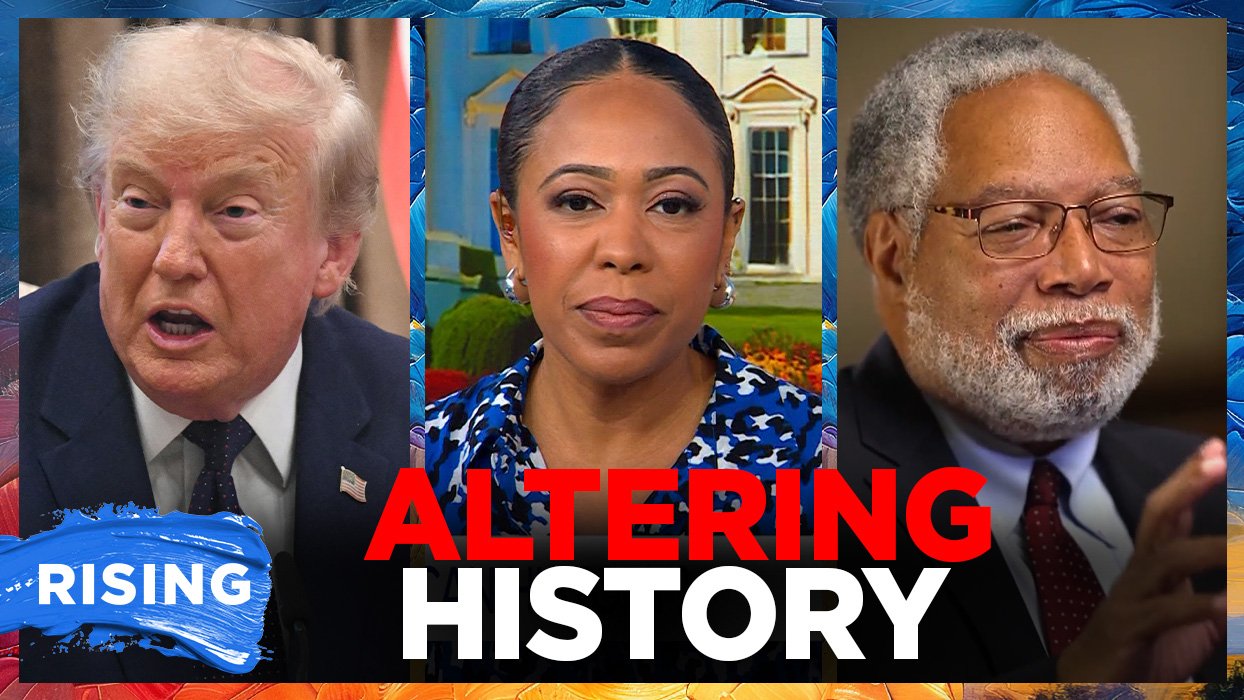
President Trump is intensifying his battle over the narrative of American history, releasing a 162-page report that accuses the Smithsonian's National Museum of American History of pushing what it calls "extreme political activism." The White House document, issued just after Independence Day, argues that the institution "cannot be trusted to tell America's story honestly and in a way that is inspiring, unifying, and worthy of our great republic."
This move is the latest front in the president's broader effort to reshape cultural institutions through an executive order titled "Restoring Truth and Sanity to American History." The order has already triggered changes at the National Park Service, where references to Harriet Tubman were briefly removed from an Underground Railroad webpage, the term "enslaved African Americans" was replaced with "enslaved workers," and details about Benjamin Franklin's history as a slave owner were deleted before being restored after public backlash.
The administration frames these actions as correcting ideological bias and restoring patriotism. But critics argue that sanitizing history does not alter the facts. At the center of this latest confrontation is Smithsonian Secretary Lonnie Bunch, the first African American to lead the institution. Bunch has largely avoided direct political conflict, but on NBC's "Meet the Press," he explained his guiding philosophy: "The notion of being a more perfect union—not the perfect union—is really what motivates me. And I think what I want people to understand is that there is a responsibility to continue to make those aspirations available, accessible, and meaningful to a whole range of people, and that America's greatest strength is not running away from its history, but understanding how that history shaped us and continues to shape us."
That concept of a "more perfect union" is central to the debate. The founding documents themselves acknowledge that perfection was never the goal—progress was. The administration's approach, however, has been to minimize or erase uncomfortable chapters. This pattern is evident in changes to National Park Service websites, executive orders targeting what can be taught and displayed, and now questioning whether the Smithsonian can be trusted.
This latest salvo fits into a broader pattern of reshaping federal cultural institutions. The Supreme Court's recent partisan term has bolstered Trump's power, giving the administration more leeway in such efforts. Meanwhile, the administration has faced bipartisan backlash over other policies, such as plans to sell F-35s to Turkey, but remains undeterred in its cultural agenda.
American history is both inspiring and painful—it includes the Declaration of Independence and slavery, the moon landing and Japanese internment, Harriet Tubman and the institution that made the Underground Railroad necessary. You don't strengthen a nation by deleting chapters that make us uncomfortable. You strengthen it by trusting Americans to grapple with all of it.
Museums should not be expected to flatter whoever occupies the White House. Their job is to preserve evidence, provide context, and let Americans wrestle with the complexity of who we are. As Bunch noted, the goal is not a perfect union, but a more perfect one—a distinction that the administration's report seems to miss.