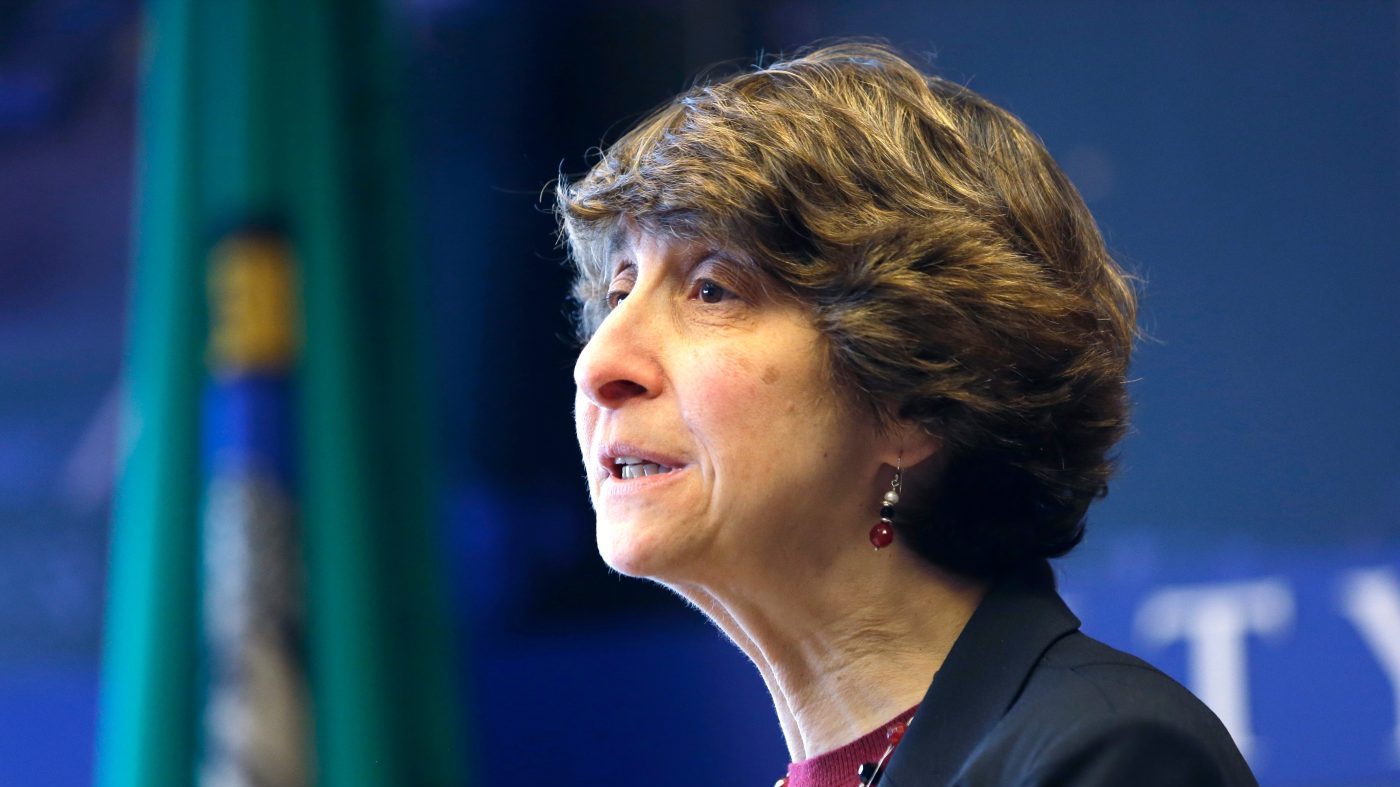
Jocelyn Samuels, a Democratic appointee to the Equal Employment Opportunity Commission who was fired by President Trump last year, has abandoned her legal challenge to that dismissal. The move follows a Supreme Court ruling that significantly strengthened the president’s authority to remove the heads of most independent federal agencies.
Samuels announced Monday that she would voluntarily dismiss her lawsuit, acknowledging that the high court’s 6-3 decision in Trump v. Slaughter left her with no realistic chance of success. That ruling overturned a 91-year-old precedent that had shielded agencies like the EEOC from direct political interference by the White House.
“I strongly disagree with the Supreme Court’s legal analysis in Trump v. Slaughter, which overturned an almost century-old precedent and undermined Congress’s authority to limit the President’s removal power over commissioners of independent agencies,” Samuels said in a statement. “The Court’s opinion, however, leaves me without a viable path forward to continue contesting my termination.”
She added that pressing the case further would be a poor use of legal resources given the many other critical challenges pending against actions taken by the Trump administration.
Samuels was one of two Democratic commissioners ousted from the EEOC early in Trump’s second term, part of a broader crackdown on diversity, equity, and inclusion initiatives across the federal government. In her original court filings last spring, she argued that Trump lacked the authority to fire her without cause, contending that Congress designed the EEOC as an “independent commission of experts, not as a vehicle for any president’s political agenda.”
The EEOC was created under the Civil Rights Act of 1964 to enforce federal laws against workplace discrimination in hiring, firing, promotions, harassment, training, wages, and benefits. By statute, its five-member commission can include no more than three members from the same political party, and commissioners serve staggered five-year terms to ensure continuity.
Today, the commission is chaired by Andrea Lucas, a Republican who was formally sworn in by Justice Clarence Thomas last month. The current makeup includes one other Republican and one Democrat, with two seats vacant.
Trump has made dismantling DEI programs a central pillar of his second term, issuing multiple executive orders in his first weeks to eliminate diversity practices from federal agencies, the military, and federally funded institutions like the Smithsonian and National Park sites.
Lucas applauded the Supreme Court’s ruling in a LinkedIn post last week, writing that it “reaffirms the federal government and EEOC’s decades-long position that EEOC is an executive branch agency and reinforces the responsibilities entrusted to us.”
The decision has drawn sharp criticism from Democrats and legal scholars who argue it erodes the independence of agencies meant to operate free from political pressure. Critics have pointed to the Supreme Court's partisan term as part of a broader pattern of rulings that consolidate executive authority.
Samuels’ decision to drop her suit comes as other legal battles continue to unfold over the administration’s aggressive use of executive power. The NAACP’s record $20 million midterm push highlights ongoing fights over voting rights and institutional independence.