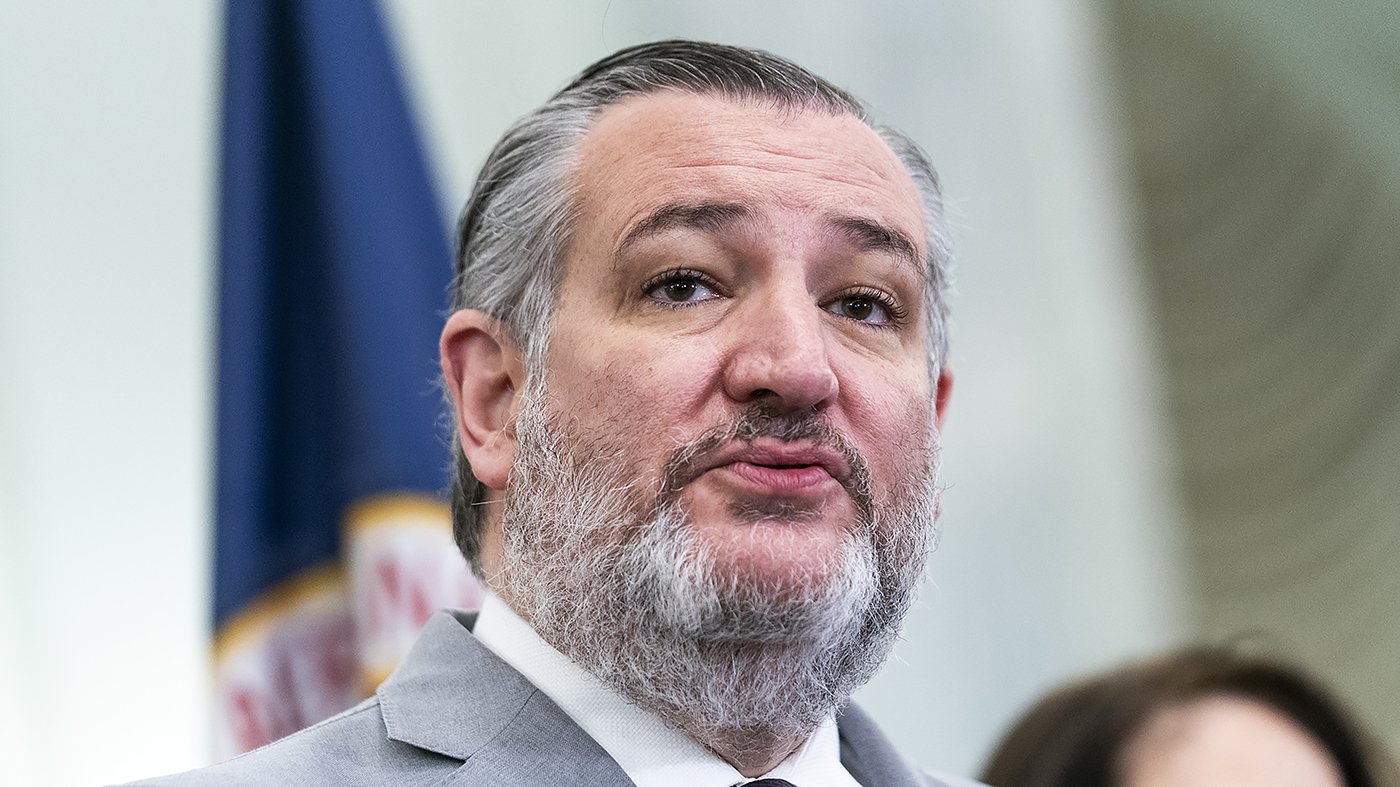
Sen. Ted Cruz (R-Texas) pushed back Tuesday against the notion that soaring gas prices—fueled by the ongoing U.S.-Iran war—will reshape the political landscape ahead of November's midterm elections. In a CNBC interview, the Texas Republican argued that national security decisions should be insulated from short-term political calculations.
“I don’t think national security decisions should be done based on short-term political considerations,” Cruz told CNBC’s “Squawk Box.” “I don’t think it’s going to impact the midterms materially. I’ve seen no data that suggests that this is having a big impact on the midterms.”
Cruz’s remarks come as the GOP braces for a challenging electoral cycle, with low turnout in recent Texas runoffs already stirring concern among party strategists. The senator, however, sought to frame the issue through a broader lens, contrasting current prices with those under the previous administration.
“What I’ll tell you—let’s take gas prices. So, under [former President] Biden, gas prices nationally were between five and six bucks a gallon. [President] Trump came in and we cut them basically in half, to about three bucks a gallon,” Cruz said. “Now, with the conflict in the Middle East, gas prices have gone up to about 4.50 a gallon, so we’ve given away about half of the decrease we had.”
The price spike traces back to late February, when U.S. and Israeli forces launched joint strikes on Iran. Tehran retaliated by restricting access to the Strait of Hormuz, a critical chokepoint for nearly one-fifth of the world’s oil supply. Hopes for a diplomatic resolution briefly lifted markets earlier this month, but those gains evaporated after Iran walked away from negotiations following Israeli strikes in Lebanon.
By mid-Tuesday, AAA data showed regular gas averaging above $4.55 per gallon in ten states and Washington, D.C. The national average stood at $4.29, down slightly from $4.32 the day before and $4.49 last week, but still sharply above $3.14 a year ago. The volatility underscores the fragility of energy markets amid the expanding Middle East conflict.
Republicans face an uphill battle in the midterms. Recent polling reveals deep public anxiety over the economy and growing disapproval of the Iran war. President Trump’s approval rating has slumped to 40.5 percent, according to The Hill’s Decision Desk HQ, with disapproval climbing to 56.3 percent. Those numbers suggest the party’s grip on key battlegrounds may be weakening.
In Texas, the political terrain is further complicated by internal GOP dynamics. The heated Senate race between Ken Paxton and Democrat Talarico has drawn national attention, with both camps trading barbs over patriotism and policy. Meanwhile, Sen. John Cornyn’s ouster in the GOP primary after Trump’s endorsement of Paxton has left some party insiders questioning the path forward.
For now, Cruz insists that voters will prioritize long-term security over pocketbook pain. But with gas prices still elevated and no end in sight to the Iran standoff, that bet may be tested at the ballot box.