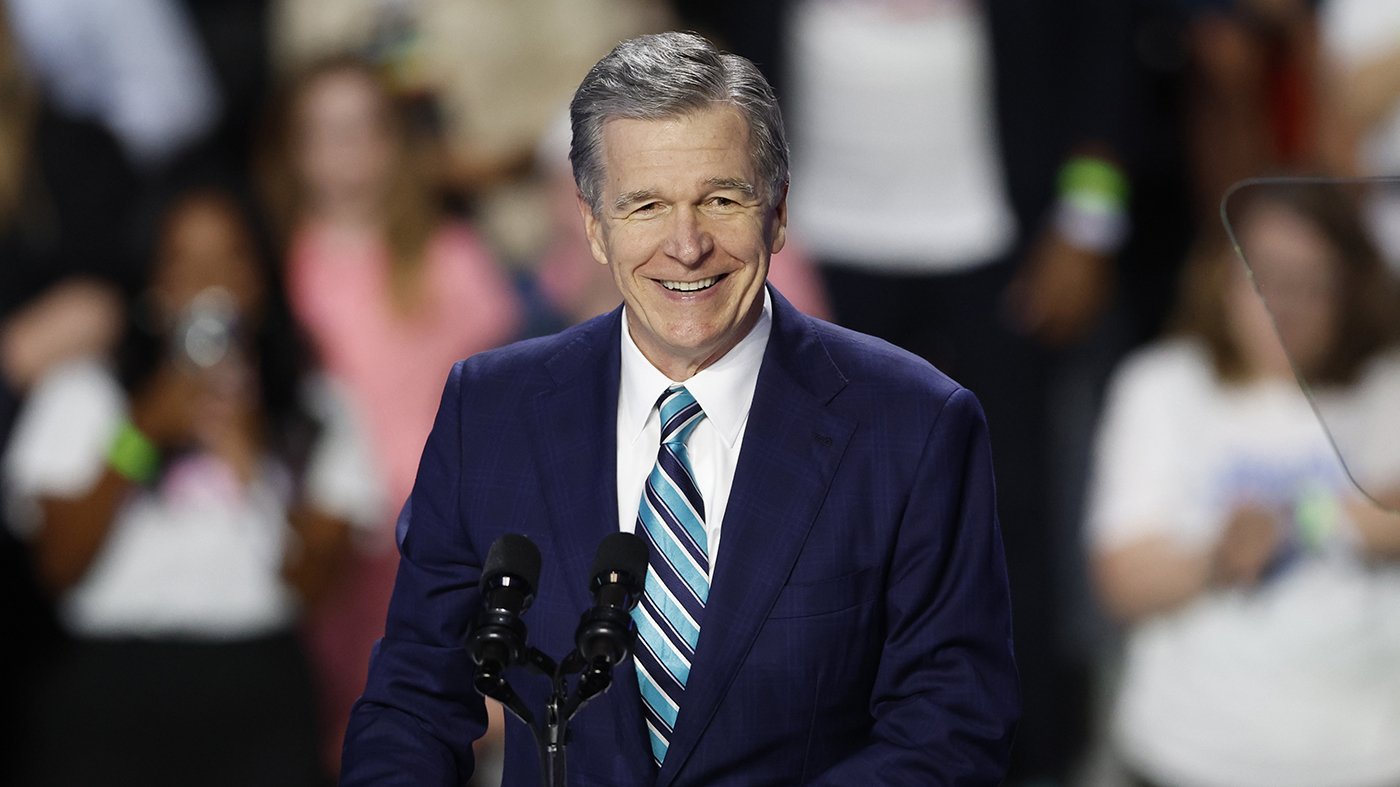
A fresh survey of North Carolina's pivotal Senate contest shows Democrat Roy Cooper maintaining a consistent lead over Republican Michael Whatley, positioning the open seat as a prime pickup opportunity for Democrats in their fight for chamber control.
The Carolina Journal poll, conducted by Harper Polling, found Cooper, the state's former governor, with 49 percent support among likely voters. Whatley, the former Republican National Committee chairman, trailed with 41 percent. Ten percent of respondents remained undecided or preferred another candidate.
This result mirrors the same pollster's findings from November, which showed Cooper ahead 47 percent to 39 percent. The consistency suggests a stable, if narrow, advantage for the Democrat in a state that has proven elusive for his party in federal elections.
North Carolina represents a critical potential flip for Senate Democrats. While the party has managed to win gubernatorial races, voters have not sent a Democrat to the U.S. Senate since 2008, when Kay Hagan was elected. That same year was the last time a Democratic presidential candidate carried the state.
The National Political Environment
Donald Bryson, CEO of the John Locke Foundation and publisher of Carolina Journal, framed the results within the typical dynamics of a midterm election. "Midterm elections are almost always a referendum on the party in the White House, and this poll shows that dynamic is alive and well in North Carolina," Bryson stated in a release accompanying the poll. "With more voters saying the country is on the wrong track and the president underwater, the environment is naturally tilting toward the out-party."
This national backdrop could complicate efforts by both parties to localize the race, as broader dissatisfaction often drives midterm turnout and preferences. The contest to succeed retiring Republican Senator Thom Tillis is unfolding amid other significant national security debates, including warnings from former defense officials about risks to U.S. personnel in volatile regions.
The poll's findings are corroborated by broader data. A polling average compiled by Decision Desk HQ shows an identical eight-point spread, with Cooper at 48 percent and Whatley at 40 percent. This consistency across surveys indicates a real, measurable edge for the Democratic candidate at this stage.
Strategic Implications
The North Carolina race is one of several that will determine the balance of power in the Senate. While Democrats face a challenging map, holding seats like this one is essential to their majority. The contest shares similarities with other key races where early polling shows significant leads, such as the Maine Senate primary where Platner holds a commanding 27-point advantage.
The survey of 600 likely voters was conducted between March 22 and 23 and carries a margin of error of plus or minus 4 percentage points. The high percentage of undecided voters, while shrinking from 14 percent in November to 10 percent now, leaves room for movement as the campaign intensifies and both sides unleash their advertising arsenals.
As the race develops, it will test whether a popular former state executive like Cooper can overcome North Carolina's recent federal-level Republican lean, or if the national political climate described by pollsters will propel Whatley to a comeback. The outcome will hinge on each campaign's ability to mobilize its base and sway the remaining persuadable voters in a state known for razor-thin margins.