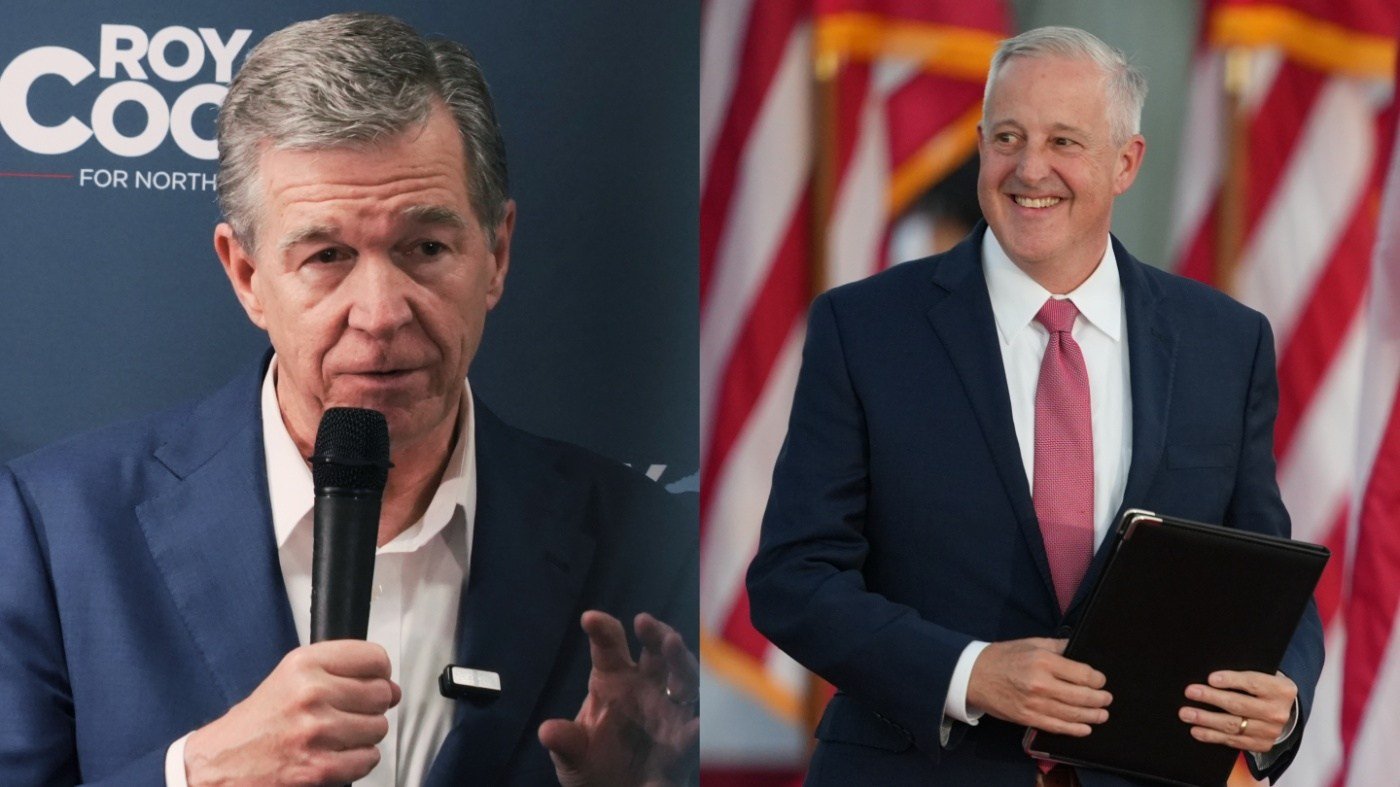
With less than two weeks until Election Day, a new Elon University poll shows Democrat Roy Cooper holding a 13-point lead over Republican Michael Whatley in North Carolina's open Senate race. The survey, conducted Sept. 29 through Oct. 8 among 800 North Carolina adults, found Cooper with 52 percent support, Whatley with 39 percent, 6 percent undecided, and 3 percent backing Libertarian Shannon Bray, Green Party candidate Michael Dublin, or someone else.
When undecided voters were pressed to choose, Cooper's lead widened slightly: 54 percent picked him, while 43 percent chose Whatley. The race is for the seat currently held by retiring Republican Sen. Thom Tillis, and Democrats see it as a key pickup opportunity in their bid to reclaim the Senate majority.

Independents and key demographics
Cooper's advantage is particularly pronounced among independents, who favor him 50 percent to 24 percent, with 17 percent still undecided. Whatley, meanwhile, leads among White voters, while Cooper dominates among Black, Hispanic, and female voters. Among men, the candidates are tied at 42 percent each.
Jason Husser, director of the Elon University Poll and a political science professor, noted that Cooper's lead among likely voters is actually larger than among all registered voters, suggesting Republicans could narrow the gap if they can turn out more of their base.
In an effort to boost GOP enthusiasm, President Trump and Vice President Vance have both made recent stops in the Tar Heel State. However, Husser observed that the poll results indicate Trump's presence may not be swaying many voters, even with his proposed $5,000 dividend checks for Americans if Republicans retain control of Congress.
Trump's dividend and endorsement effects
Thirty percent of respondents said Trump's dividend promise makes them less likely to vote Republican, while 16 percent said it makes them more likely, and 50 percent said it makes no difference. Even among those who approve of Trump's job performance, most said the dividend does not affect their vote, though Husser noted the president's endorsement still resonates with his base.
On endorsements, 43 percent said a Trump endorsement would make them less likely to support a candidate, while 25 percent said it would make them more likely, and 26 percent said it made no difference. These findings come as Democrats have been widening their midterm lead nationally, according to recent polling.
The poll's margin of error is 4.03 percentage points, and it was conducted before early voting began in earnest. North Carolina's strict mail-in ballot rules, recently upheld by a federal judge, could affect turnout patterns in the final stretch.
Both campaigns are expected to focus on mobilizing their bases in the coming days, with Cooper aiming to consolidate his lead among independents and Whatley hoping to energize Republicans with Trump's backing.