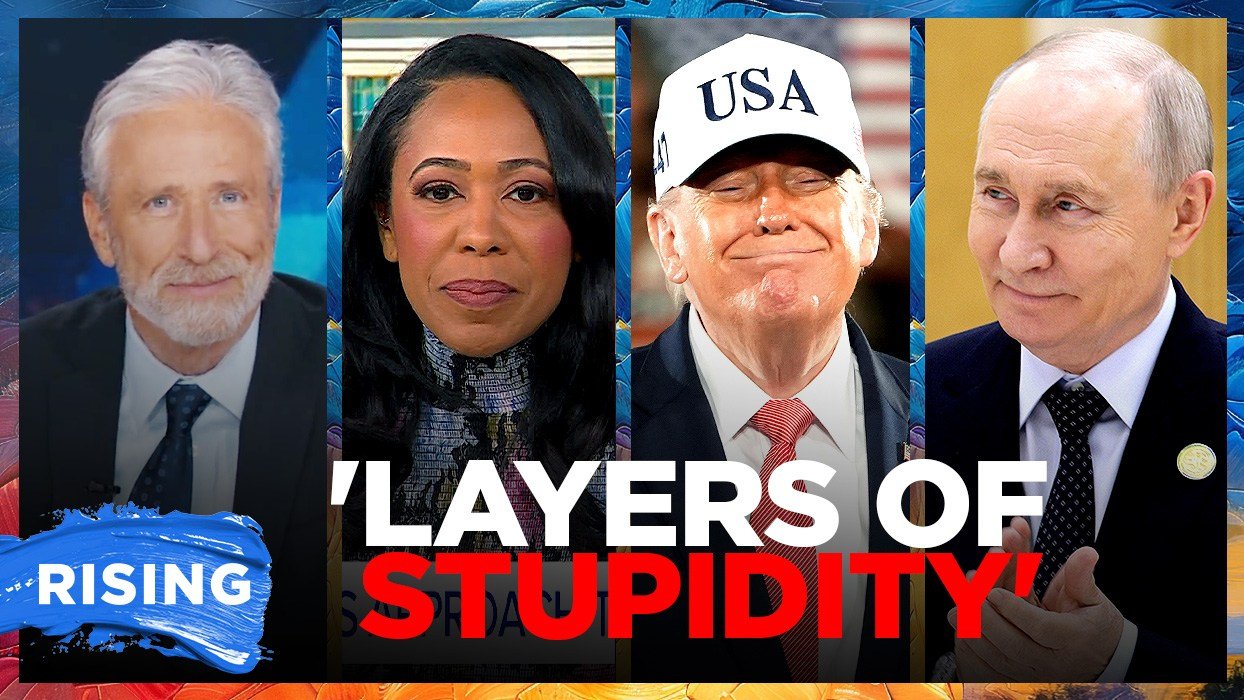
Jon Stewart deployed a Russian nesting doll on The Daily Show to dismantle what he called the “layers of stupidity” in the Trump administration’s latest Russia policy reversal. The comedian was reacting to the decision to ease sanctions on Russian diesel exports even as Moscow’s war in Ukraine grinds on.
Stewart zeroed in on Energy Secretary Christopher Wright’s justification on CNN. Wright claimed the move “is a motivation for Russia to figure out how they can actually export some diesel.” Stewart shot back: “Why would we motivate a group to sell diesel when we just put sanctions on them for selling diesel? Doing the opposite within a month is insane. It is illogical. It is incoherent!”
The sharp critique lands as the White House faces mounting pressure to lower fuel costs ahead of the midterm elections. Diesel prices are at record highs, but analysts at Goldman Sachs estimate the sanctions waiver could shave only a penny or two per gallon—hardly the relief American drivers are looking for. Meanwhile, Moscow gains sanctions relief and a direct line to Washington, apparently on terms that favor the Kremlin.
This is not the first time the administration has tied Russia-related moves to domestic political needs. The president has also defended sanctions waivers as key to securing the release of American detainees, including teacher Stephen Hubbard. But critics argue that such trades are becoming a pattern: Washington gets symbolic wins while Moscow gets tangible concessions.
The economic calculus is thin, but the geopolitical stakes are high. The relationship between President Trump and Ukrainian President Volodymyr Zelensky has deteriorated over intelligence sharing, sanctions, attacks on Russian energy infrastructure, and the shape of any potential peace deal. On Monday, Trump questioned Zelensky’s grasp of the situation and suggested it might be “time for somebody else to negotiate on behalf of Ukraine.”
Zelensky has said he is open to talks but insists on security guarantees and refuses to accept a deal negotiated over Kyiv’s head. Reports that Russia is exploring a summit involving Trump and Chinese President Xi Jinping—without European leaders at the table—raise alarm bells about who will actually decide Ukraine’s future.
Russian President Vladimir Putin appears to understand a dynamic Trump keeps overlooking: he does not have to win every battle if he can persuade the American president to ease pressure and give Moscow a seat at the head of the table. Putin gets to pursue his military objectives while Trump claims credit for pursuing peace and fighting inflation. But if the economic benefits are marginal and Ukraine is squeezed into concessions, the United States is being played for a fool—and Ukraine is left out in the cold.
Diplomacy with Russia is necessary, but not without credible security guarantees for Ukraine and its allies. Otherwise, as Stewart’s nesting doll suggests, the layers of this administration’s policy may just keep revealing more absurdity—and more vulnerability for America’s partners.