In a striking echo of the mid-1990s, a frontier technology company with shaky profitability is on the verge of a massive public offering. Its co-founder is the public face of a technology that most politicians and citizens barely grasp. The recent news cycle has been a grim catalog of the technology's dangers, especially for children, and Washington is divided on a remedy. One Democratic senator wants prison time for those who upload indecent material where minors might see it. A bipartisan duo in the House wants the opposite: legal immunity for platforms over user-generated content, allowing companies to self-regulate.
This is Silicon Valley's classic playbook: don't scrutinize your product's side effects; just chase user growth. Heavy-handed regulation, the argument goes, would stifle American innovation, freedom, and profit. But this scenario is not about artificial intelligence, Anthropic, or Dario Amodei in 2026—it's about the internet, Netscape, and Marc Andreessen in 1995. The senator was James Exon (D-Neb.), and the congressmen were Chris Cox (R-Calif.) and Ron Wyden (D-Ore.), co-sponsors of the infamous Section 230 of the Communications Decency Act.
Section 230's text seems benign: no provider or user of an interactive computer service shall be treated as the publisher of any information provided by another content provider. Cox and Wyden were addressing a real business problem: dial-up services were being sued for moderating content. They couldn't foresee that this liability shield, intended to encourage responsible self-regulation, would become the legal foundation of social media, letting platforms grow to billions of users without accountability for what their algorithms amplify—including harm to users themselves.
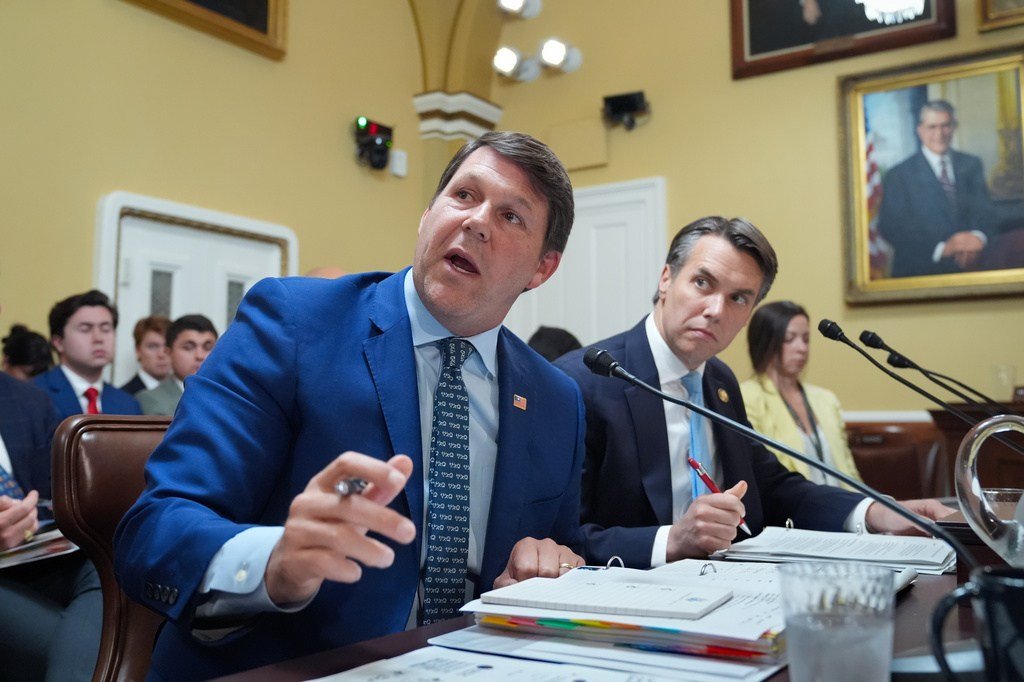
Now, in 2026, the tech industry is back with fresh demands: an antitrust waiver and liability protection from lawsuits over AI-generated content. This month, Amodei published a viral essay asking for the waiver so frontier labs can coordinate on safety. On September 15, Treasury Secretary Scott Bessent told a House committee that these labs should not receive a liability exemption. "The best way to guarantee safety is that the creators are liable for what they build and generate," he said.
Anthropic reportedly plans a $2 trillion IPO in October—roughly 700 times Netscape's valuation. Fortunately, pushback has been bipartisan. Jonathan Kanter, former antitrust chief under Biden, told CNBC that labs can adopt safety standards without an antitrust waiver. David Sacks, Trump's former AI czar, told CBS News that "it is on them to make their products safe," adding, "If you can't control it, then don't do it."
Sacks is right, and history shows why. Washington couldn't write the best policies in 1996, and it can't now. The last existential technology emerged from the Manhattan Project, where the government owned the labs and knowledge. Today's AI labs are private, worth more than most economies, and no free market would hand them to the state. The House has recessed until after the midterms with AI bills stalled, so asking Congress to take the wheel is like asking a passenger who has never driven to prevent a school bus crash. This technology needs rules that evolve, not a campaign slogan.
None of this argues against regulating AI. It argues against carving rules into statute in the industry's infancy, before its societal role has settled. Section 230 has been amended only once in three decades, outliving the companies it was designed for. A liability exemption or antitrust waiver could harden similarly around whoever is largest now. Private AI labs asking permission to self-coordinate are also asking permission to coordinate, and only the frontier firms can afford to slow down. Regulate now, but write rules that can adapt. Don't hand over an immutable immunity.
Amodei is 43, older than Andreessen was in 1995, and has history to learn from. This fall, the University of Chicago barred AI from its core social sciences courses to ensure students learn to read, write, and think. Those old books hold a lesson: a shield outlasts its intended beneficiary, and those who remain must live with what was protected. Accountability is the price of profit. You cannot privatize gains, socialize losses, and ask for a permission slip for everything that could go wrong. If frontier AI labs believe their technology is dangerous, they can slow down after reading this article. They don't need our permission to hit the brakes.
Zander Cowan is a former product employee at Lila Sciences, an AI lab pursuing scientific superintelligence.