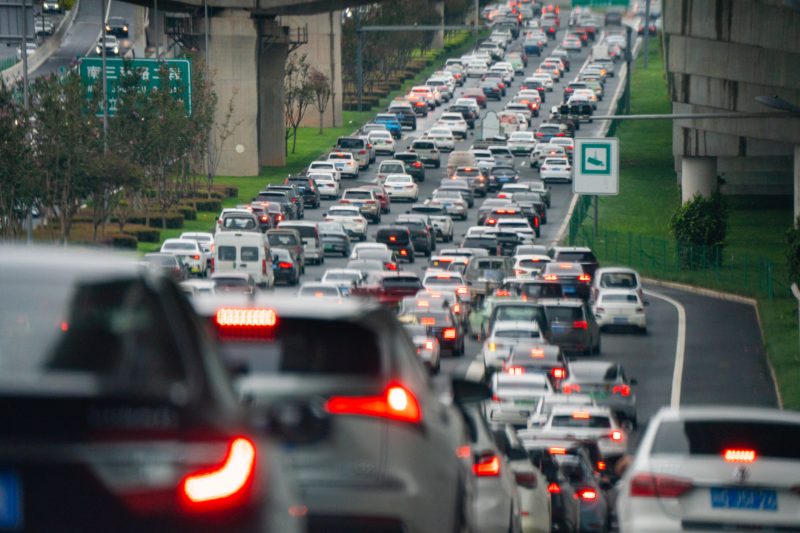
For millions of Americans, the daily commute has become a source of stress rivaling the job itself. A new survey by AMFM Healthcare, which polled more than 3,000 commuters nationwide, identifies the routes causing the most “burnout” among workers. The findings highlight a growing tension between suburban living and urban employment, with long drives through traffic eating into personal time and fraying nerves.
The top spot belongs to the commute from Palmdale, California, to Los Angeles. This route, stretching across the Mojave Desert and into the nation’s second-largest city, epitomizes the grind: bumper-to-bumper traffic on the Antelope Valley Freeway, frequent delays, and a round trip that can exceed three hours. Not far behind are the White Plains-to-New York City run and the Tracy-to-San Francisco commute, both notorious for congestion and unpredictability.

The survey’s list of 20 most burnout-inducing commutes is dominated by suburbs feeding major metro areas. From Homestead to Miami and Temecula to San Diego, workers are trading space for strain. The pattern reflects a broader trend: as housing costs push families to the periphery, they absorb longer commutes that erode well-being. As a recent Fed survey found worker satisfaction at historic lows, this added pressure may be compounding economic discontent.
Beyond Traffic: The Toll on Workers
Commute burnout isn’t just about time lost. The survey captures the psychological weight of daily travel: unexpected delays, the monotony of gridlock, and the realization that hours of free time vanish each week. For many, these factors make the commute more draining than the workday itself. The phenomenon is especially acute in regions like the Washington, D.C. metro area, where Frederick, Maryland, and Fairfax, Virginia, rank high on the list.
Interestingly, the survey also reflects a shifting political landscape. As nearly 6 in 10 Americans now actively avoid news about former President Trump, the commute might serve as a rare escape from political noise—but only if it’s manageable. For those stuck in the worst routes, even that escape is compromised.
Strategies to Fight Burnout
UCLA Transportation offers practical advice for commuters looking to reclaim calm. Distraction is key: audiobooks, podcasts, or guided meditation can transform dead time into productive or relaxing moments. Another tip is to avoid an empty stomach, as hunger amplifies stress. Packing healthy snacks or eating before departure can make a difference. For those in the most burned-out belts, these small adjustments may help mitigate the daily toll.
The full survey provides a detailed ranking, allowing commuters to see where their route falls. As Congressional approval hits near-record lows, the disconnect between policy and daily life grows sharper. Commute burnout is a visceral reminder that for many, the real political struggle is not in Washington but on the road.