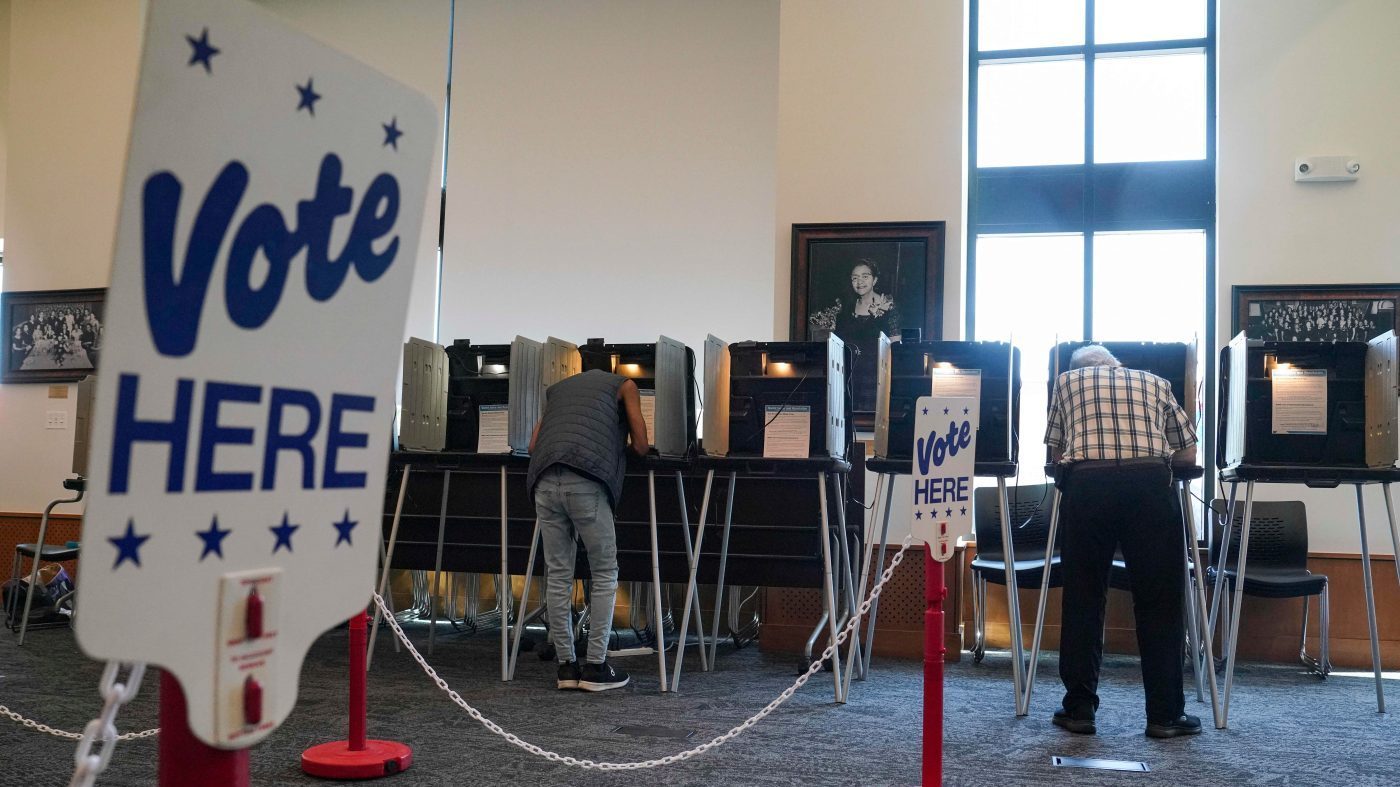
Coloradans have voted down a constitutional amendment that would have imposed new hurdles on any attempt to redraw the state's congressional districts outside the usual 10-year cycle. Decision Desk HQ projects that Amendment 86, also known as Initiative 256, failed to secure the required 55% supermajority, with roughly 53% voting against it.
The measure sought to require that any mid-decade redistricting plan be approved by both the state's independent redistricting commission and the state Supreme Court. It also would have added language to the state constitution mandating that the commission hold at least three public hearings and avoid any plan that divides communities of interest or deliberately favors one political party.

The rejection comes as both major parties have been maneuvering to redraw House maps ahead of the 2026 elections, with Republicans pushing for changes in GOP-led states like Texas and Missouri, while Democrats have focused on California. Colorado is one of a handful of states that relies on an independent commission to handle redistricting.
Earlier this year, Colorado Democrats failed to advance their own ballot measures that would have allowed for a redraw before 2028, a move that some saw as an attempt to gain a partisan advantage. The failure of Amendment 86 means the existing rules for redistricting remain in place, at least for now.
Political observers note that the battle over redistricting is far from over. Both parties are already looking ahead to the 2028 cycle, and the outcome in Colorado could influence similar efforts elsewhere. The rejection of Amendment 86 is a setback for those who wanted to tighten the rules, but it does not eliminate the possibility of future attempts.
As recent redistricting battles have shown, the process remains highly contentious. In other states, voters have also rejected GOP-led redistricting plans, indicating that public sentiment on the issue is divided.
The vote in Colorado is a clear signal that voters are wary of changing the rules midstream. Whether this leads to more stability or simply shifts the fight to other venues remains to be seen. For now, the state's existing independent commission process stands, and any future changes will require a higher bar of public support.