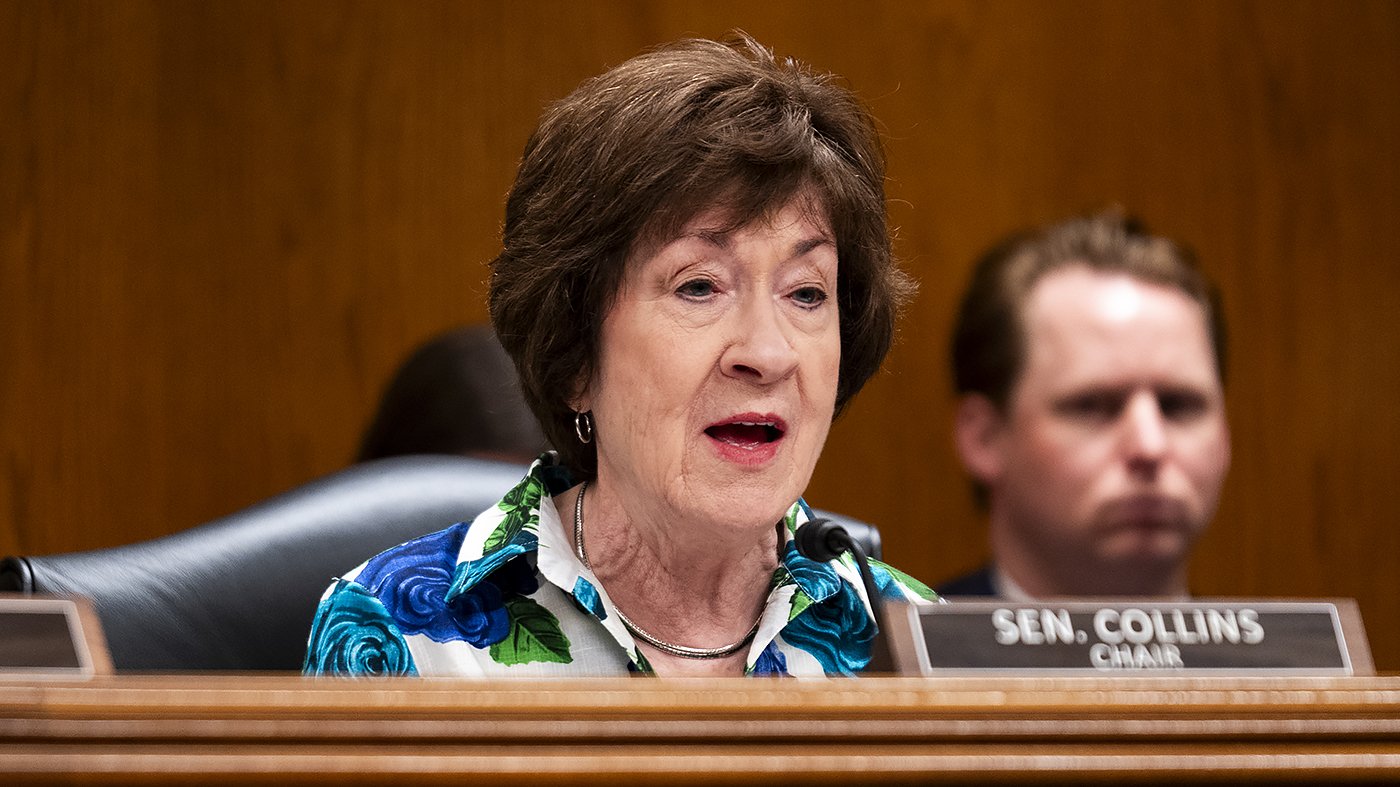
Sen. Susan Collins (R-Maine) publicly disclosed that she has a benign essential tremor, a condition that can cause trembling in her hands, head, or voice. In an interview with NEWS CENTER Maine, the 73-year-old senator said she is managing the condition with medication but stressed that it has not hindered her work.
“What I have is an extremely common condition that is called a benign essential tremor. I have had it for the entire time that I have served in the United States Senate. It has absolutely no impact on my ability to do my job or how I feel each day,” Collins said.

Collins, who chairs the powerful Senate Appropriations Committee, has not missed a single vote on the Senate floor during her nearly three decades in office. She is on track to cast her 10,000th consecutive vote soon, a record she cited as evidence of her health and dedication. “If you talk to anybody in Washington, they will tell you that I am the hardest working person that they have every worked with, and the fact is I’ve never missed a single vote in all the time that I’ve been honored to represent the people of Maine,” she said. “I think that’s pretty good evidence of the fact that I am blessed with great health.”
The disclosure comes as Collins prepares for a tough re-election battle against Graham Platner, an oyster fisherman and veteran of the Marine Corps and Army National Guard. The nonpartisan Cook Political Report rates the Maine Senate race a toss-up, with Platner leading Collins 51 percent to 45 percent in an Echelon Insights poll from early April. Collins previously led Democratic Gov. Janet Mills 45 percent to 42 percent in a Maine People’s Resource Center poll, but Mills has since dropped out of the race.
Benign essential tremor is not associated with cognitive or memory decline, and Collins emphasized that her health remains robust. Her disclosure has drawn attention amid a contentious campaign where Platner has faced scrutiny over past comments on sexual assault, as highlighted by Rep. Debbie Dingell (D-Mich.). After Mills exited the race, Platner canceled primary debates to focus on Collins, a move that has sparked internal Democratic doubts, with some critics pointing to Senate Majority Leader Chuck Schumer’s initial support for the candidate.
Collins’s disclosure is unlikely to shift the dynamics of a race already shaped by national politics and local concerns. The Maine contest is one of several high-stakes Senate battles that could determine control of the chamber. As Republicans aim to expand their majority, Collins’s seat remains a key target for Democrats, who see Platner as a strong challenger despite his controversial history.
The senator’s health revelation adds a personal dimension to a campaign already defined by policy battles and political maneuvering. Collins, first elected in 1996, has built a reputation as a moderate and a dealmaker, but her voting record has drawn criticism from the left. With the race tightening, both candidates are ramping up efforts to sway undecided voters in a state known for its independent streak.