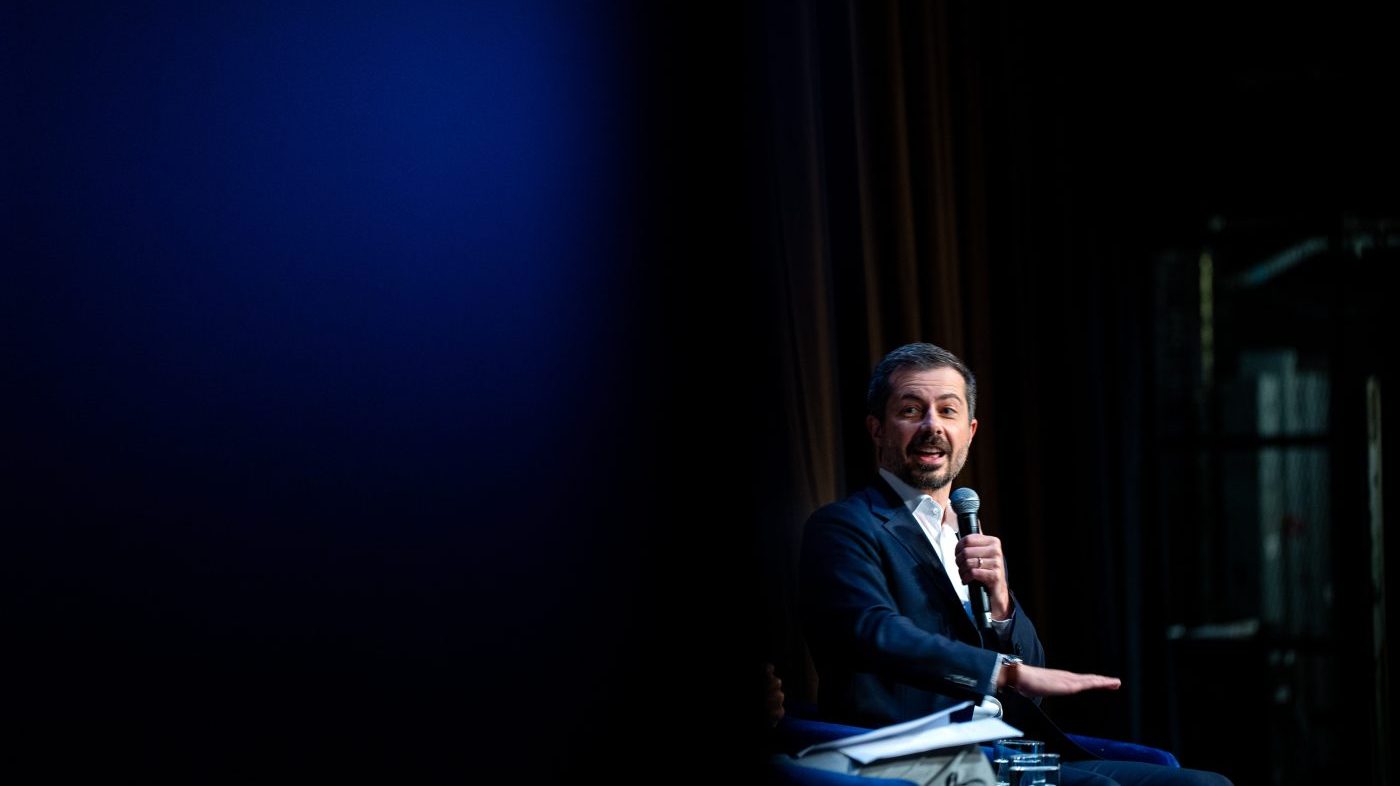
A fresh Emerson College Polling survey released Thursday places former Transportation Secretary Pete Buttigieg at the front of a hypothetical 2028 Democratic presidential primary, signaling early positioning as the party navigates its post-2024 identity.
Buttigieg captured 18% support among likely Democratic primary voters, edging out California Governor Gavin Newsom, who landed at 16%. Representative Alexandria Ocasio-Cortez of New York secured 11%, while Pennsylvania Governor Josh Shapiro and former Vice President Kamala Harris—the party’s 2024 standard-bearer—each drew 10%.
Kentucky Governor Andy Beshear rounded out the field with 9%, and 18% of respondents remained undecided. The poll, conducted May 24-25, surveyed 1,000 likely voters with a credibility interval of ±3 percentage points; the Democratic primary subsample of 432 voters had a ±4.7-point margin.
Compared to earlier surveys, Buttigieg, Ocasio-Cortez, and Beshear each saw modest gains, while Newsom and Harris experienced slight declines. The shifts suggest a fluid early race as candidates test messages and build profiles.
Buttigieg hinted at a possible campaign during the National Action Network conference last month. When Reverend Al Sharpton asked whether he would run again, Buttigieg replied, “You save me a seat, I’ll be there,” declining to elaborate further.
Newsom, term-limited as California’s governor, has long been considered a frontrunner. He has bolstered his national standing through high-profile clashes with President Donald Trump, but the poll shows he has yet to consolidate the progressive base.
Harris has indicated she “might” seek the presidency again, which would mark her third consecutive bid for the White House. Ocasio-Cortez, when asked about 2028 speculation earlier this month, deflected: “They assume that my ambition is a title or a seat, and my ambition is way bigger than that. My ambition is to change this country.”
The Democratic field remains wide open, with no clear heir apparent. The party’s internal dynamics—including tensions between moderates and progressives, and debates over strategy following the 2024 losses—will likely shape the primary. Meanwhile, the Republican side has seen its own maneuvering, as Vance leads anti-fraud efforts targeting Democratic-run states, adding another layer to the national political landscape.
As candidates test the waters, the Emerson poll underscores that Buttigieg’s early lead is fragile. The undecided bloc—nearly one in five voters—could swing the race as more contenders enter and policy debates intensify.