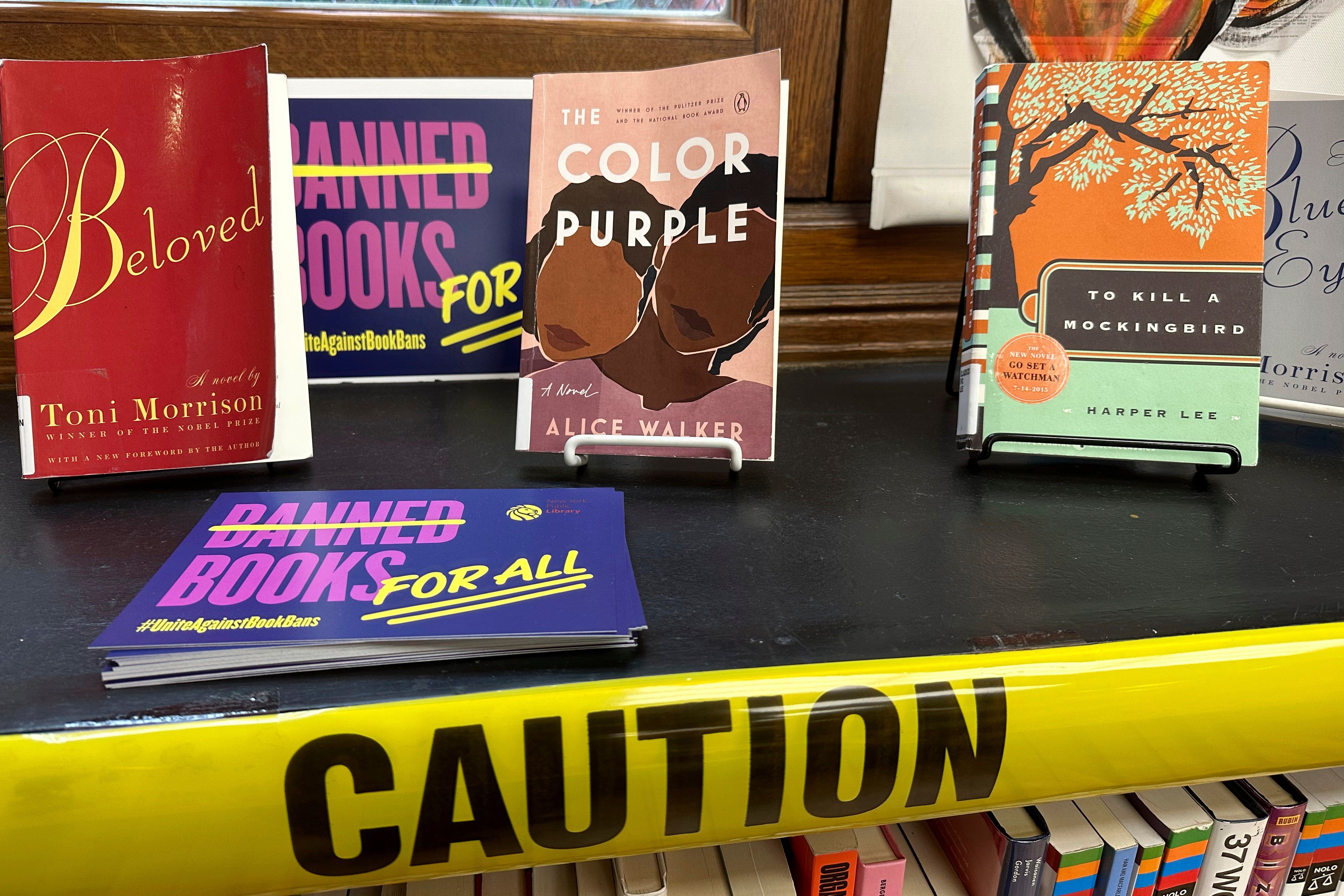
Book removals in American schools and libraries have reached an unprecedented level, driven by political pressure and the growing use of artificial intelligence to vet reading materials. A new report from the free-speech group PEN America, released Monday, counts nearly 12,000 titles pulled from shelves between 2025 and 2026 — a jump of roughly 5,000 from the prior year.
The surge is heavily concentrated in two states: Texas, where an estimated 8,100 books were removed, and Florida, with about 3,200. Together, they account for the vast majority of the national total. But PEN America cautions that the figures likely understate the true scale, because many removals are only coming to light through public records requests rather than local news coverage.
Philomena Polefrone, senior manager for Freedom to Read at PEN America, said the organization has had to change its methodology. “The fact that a huge number — a strong majority, I would say — of the bans that we calculated in Texas and Florida, we were only able to find out about because of public information requests,” she said. “We have needed to pivot a little bit and start going directly to the source for information.” She added that the overrepresentation of those two states “doesn’t indicate that there aren’t bans in other states. It indicates that we have better information in Texas and Florida.”
Republican-led education reforms in both states have prioritized removing content deemed sexually explicit or harmful. A Texas law that took effect in September 2025 imposed new restrictions on school libraries and expanded parental oversight. In response, some districts have turned to AI to handle the volume of review. The Texas Freedom to Read Project, through public records requests, found that AI tools sometimes flagged books for removal simply because another district had removed them — not because the content actually violated the law.
“This is the first time that we have direct evidence of” AI use in our report, Polefrone said. She explained that the technology emerges from a climate of fear: “Administrators and librarians know that they don’t have the resources to review each book that some of these laws demand. They don’t have the capacity to go through each one individually and reread it essentially and consider it in its entirety.”
Ohio ranks a distant third with 117 bans, but PEN America believes most states are undercounted. In Iowa, a 2023 law restricts school libraries to “age-appropriate materials,” with repeat violations potentially leading to professional sanctions for staff. Utah has created a statewide banned list that forces removal from all classrooms. Even in some blue states, the chilling effect is spreading. Skip Dye, senior vice president at Penguin Random House and chair of its Intellectual Freedom Task Force, said educators in New York have told his group they are “nervous about books” and have preemptively removed titles or avoided purchasing new ones out of fear of parental complaints.
The use of AI in book screening is a growing concern because it can misread context. “I do know that some school boards and some educators have been using AI tools to go through and scan books to go and look for possible books” that could violate state law, Dye said. He noted that AI often pulls out “troublesome” phrases without considering the surrounding narrative, leading to false conclusions about a book’s appropriateness.
Legal challenges to the bans have produced mixed outcomes. In Iowa, a federal appeals court allowed the 2023 law to take effect after a lower court had temporarily blocked it. In Florida, attorney Corey Stoughton is representing a student and the authors of “And Tango Makes Three,” a children’s book about two male penguins raising a chick, after it was removed from a school. Stoughton argued before the Eleventh Circuit that the district court’s ruling — which held that the First Amendment does not apply to school library decisions — was a shocking overreach. “The district court, rather than examining whether the school district’s reasons for removing that book were legitimate, or instead, just viewpoint discrimination against the idea of tolerance for adoptive families, adoptive gay families, the court held, really rather shockingly, that the First Amendment does not apply at all,” she said.
While the legal battles continue, opponents are urging grassroots action. Sarah Lamdan, director of the American Library Association’s Office for Intellectual Freedom, said the key is “building awareness about the issue, letting people know that this isn’t just happening in a couple states, it’s probably happening in your state, and getting out there and supporting libraries and remembering that libraries are wonderful, joyful places.”