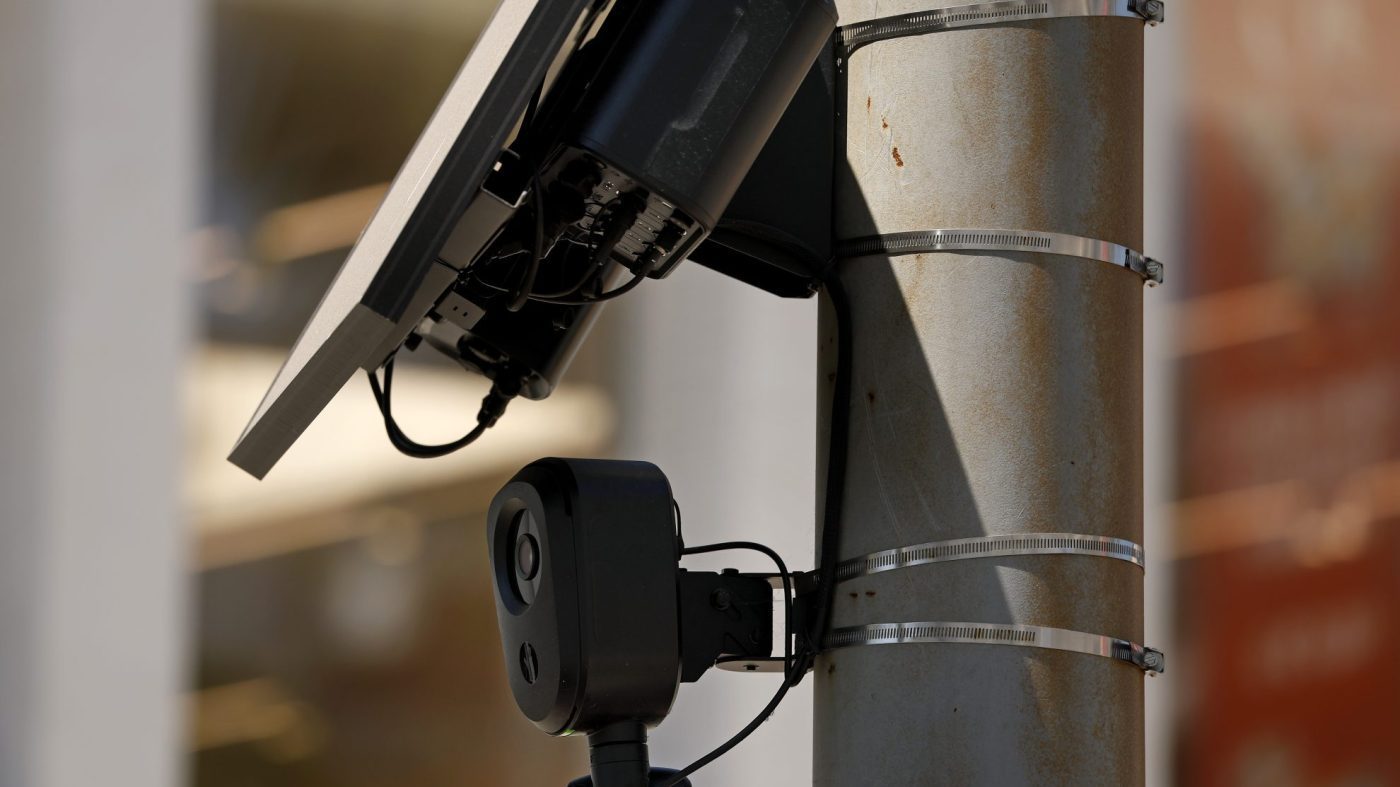
In recent months, Flock Safety has become a lightning rod for criticism over its network of automated license plate readers (ALPRs). But while Flock has drawn the most public scrutiny, it is far from the only company installing these surveillance cameras in communities across the United States.
Flock, which says it partners with more than 5,000 law enforcement agencies in 6,000 communities, has seen some cities pull the plug on its solar-powered devices. Yet the backlash has not halted the broader expansion of ALPR technology. Instead, some jurisdictions are simply switching to other vendors, including Axon, Motorola Solutions, and Genetec, which operate on similar business models but have largely escaped the same level of public attention.

According to DeFlock, a nonprofit that maintains a crowdsourced map of ALPR locations, about 82% of the roughly 138,000 cameras it has identified across the continental U.S. are made by Flock. Motorola Solutions accounts for about 5%, Genetec for 2%, and a long tail of smaller companies—including Axon, Axis Communications, and Neology—make up the rest.
The technology works the same regardless of the manufacturer: cameras mounted on poles or traffic lights capture images of every passing vehicle, logging license plates and sometimes even details like bumper stickers. That data is stored in searchable databases, which law enforcement can query to track a vehicle's movements over time.
Proponents argue these systems are invaluable for solving crimes, from stolen cars to hit-and-runs. But civil liberties advocates warn that the data can be used to build a detailed picture of anyone's life—not just suspects—without a warrant or meaningful oversight. The ACLU's Jay Stanley, a senior policy analyst on speech, privacy, and technology, notes that the policies governing data retention and sharing vary significantly between companies.
For instance, Flock and Motorola both allow nationwide data sharing among law enforcement agencies, while Axon does not. That difference matters, Stanley says, but he cautions that swapping one provider for another is not a cure-all.
"Communities can't simply assume that their residents will be better off from a privacy and civil liberties perspective by dropping Flock and replacing it with another ALPR provider," Stanley told Nexstar. "They should ask hard questions about whether they really want to create that kind of a system, and if they do, ensure it doesn't function as a mass surveillance system."
The debate has reached the halls of Congress. Rep. Thomas Massie has introduced a bill that would cut off federal funds for license plate surveillance, a direct challenge to the industry's growth. Meanwhile, cities like Dallas have voted to remove hundreds of Flock cameras after state funding dried up, and advocates are calling for more scrutiny as police surveillance networks expand.
Residents who want to know what's in their neighborhood can consult DeFlock's crowdsourced map, which relies on volunteers and OpenStreetMap contributors rather than official data. The map shows reported camera locations, but Nexstar could not independently verify the accuracy of every pin.
As the political and legal battles over surveillance continue, the key question is not just which company makes the cameras, but whether communities want this kind of monitoring at all—and under what rules.