Yerevan is set to host an unprecedented gathering of European leaders in early May, culminating in the first-ever European Union-Armenia summit. For a nation historically anchored within Russia's sphere of influence, this represents a profound and public realignment of its foreign policy trajectory. Armenia is actively moving toward Europe, and European institutions are responding with tangible commitments designed to solidify this new direction.
Moscow's Ultimatum
The Kremlin has moved swiftly to clarify the stakes of this shift. In a recent meeting, Russian President Vladimir Putin delivered a stark warning to Armenian Prime Minister Nikol Pashinyan: Armenia cannot simultaneously pursue deeper integration with the European Union while remaining a member of Russian-led economic and security structures. While framed as a technical argument about incompatible regulatory systems, the message carries profound geopolitical weight in a country where Russian military power is physically present and has long been presented as a security guarantee.

That guarantee, however, has been severely undermined. During the 2020 and 2023 conflicts with Azerbaijan, Russia failed to intervene militarily to support its treaty ally, despite deploying peacekeepers in the contested Nagorno-Karabakh region. When Azerbaijani forces advanced, Russian troops stood aside, precipitating a mass exodus of over 100,000 ethnic Armenians. For many in Armenia, this demonstrated that the security architecture binding them to Moscow was unreliable, a realization that now colors every diplomatic exchange.
A Regional Pattern of Coercion
Putin's warning is consistent with a long-standing Russian doctrine that treats the post-Soviet space as a privileged sphere of influence, where Western engagement is viewed as intrusion, not competition. This pattern, evident in the 2008 war with Georgia and the 2022 full-scale invasion of Ukraine, involves a combination of economic pressure, political interference, and military coercion aimed at obstructing sovereign choices by neighboring states. The resulting dynamic often leads to democratic backsliding, a grey-zone strategy Russia employs with consistency across its periphery.
Armenia now finds itself at an earlier stage of a similar test. The critical difference is that the geopolitical signals are clearer, and Western powers retain a narrow window to influence the outcome. The upcoming summits in Yerevan thus carry significance far beyond bilateral relations; they represent a test case for Western strategy in a region where Russian dominance is being challenged.
The Strategic Stakes of the South Caucasus
The South Caucasus occupies a crucial geographic crossroads, linking Europe to Central Asia. As the war in Ukraine disrupts traditional transit routes through Russia, alternative East-West corridors across the Caspian basin to the Black Sea have gained urgent strategic importance. These are not merely trade routes but instruments for diversifying energy flows away from Russia, building resilient supply chains, and reshaping regional alignments.
Armenia's role in this landscape remains undefined but potentially significant. Bordering NATO-member Turkey and adjacent to key transit corridors, it could become a stabilizing link in a broader network connecting Europe to Central Asia. Alternatively, if excluded, it risks geographic centrality paired with strategic irrelevance. The presence of European leaders must therefore translate into concrete structure: investment in connectivity, deeper economic integration, and robust mechanisms to help Yerevan withstand external pressure.
The Need for a Cohesive Western Response
Europe cannot anchor this shift alone. While the United States may not be central to the summit stage, it remains the decisive strategic actor. Washington possesses the financial, political, and security leverage required to make Armenia's westward pivot credible and durable. This entails backing critical infrastructure projects that physically link Armenia into East-West corridors and mobilizing both public development finance and private investment.
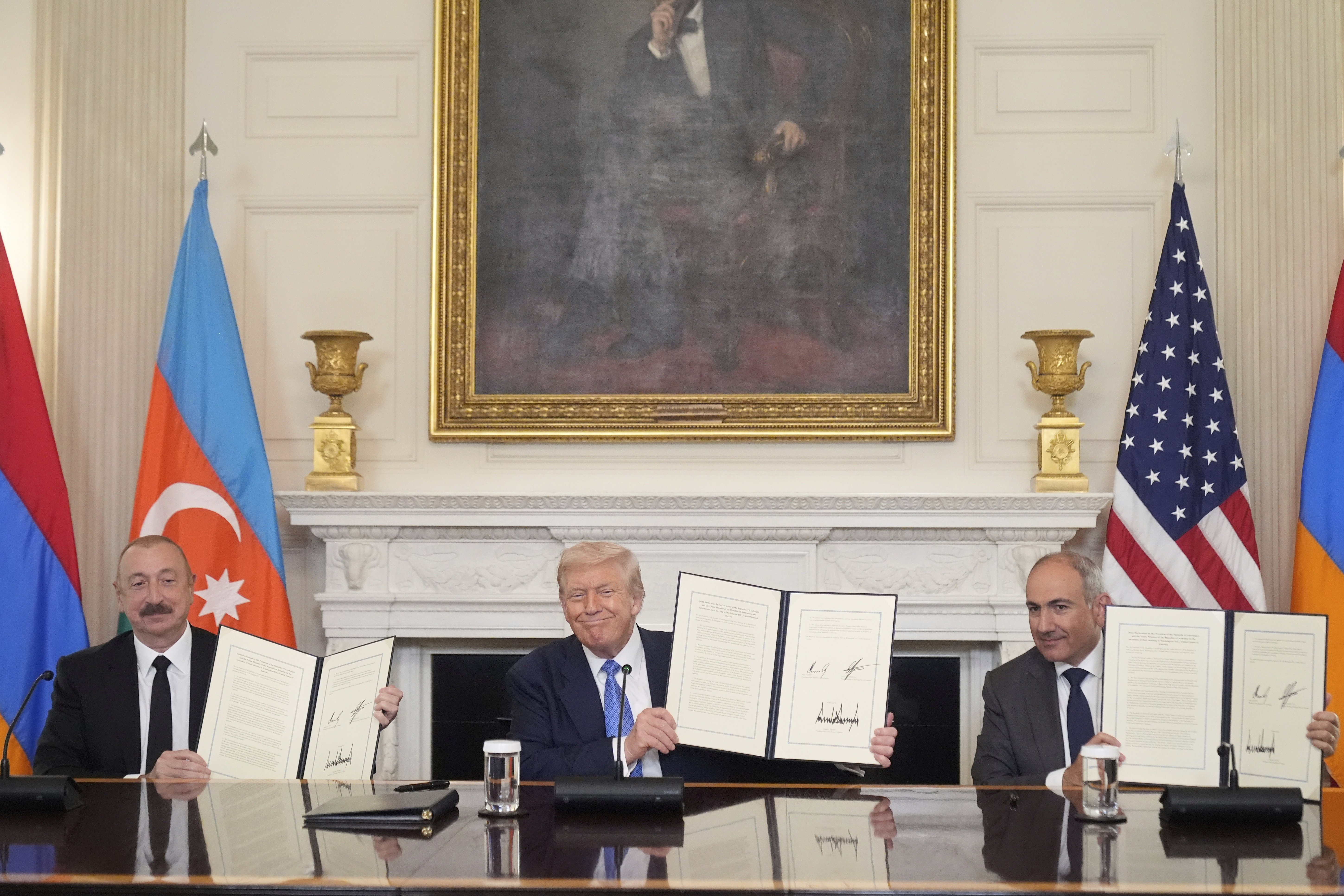
Notably, the previous administration laid groundwork through initiatives like the TRIPP corridor, which was championed last summer and credited with helping to calm tensions between Armenia and Azerbaijan. The current challenge is one of speed and coordination. The fundamental question for Western capitals is whether they can act with sufficient urgency and unity to ensure Armenia's strategic reorientation becomes permanent, transforming a moment of opportunity into a lasting realignment. This test comes as domestic political fractures in the U.S. could complicate a coherent foreign policy response.