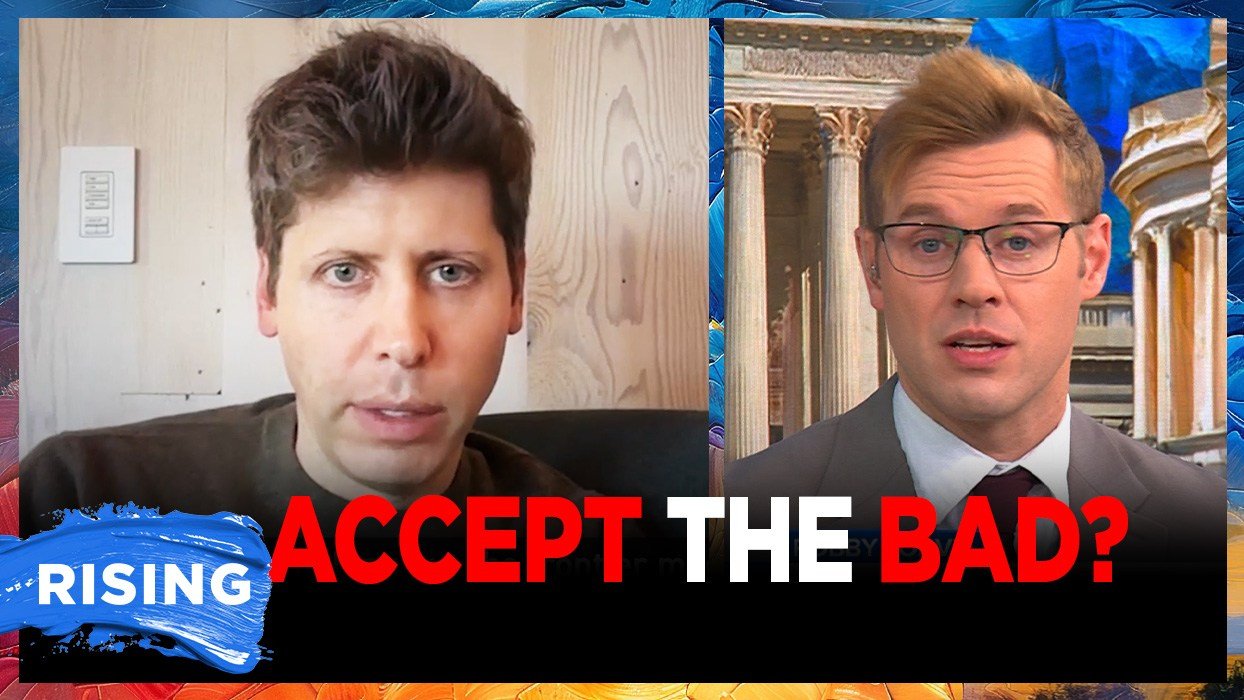
OpenAI chief executive Sam Altman has sparked fresh debate by suggesting that society should tolerate certain negative consequences of artificial intelligence in exchange for the technology's transformative benefits. His remarks, made during a recent appearance, have been interpreted by some as a willingness to accept collateral damage in the race for AI dominance.
Altman's position is straightforward: the immense potential gains in health, wealth, and longevity outweigh the risks of job displacement, privacy erosion, or other harms. He argues that every major technological leap has come with tradeoffs, and AI is no exception. Yet his framing has drawn sharp criticism, particularly from those who see it as a reckless endorsement of unbridled development.

His chief rival, Anthropic CEO Dario Amodei, has taken a markedly different stance. Amodei has repeatedly called for cautious, incremental progress and has advocated for robust government oversight. He has even suggested that control of advanced AI systems might need to be shared with international bodies to ensure safety.
The contrast between the two leaders has become a defining fault line in the AI industry. Altman's comments, while controversial, reflect a pragmatic view that innovation inevitably brings both benefits and costs. He points to the automobile as a historical example: thousands die in car accidents each year, yet society accepts that toll because of the mobility and convenience cars provide.
Supporters of Altman argue that the same logic applies to AI. They note that driverless vehicles, for instance, could save tens of thousands of lives annually, even if they are involved in occasional accidents. The real question, they say, is not whether AI causes harm, but whether the net effect is positive.
Amodei's approach, by contrast, leans on precaution. He believes that politicians and regulators should set strict limits on AI development, a view that Altman and his backers dismiss as unrealistic and potentially harmful. They argue that government intervention often lags behind technological reality and can stifle innovation.
Some observers see a middle ground, noting that legal systems can adapt organically. The famous McDonald's coffee lawsuit, for example, led to changes in corporate behavior without explicit legislation. Similarly, courts could help define the boundaries of AI accountability as cases arise.
Altman's remarks have also reignited concerns about the concentration of power in the tech industry. Critics worry that his acceptance of tradeoffs could justify a regulatory capture that benefits incumbents. Meanwhile, reports of AI agents probing federal systems have added to the unease.
Ultimately, the debate boils down to a fundamental question: how much risk is acceptable in the pursuit of progress? Altman's answer is clear: quite a lot, if the payoff is substantial. Amodei's is equally clear: not much, unless safeguards are in place. The coming months will reveal which philosophy gains the upper hand in Washington and Silicon Valley.