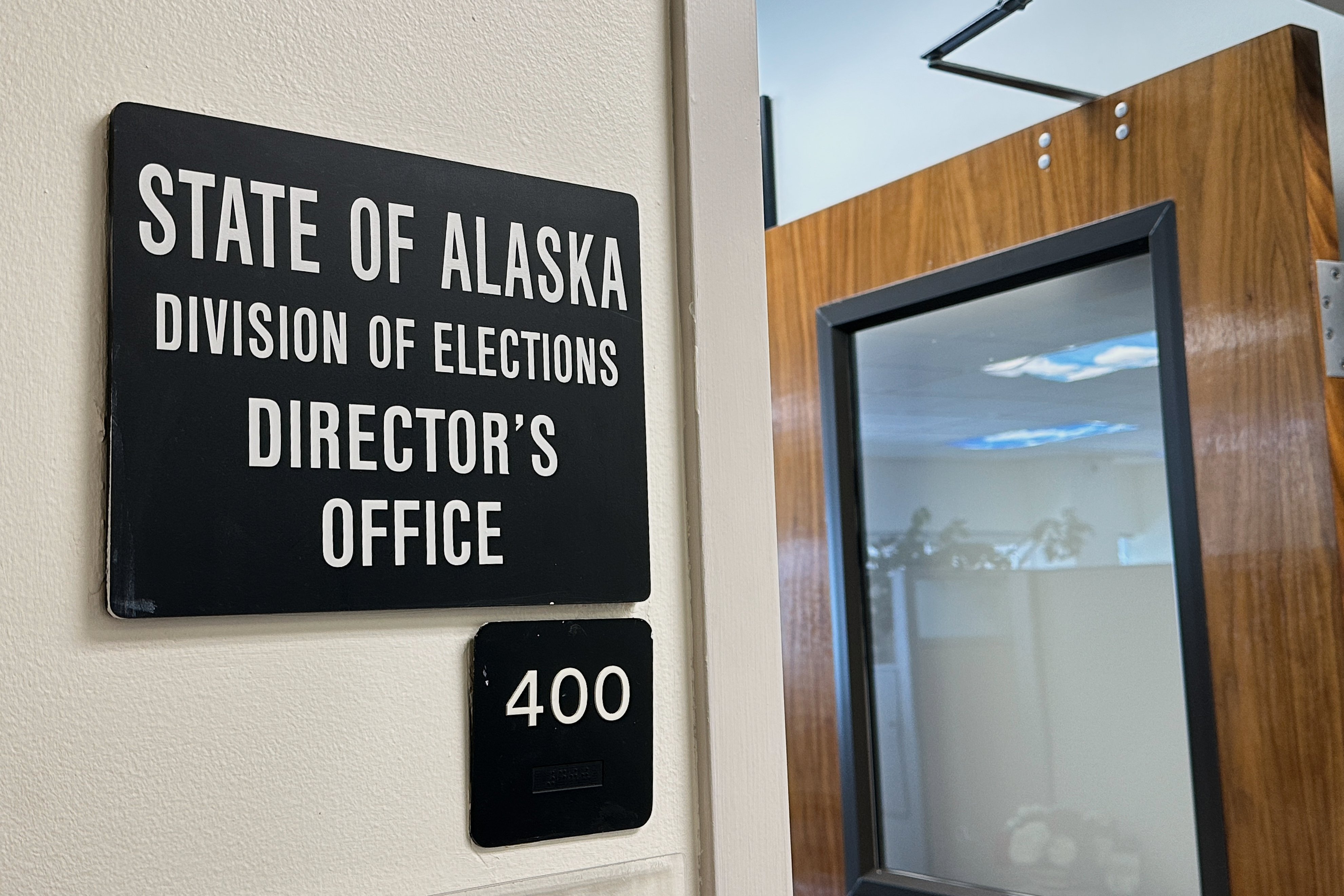
Alaska election officials have removed a candidate with the same name as incumbent Republican Sen. Dan Sullivan from the ballot, ruling that his bid was filed in bad faith and designed to mislead voters.
In a letter Monday, Carol Beecher, director of the Governor's Division of Elections, told Daniel J. Sullivan Jr. that his declaration of candidacy was not properly filed under state law. “On review of the complaints and other information in the Division’s possession, I conclude that your declaration of candidacy was not properly filed…because it was not filed in order to declare an actual good-faith candidacy for the office of United States Senator, but was instead filed with a purpose to confuse or mislead and to thereby compromise the ballot’s fairness or neutrality,” Beecher wrote.
The National Republican Senatorial Committee had pushed for an investigation earlier this month, sending a 25-page letter to Beecher detailing similarities between the two campaigns. Beecher cited several red flags: the new candidate’s recent switch to the Republican Party, a campaign website that closely mirrored the senator’s, and ties to a political consultant who works for a Democratic challenger to Sullivan.
“A declaration of candidacy filed for the purpose of confusing or misleading voters and compromising the fairness of the ballot is not properly filed as required by Alaska Statute 15.25.060,” Beecher wrote, adding, “As such, I am unable to maintain your declaration of candidacy and I am de-certifying your candidacy for United States Senator.”
Daniel J. Sullivan Jr. has 30 days to appeal the decision in Alaska Superior Court, but ballots are set to be printed on June 28. Local news reports note that Sen. Dan Sullivan is registered to vote under the name Daniel Scott Sullivan, raising questions about how closely names matched.
The disqualified candidate previously described sharing the senator’s name as a “matter of fate.” Last week, he argued that efforts to remove him “create the impression that the state government is being used to protect an incumbent senator from facing competition at the ballot box.” Some Alaskans protested the decision outside the Division of Elections in Juneau, according to The Associated Press.
This case echoes broader concerns about ballot integrity and the use of similar names to confuse voters. In related coverage, Rainn Wilson slammed both parties for hypocrisy over a Maine candidate's Nazi tattoo, highlighting how candidate controversies can test party lines. Meanwhile, Stephen A. Smith has ruled out VP and Senate bids, eyeing only the presidency, showing how name recognition and political ambition can shape races.
The decision underscores the legal and political stakes in Alaska, where the Senate seat is competitive. With ballots printing soon, the state faces a tight timeline to resolve any appeal. The case also raises questions about how election officials police candidate intent, especially when names and branding overlap.