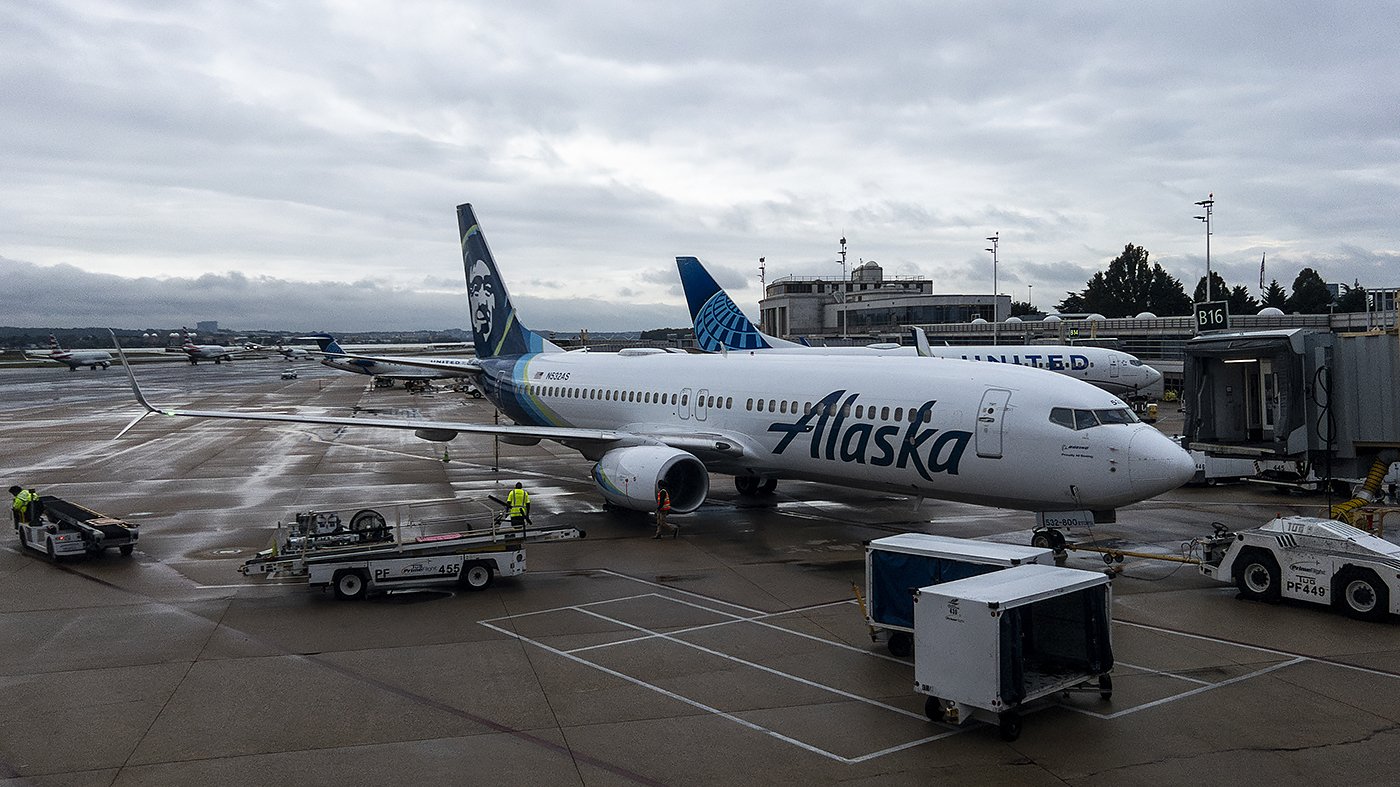
Authorities determined that a Sunday evening disturbance aboard an Alaska Airlines flight from Miami to Seattle posed no credible threat, though the incident prompted the pilot to initiate a lockdown protocol and request police assistance.
The flight, operating as Alaska Airlines Flight 305, had already landed when the pilot radioed air traffic controllers about a customer disturbance that escalated to threats against flight attendants. According to audio obtained by ATC.com, the pilot stated: “We have set the parking brake, and we have a customer disturbance on board right now, with threats coming from customers. We want to go into a lockdown protocol. We are shutting down our engine, and the parking brake is set.”
In a subsequent transmission, the pilot clarified that “the flight attendants have received threats from customers on board the aircraft” and asked controllers to notify law enforcement. The Miami-Dade Sheriff’s Office dispatched deputies to the scene, but after interviewing those involved, they concluded there was no credible threat.
Two individuals connected to the disturbance were later rebooked on a different flight, according to CBS News. Alaska Airlines did not immediately respond to requests for comment, but the airline has not reported any injuries or further security concerns.
The incident comes amid heightened scrutiny of in-flight behavior and aviation security protocols. While this case ended without charges or a formal security alert, it underscores the challenges crews face when passenger disputes escalate. Airlines have increasingly adopted stricter policies on unruly passengers, and the Federal Aviation Administration has maintained a zero-tolerance approach to such incidents.
This episode also highlights the broader operational pressures on carriers, particularly as climate-related disruptions, such as heat waves that threaten more flight delays, add to the complexity of managing daily schedules. While Sunday’s disturbance was resolved quickly, any lockdown or diversion can ripple through an airline’s network, affecting connecting passengers and crew rotations.
For passengers, the key takeaway is that airlines and law enforcement treat any threat seriously, even if it turns out to be unfounded. The quick response by the pilot and the deputy’s on-site assessment prevented the situation from escalating further. As one aviation safety expert noted, “The protocol worked as designed: the crew secured the cockpit, notified ground authorities, and law enforcement made an immediate determination.”
In the broader political context, this incident is a reminder of the ongoing debates over aviation security funding and passenger rights. Lawmakers have occasionally raised concerns about the adequacy of federal air marshal coverage and the need for better mental health support for travelers. While no policy change is expected from this single event, it may feed into discussions about legal and political roadblocks facing broader transportation reforms.
For now, Alaska Airlines is expected to review its internal handling of the disturbance, and the two rebooked passengers will continue their journeys separately. The airline has not indicated whether any further action, such as a ban or legal referral, will be taken.