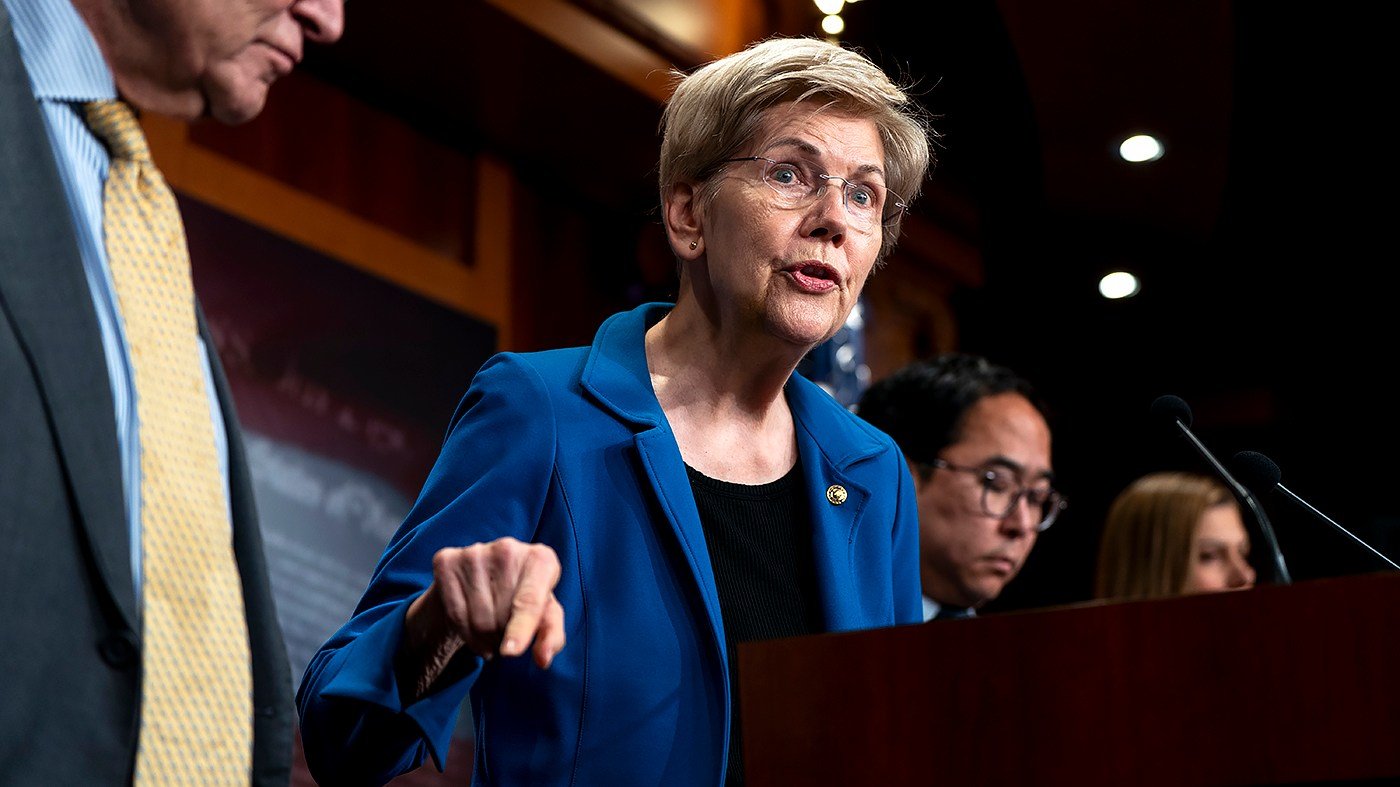
Sen. Elizabeth Warren (D-Mass.) is pressing for a formal investigation into who authorized the recent restrictions on Ukraine's access to the Starshield satellite network, warning that allowing one individual to shape U.S. foreign policy creates an "enormous risk" for the nation.
"We'd like to know exactly who is responsible for what happened," Warren told CNN's Kaitlan Collins, reacting to reports that Ukraine lost full functionality of the military-grade internet service, which it relies on to operate drones and other battlefield systems. Warren, a member of the Senate Armed Services Committee, did not mince words: "If it is one man, Elon Musk, who is dictating our foreign policy, then he puts the United States at enormous risk."
The controversy stems from reporting by the Wall Street Journal and CBS News that Musk, the founder and CEO of SpaceX—which operates Starlink and its defense-focused sibling, Starshield—ordered a reduction in data speeds for Ukraine. That slowdown crippled Kyiv's ability to fly drones and other unmanned vehicles to counter Russian attacks, at a time when Moscow has intensified strikes on Ukrainian energy infrastructure and civilian targets.
According to the Journal, Musk and President Donald Trump discussed the decision to cap Ukraine's access shortly after the slowdown became public. Warren suggested that if Trump was behind the move, it underscores the need for a Democratic majority in Congress. "If Donald Trump is the one who made this decision, then I will just say that's one more reason we need a democratic majority in the House and the Senate so that we can actually put some constraints on Donald Trump, so that we can investigate and get to the bottom of this," she said.
Other Democrats have also voiced alarm. Sen. Chris Coons (D-Del.), a senior member of the Senate Foreign Relations Committee, wrote on X: "Elon Musk shouldn't have the power to influence the outcome of a war with the flip of a switch. Yet he and Trump seem determined to put their finger on the scale for Putin."
Musk, however, has pushed back, asserting that Starshield is owned and operated by the U.S. government. "Starshield systems are owned and controlled by the US government. Any limits on speed or usage are decided by the US military and ultimately POTUS," he posted on X, the platform he owns. That statement appeared to shift responsibility to the Pentagon.
Defense Secretary Pete Hegseth offered a different interpretation, suggesting that Ukraine may have breached its agreement with the satellite provider. "We haven't pulled anything back," Hegseth told reporters. "There are terms of service that ultimately need to be complied to, and that's where Starlink has the option to make those decisions."
The murky chain of command has prompted a bipartisan group of senators—including Republicans John Cornyn (Texas), Thom Tillis (N.C.), Susan Collins (Maine), and Lisa Murkowski (Alaska)—to ask the Defense Department's inspector general to investigate whether senior Pentagon officials ordered or had advance knowledge of the restrictions. The inquiry aims to clarify whether the decision was made by military leadership, the White House, or Musk himself.
Warren's call for accountability comes amid broader concerns about the influence of private tech billionaires on national security. She has previously raised alarms about Musk's role in government contracts, and her latest remarks reflect a growing unease on Capitol Hill about the concentration of power in unelected figures. As the investigation unfolds, the question remains: who ultimately controls the tools that Ukraine needs to defend itself?