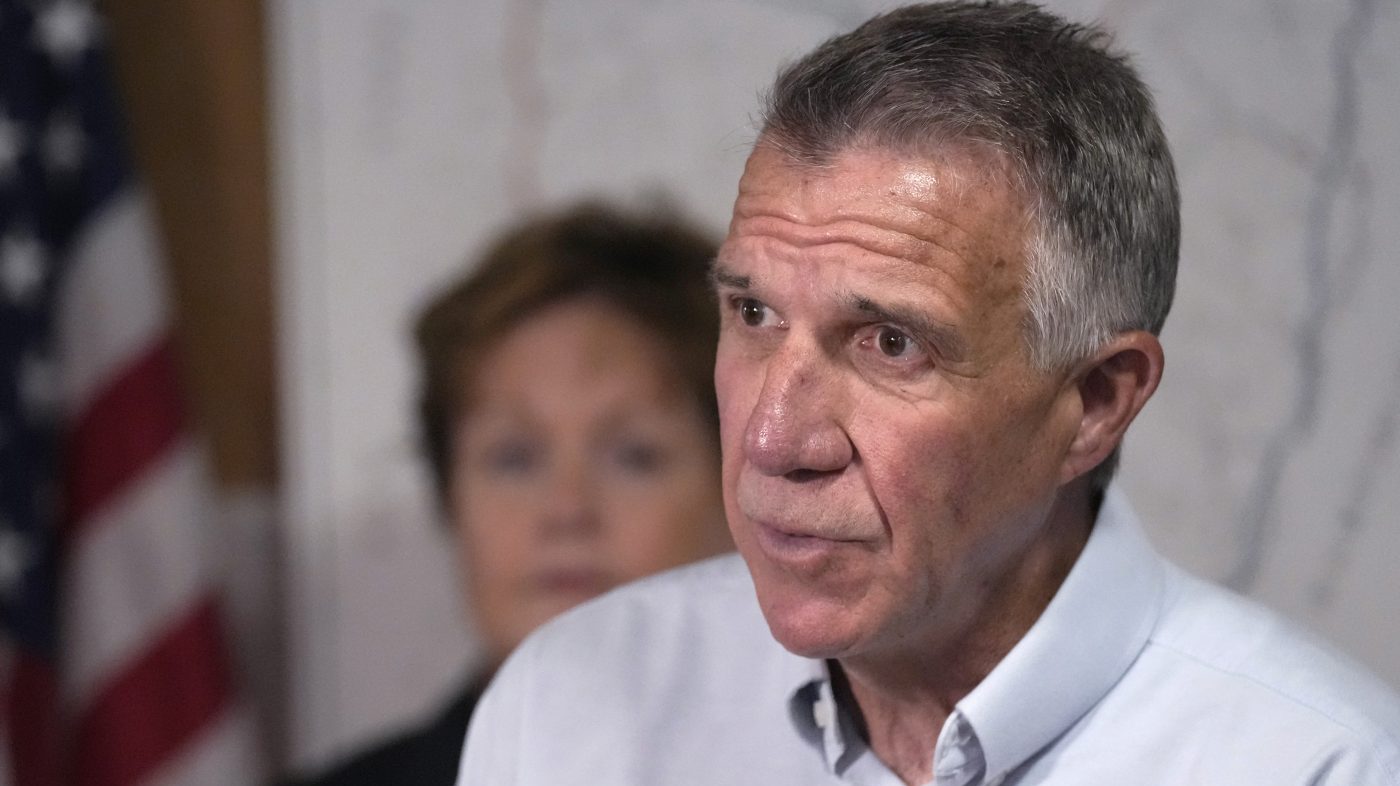
Vermont's Republican Gov. Phil Scott will square off against progressive Democrat Amanda Janoo in the state's November gubernatorial election, according to Decision Desk HQ projections. Scott, who has held the office since 2016, is seeking a sixth term, while Janoo, an economist and political newcomer, is making her first bid for public office.
Scott, widely regarded as a moderate Republican, has frequently broken with former President Trump on key policies, including tariffs and the deployment of National Guard troops to cities. In his last reelection, he captured more than 73 percent of the vote, underscoring his broad appeal in the largely Democratic state.
The Cook Political Report rates the race as "solidly Republican," and recent polling supports that assessment. A University of New Hampshire survey from July showed Scott leading Janoo 44 percent to 33 percent among likely voters, with 78 percent of Republicans and 47 percent of independents backing the incumbent.
Scott's campaign has emphasized his record of fiscal management and bipartisan cooperation. In his May announcement, he pledged to continue working on affordability and community vitality. "After many years of public service, I believe most Vermonter[s] appreciate my work ethic, and if you elect me to another term, I'll do all I can to leave Vermont in better shape than I found it," he said.
Janoo, who launched her campaign in April, is running on a platform that includes tackling rising education costs, expanding healthcare access, and increasing affordable housing. She has framed her candidacy as a rejection of the status quo. "I'm running for Governor because I refuse to accept that collapse is inevitable or that the best a Governor can do is manage decline," she stated. "I've spent my career working with governments, here and around the world, to define long-term goals and design innovative economic strategies needed to achieve them — and I believe those are governance skills Vermont needs right now."
Scott's political career includes stints as lieutenant governor and state senator, giving him deep institutional experience. His moderate stance has sometimes put him at odds with the national GOP, but it has also helped him maintain crossover support in a state that hasn't backed a Republican for president since 1988.
The race is part of a broader national pattern where progressive challengers are testing the limits of their appeal in statewide contests. As the progressive movement faces its own tests, Janoo's campaign will be watched for signs of whether left-wing economics can break through in a state that already leans Democratic.
Scott's ability to attract independent voters, who make up a significant share of the electorate, will likely be decisive. His record of vetoing Democratic spending plans and his opposition to certain federal mandates have endeared him to moderates, even as progressives argue that more aggressive action is needed on climate and social programs.
With the November election approaching, both candidates are expected to focus on economic issues, particularly the high cost of living in Vermont. Scott has touted his stewardship during the pandemic and his efforts to reduce property taxes, while Janoo is pushing for systemic reforms that she says will address the root causes of inequality.
As the campaign unfolds, national observers will also be watching whether Janoo can consolidate Democratic support and close the gap. While Scott remains the heavy favorite, the dynamics of a state that has trended further left in recent years could make the race more competitive than the fundamentals suggest.