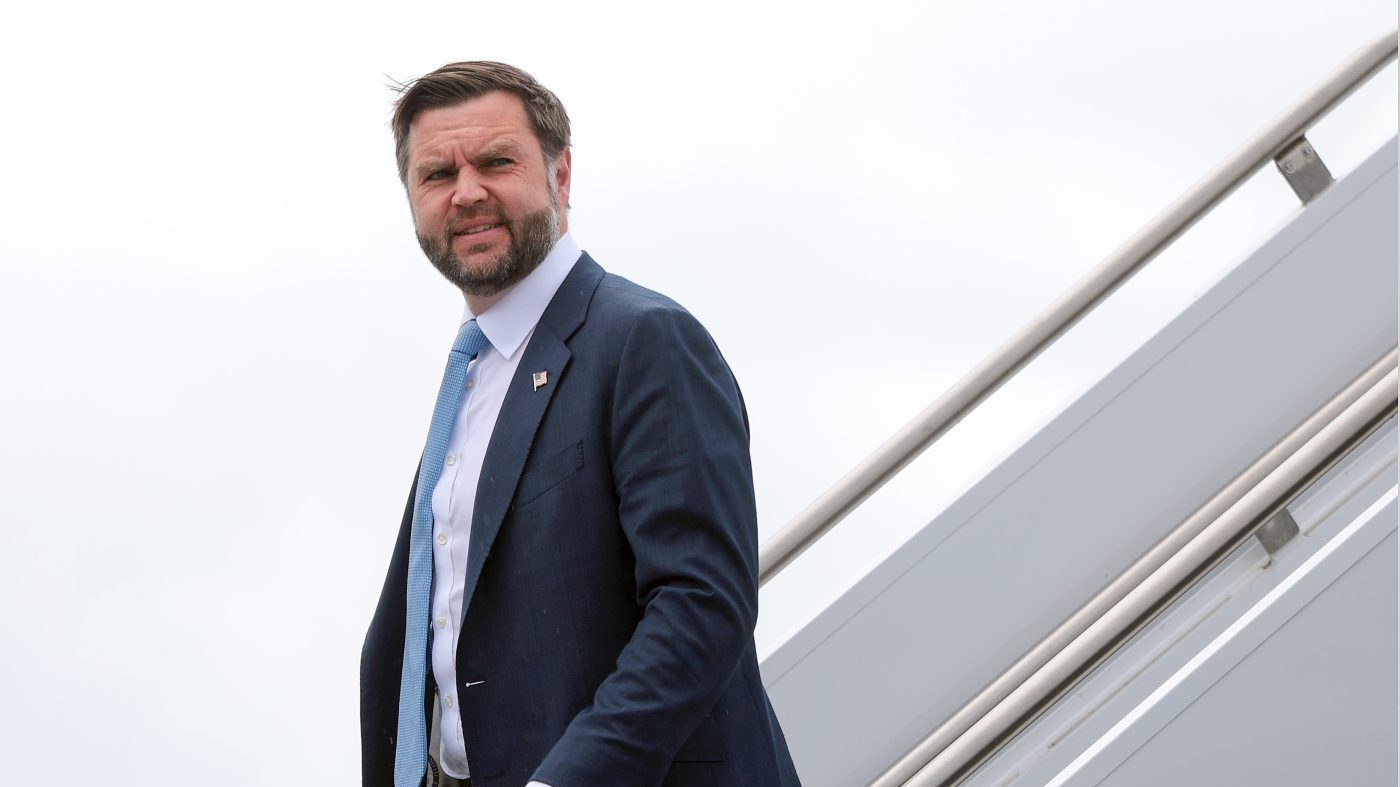
Vice President Vance said Monday that President Trump's social media post showing an apparent AI-generated depiction of Iran's Kharg Island being destroyed was a deliberate signal to Tehran, not a preview of imminent military action.
Speaking to reporters at Joint Base Andrews before departing for Michigan, Vance said Trump "would be the first to say he doesn't make announcements about military actions on social media, but I think that he's sending a message to the Iranians." The video, posted on Trump's Truth Social account, shows an explosion on the island, which serves as a major Iranian oil export terminal.
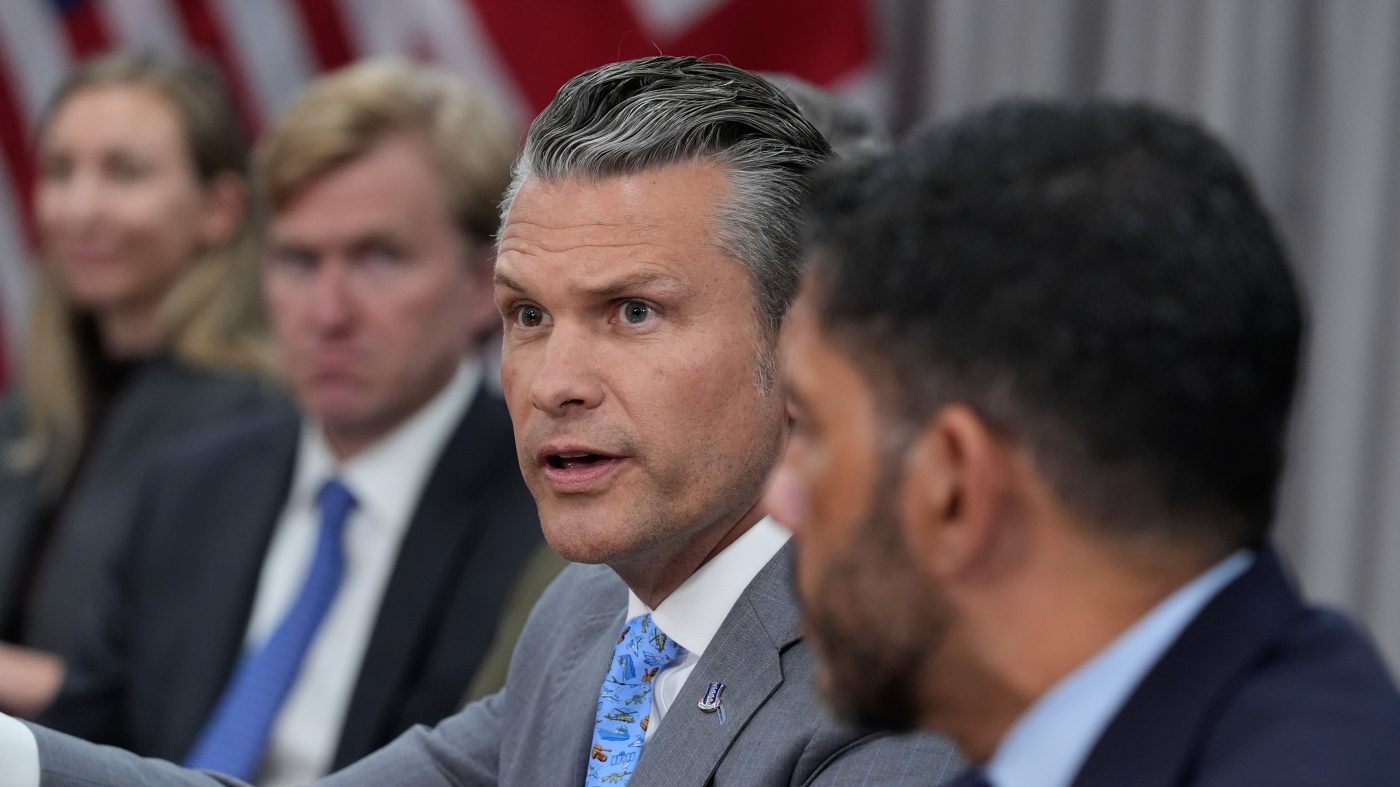
Vance framed the post as part of a broader pressure campaign. "Look, we know that they continue to shoot at commercial shipping. We continue to have a lot of tools at our disposal to prevent them from doing so, or at least cut down on them from doing so," he said. "And that's what the president is saying is, 'Look, you guys are shooting at commercial shipping. You guys are behaving like a terrorist country. You've got to stop, or there's going to be some consequences.'"
The remarks come after the U.S. and Iran exchanged direct strikes over the weekend, ending a lull of more than a month in hostilities. On Sunday, U.S. forces targeted two Iranian rocket launchers on Larak Island, another strategic site in the Strait of Hormuz. A U.S. Central Command spokesperson said the strike was launched after American forces observed Islamic Revolutionary Guard Corps (IRGC) personnel "preparing to launch rockets with sea mines" into the vital waterway.
Iran responded early Monday with attacks on U.S. military assets at bases in the United Arab Emirates and Jordan. The IRGC, in a statement carried by the state-run Fars News Agency, warned that "aggression and crimes will not solve the enemy's desperation in attempting to weaken the Islamic Republic's control over the Strait of Hormuz, and every attack will be met with even more devastating responses."
President Trump, in an interview with Fox News on Monday, vowed a forceful reply. "We're going to hit them hard. There will be a response," he said. That pledge aligns with his earlier threats of retaliation following the Iranian strikes.
The escalation has heightened concerns about a broader conflict in the Gulf, a region through which about a fifth of global oil supplies transit. The Strait of Hormuz remains a flashpoint, and the U.S. has repeatedly accused Iran of harassing and attacking commercial shipping. Iran, for its part, insists it is defending its sovereignty and has threatened to close the strait if its interests are threatened.
Vance's comments suggest the administration is walking a fine line: using provocative imagery to signal resolve while avoiding public declarations that could be seen as committing to a specific military course. "He's not going to telegraph his punches," Vance said, adding that the video was "a way of saying, 'We see you, and we're not going to back down.'"
The situation remains fluid, with diplomatic channels largely dormant and both sides bracing for further exchanges. As domestic political dynamics play out, the administration's handling of the Iran crisis is likely to face scrutiny from both hawks and those wary of another Middle East entanglement.