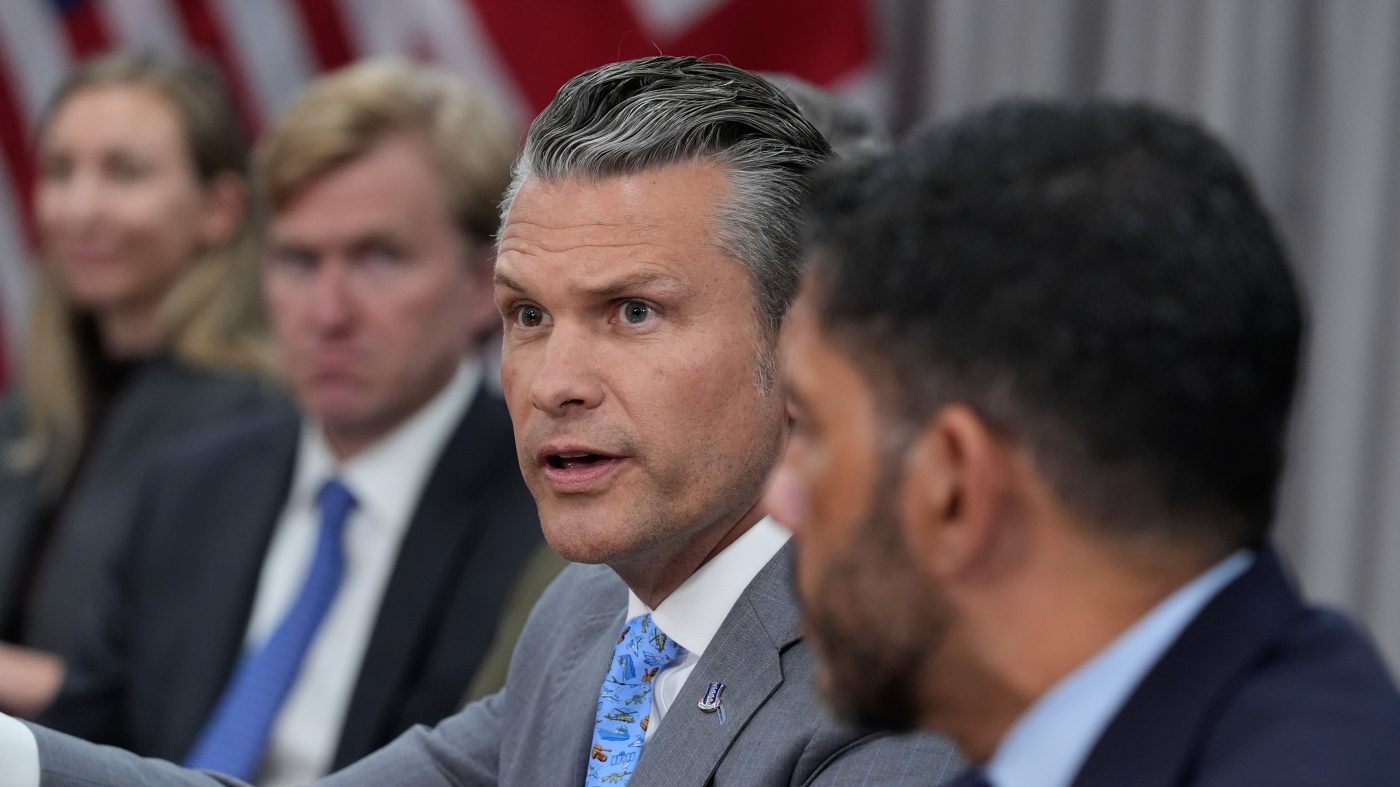
Defense Secretary Pete Hegseth is “completely aligned” with President Trump’s decision to cancel the planned livestream of the execution of Nidal Malik Hasan, the Fort Hood shooter, a Pentagon spokesperson said Thursday.
Chief Pentagon spokesperson Sean Parnell told reporters that Trump and Hegseth discussed the matter before the president announced the reversal Wednesday on Truth Social. “The secretary supports the president’s decision, and they are completely aligned,” Parnell said.
The about-face came after Hegseth earlier this month surprised even close observers by declaring that Hasan’s death would be broadcast publicly. The move drew swift condemnation from lawmakers in both parties, who argued it would turn a solemn act of justice into a spectacle. Vice President Vance, while backing the death sentence, said he had no intention of watching.
In his Truth Social post, Trump blamed the Obama administration for the 2009 attack, calling it a “key intelligence failure.” He acknowledged the criticism, saying that while Hasan deserved to die, the execution would not be livestreamed. Trump suggested the broadcast might have deterred potential terrorists but added that “many very good and well meaning people would rather not watch him die, through streaming, or through any other visual device.”
The president said the immediate families of the victims may attend the execution in person if they choose. Hasan, a former Army major, killed 13 people and wounded more than 30 others in the November 2009 rampage at the Fort Hood processing center—the deadliest mass shooting ever on a U.S. military installation.
Republican lawmakers had led the pushback against Hegseth’s original plan. Sen. John Curtis (R-Utah) said last week that “a civilization erodes when it cultivates an appetite for executions as a form of entertainment,” warning that the livestream would “risk feeding that appetite.” Others compared the proposal to the tactics of authoritarian regimes.
The episode has also intensified a broader debate over capital punishment. Advocates on both sides pointed to the controversy as evidence of deeper problems, with some citing botched executions and the livestream plan as new fuel for efforts to abolish the death penalty.
Trump’s decision avoids a potential political headache for the White House, which had faced questions about whether it would allow a public execution to proceed. The president’s statement sought to have it both ways—defending the death sentence while bowing to the concerns of those who found the broadcast distasteful.
Hegseth, for his part, has now publicly aligned himself with the president’s final call, closing a brief but contentious chapter that had put the Pentagon at the center of a national debate over crime, punishment, and the limits of public exposure.