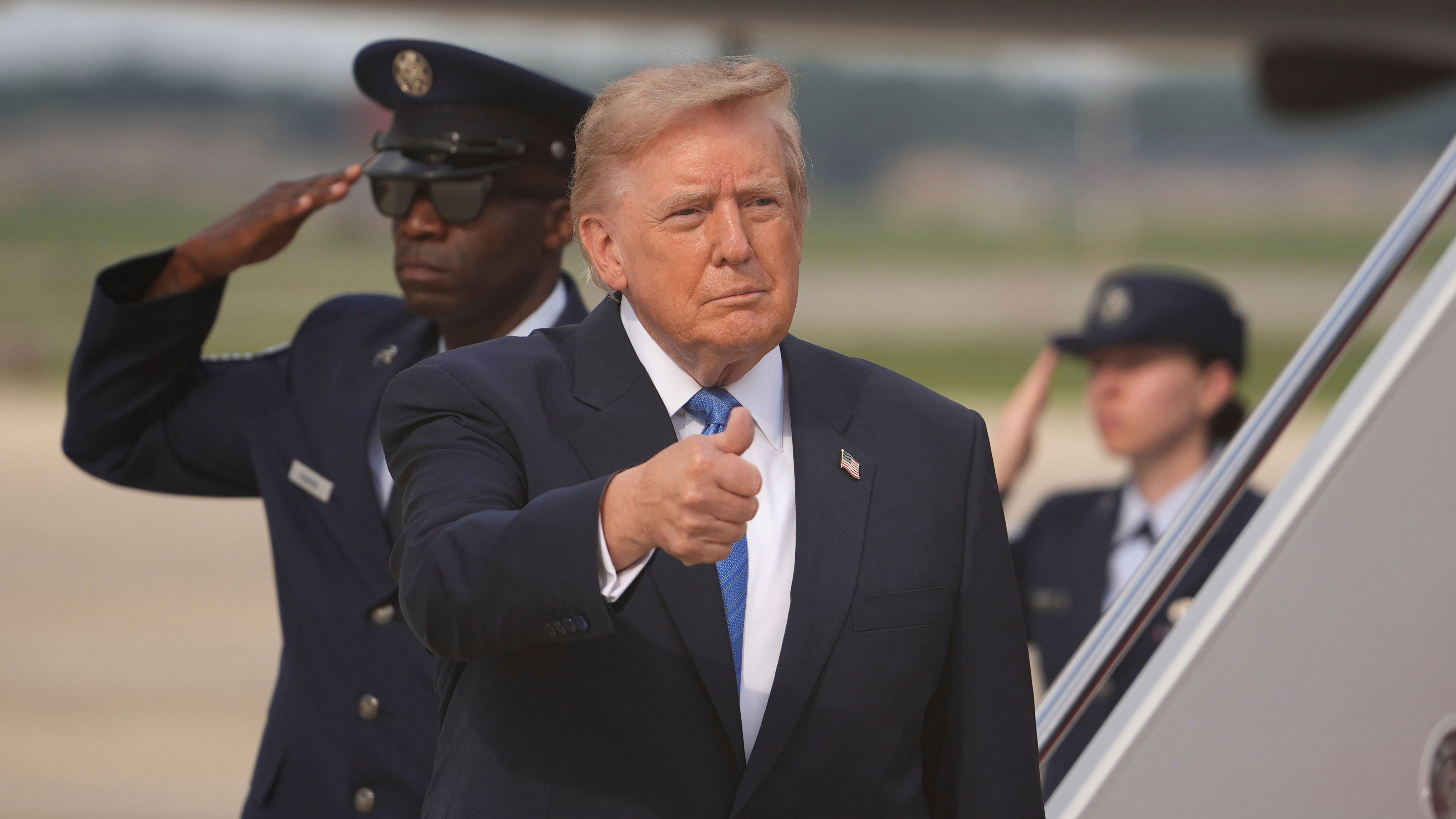
President Trump said Monday that the United States will deliver a forceful response to Iran's retaliatory strikes, which targeted American military assets in the Gulf region overnight. In an interview with Fox News correspondent Trey Yingst, Trump declared, "We're going to hit them hard. There will be a response."
The president's remarks came after he took to Truth Social to denounce Iran as a "failed nation," citing its lack of a credible navy, air force, or stable currency. He pointed to rampant inflation, unpaid soldiers and police, and a leadership in disarray, accusing Tehran of killing over 100,000 protesters and mocking what he called a "good line of 'BULL—.'"
The latest escalation began Sunday when U.S. forces struck two Iranian rocket launchers on Larak Island, according to a Central Command spokesman. The strike was justified as a preemptive measure, with U.S. military officials saying they observed Islamic Revolutionary Guard Corps (IRGC) personnel "preparing to launch rockets with sea mines" into the Strait of Hormuz, a critical chokepoint for global oil shipments.
Iran responded early Monday by targeting U.S. bases in the United Arab Emirates and Jordan. The IRGC, in a statement carried by the state-run Fars News Agency, warned that "aggression and crimes will not solve the enemy's desperation in attempting to weaken the Islamic Republic's control over the Strait of Hormuz," adding that "every attack will be met with even more devastating responses."
The tit-for-tat strikes sent shockwaves through energy markets. September Brent crude futures jumped 3.4% to $91.09 per barrel in early trading, while West Texas Intermediate also rose 3.4% to $86.22, reversing some of last week's declines.
This confrontation marks the first U.S. attack on Iranian soil in over a month, signaling a new phase in the ongoing standoff. The administration's broader strategy on oil prices remains under scrutiny as it navigates both military and economic pressures.
Analysts warn that the exchange could spiral into a wider regional conflict, particularly given Iran's repeated threats to disrupt shipping through the Strait of Hormuz, which carries about a fifth of global oil consumption. The Pentagon has not yet detailed the scope of the promised U.S. response, but Trump's language suggests a significant military escalation may be imminent.
The situation also complicates the political landscape for Republicans as they prepare for midterm elections, with some lawmakers expressing concern about the costs of an extended military engagement abroad. Meanwhile, Trump's combative rhetoric on social media has drawn both support and criticism, with some allies urging caution and others backing a hardline approach.
As the world watches, the immediate focus remains on whether the U.S. will follow through on Trump's pledge and what form that retaliation might take. The White House has not set a timeline, but officials indicate that options are being reviewed, ranging from targeted strikes to broader economic measures.