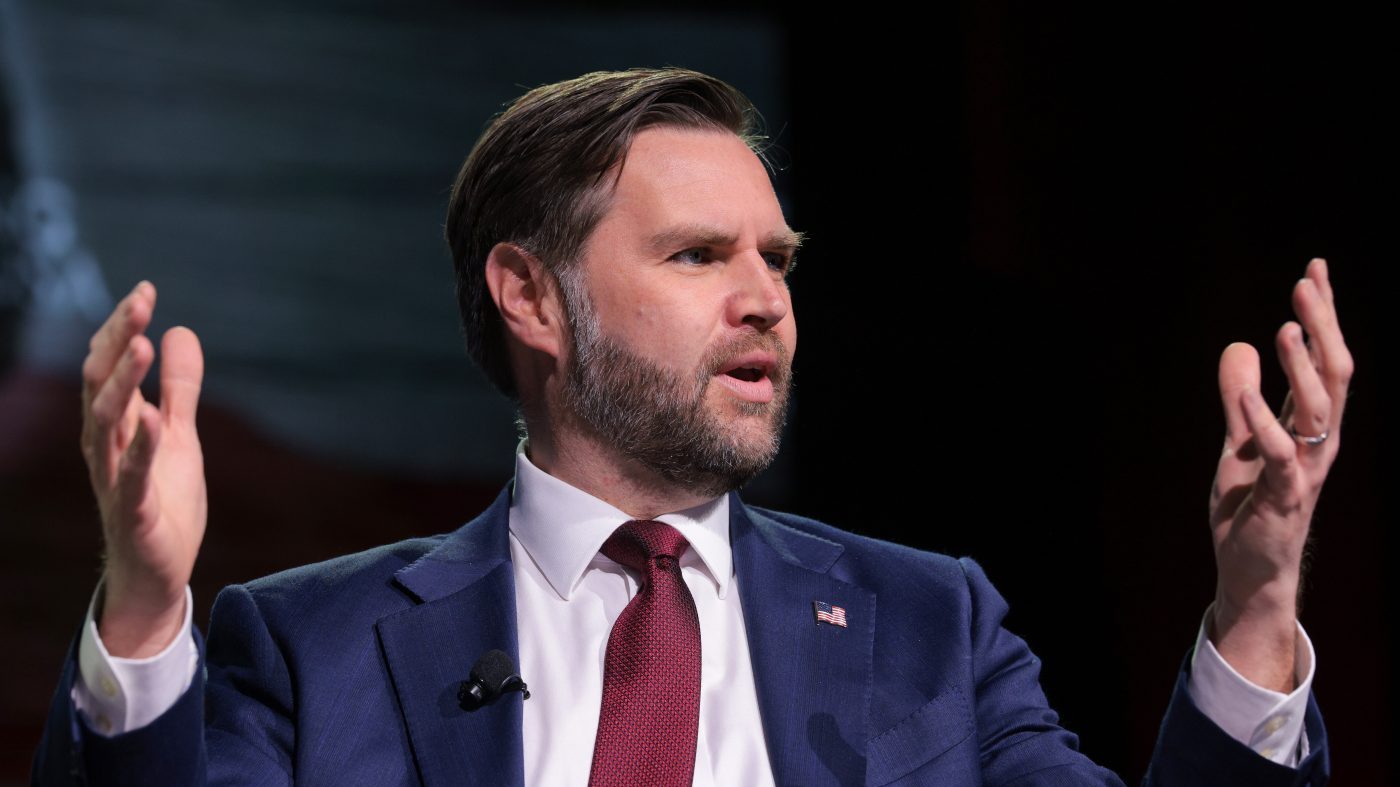
Vice President JD Vance confronted a skeptical young conservative audience in Georgia on Tuesday, openly admitting that a core part of the Republican base remains at odds with President Trump's foreign policy in the Middle East. Speaking at a Turning Point USA event in Athens, Vance sought to defend the administration's approach toward Iran and the ongoing conflict in Gaza while fielding pointed interruptions from attendees.
The event was marked by vocal dissent roughly ten minutes after it began, with one protester shouting, "Jesus Christ does not support genocide!" and later, "You're killing children! You're bombing children!"—a clear reference to Israeli military operations in Gaza. The heckling, reported by The New York Times, underscored the deep divisions within the GOP coalition over the administration's support for Israel's campaign against Hamas.
"I recognize that young voters do not love the policy we have in the Middle East, OK," Vance stated in response to the tension. "I understand." He pivoted to listing what he framed as the administration's domestic victories, from immigration enforcement to economic measures, urging the crowd not to disengage over a single issue. "I'm not saying you have to agree with me on every issue. What I'm saying is don't get disengaged because you disagree with the administration on one topic," Vance argued. "Get more involved. Make your voice heard even more. That's how we ultimately take the country back."
Addressing Religious and Diplomatic Tensions
Vance, the second Catholic to hold the vice presidency, directly engaged with the religious dimension of the protest. He agreed that "Jesus Christ does not support genocide" and pointed to a temporary ceasefire between the U.S. and Iran as an achievement for which the audience should be grateful. He contrasted the administration's actions with those of its predecessors, claiming it has "tried as much as we can to solve the problems, not just complain about them like the guy who just ran away."
The discussion also turned to the escalating public rift between President Trump and Pope Leo XIV, who has been a vocal critic of U.S. and Israeli military actions. Trump has previously labeled the pontiff "weak" on crime and suggested his election was influenced by Trump's own presidency. This conflict mirrors other tensions where Trump administration officials have urged church leaders to avoid policy critiques.
In remarks to Fox News on Monday, Vance advised the pope to "stick to matters of morality, to stick to matters of what's going on in the Catholic Church and let the president of the United States stick to dictating American public policy." However, at the Georgia rally, he struck a more conciliatory tone, welcoming dialogue from the Vatican. "At the very least, they invite conversation," he said, according to The Associated Press.
Invoking Just-War Doctrine
Referencing the pope's criticisms of the conflict with Iran, Vance invoked Catholic theological tradition. "There is more than a thousand-year tradition of just-war theory, OK?" he stated. "Now, we can of course have disagreements about whether this or that conflict is just. But I think that it's important, in the same way that it's important for the Vice President of the United States to be careful when I talk about matters of public policy, I think it's very, very important for the pope to be careful when he talks about matters of theology."
The event highlighted the challenging political landscape Vance and Trump must navigate as they seek to consolidate support ahead of the next election. The public disagreement with the pope and the visible unrest among young conservatives point to broader ideological fractures. These internal GOP dynamics are not isolated, as seen in recent divisions over political shifts in allied nations like Hungary. Furthermore, the administration's assertive national security posture, including in the Middle East, continues to evolve within a changing international legal framework regarding the use of force.
Vance's appearance served as both a defense of current policy and an attempt at political damage control, aiming to keep a key demographic within the Republican fold despite profound policy disagreements. The administration's ability to maintain this coalition may depend on emphasizing domestic priorities while managing foreign policy controversies that resonate on moral and religious grounds for many voters.