The Department of Agriculture has floated a plan to accelerate slaughterhouse line speeds for poultry and pigs, arguing it will cut food costs and bolster economic freedom. But critics say the move masks a deeper moral crisis: the mass slaughter of nearly 10 billion land animals annually in conditions that often fail to ensure they are unconscious before death.
Industry standards require stunning animals to render them insensible before killing, but enforcement is spotty. A study by the American Veterinary Medical Association found that stunning methods for birds are far from reliable. Of those tested, 45 percent still exhibited electrical brain activity suggesting awareness, and up to 22 percent showed behavioral responses like wing flapping or blink reflexes after stunning.
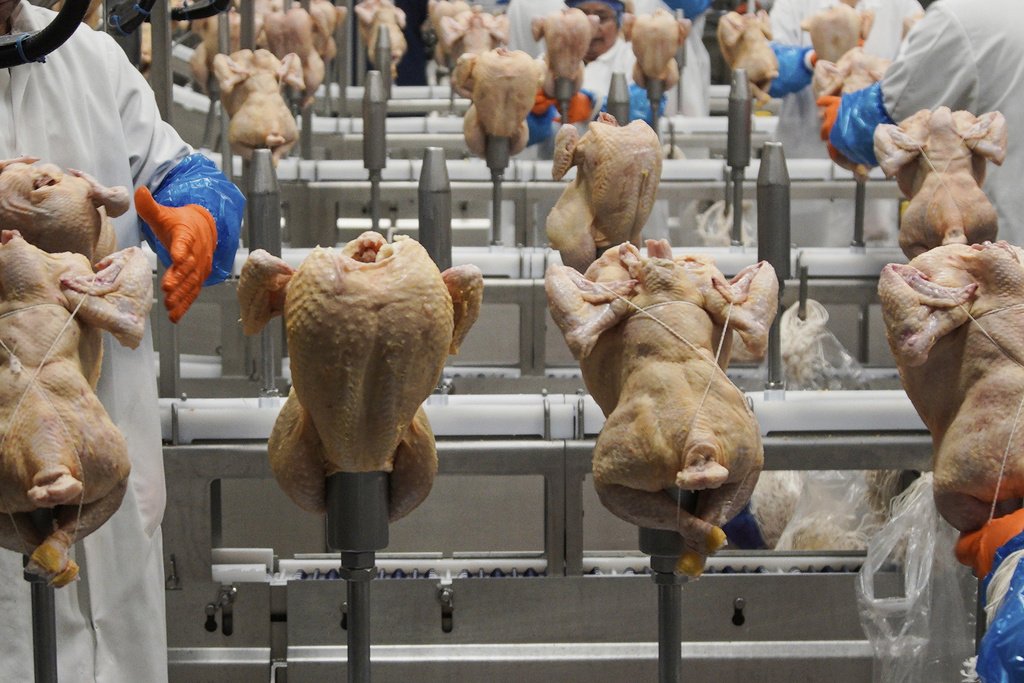
Chicken slaughterhouses already operate at breakneck speeds—140 birds per minute. Workers rely on visual cues to confirm unconsciousness, but animals whose bodies are paralyzed may remain fully conscious, aware of their own deaths. The proposed speed increase would heighten the risk that more animals slip through undetected, critics warn.
"This isn't a free-market win; it's a state-sanctioned expansion of cruelty," said Isaac DeBlasio, a junior fellow at the Wilberforce Institute, a think tank exploring pro-liberty approaches to animal welfare. "You can't champion freedom while enslaving and killing sentient beings by force."
The moral argument extends beyond the slaughterhouse. The non-aggression principle, a cornerstone of free-market philosophy, opposes using force or coercion against others. Yet farmed animals—chickens, pigs, and others—are legally classified as property, not individuals. They have no standing in court and no advocates of their own species.
Consider the case of animal activist Zoe Rosenberg, who rescued neglected chickens from a Sonoma County slaughterhouse. She was charged with felony conspiracy and trespassing because the animals lacked legal personhood. Such prosecutions are routine, highlighting a legal system that treats sentient beings as objects.
The USDA proposal would effectively legalize killing more animals under riskier conditions, a step backward for animal rights in a nation that prides itself on liberty. As debates rage over other rights issues—like the Justice Department's revival of firing squad executions or the proposed NASA budget cuts—this one remains largely hidden behind slaughterhouse walls.
DeBlasio argues that Americans, as the species capable of high-level moral reasoning, have a duty to speak for those who cannot. "If we're serious about freedom," he said, "we must consider how the most innocent among us are treated." The proposal now faces public comment before any final rule.