The United Nations is sounding the alarm: the next five years are almost certain to bring a relentless cascade of record-breaking heat, pushing the planet past the internationally agreed-upon climate safety limit. A new report from the World Meteorological Organization (WMO) warns that the Earth will likely breach the 1.5 degrees Celsius (2.7 Fahrenheit) warming threshold—set by the 2015 Paris climate agreement—multiple times before 2030.
The WMO, in partnership with the UK Met Office, projects a 75% probability that average global temperatures between 2026 and 2030 will be more than 1.5°C higher than pre-industrial levels. That benchmark, when averaged over two decades, was meant to be the ceiling to avert catastrophic climate impacts. The report also gives a 91% chance that at least one of the next five years will spike above that mark, with an 86% likelihood that one of those years will surpass 2024 as the hottest on record.
A ‘Cliff Edge’ or a Slow Burn?
“It’s important to note that 1.5 is not kind of a cliff edge that we’re going to fall off,” said Melissa Seabrook, a climate scientist at the UK Met Office and co-author of the report. “Every kind of 0.1 of a degree has more and more severe impact.” She pointed to the unprecedented May heat wave in Europe as a harbinger of what’s to come.
Friederike Otto, a climate scientist at Imperial College London who was not involved in the report, warned that a full year above the 1.5°C mark would unleash extreme weather beyond what cities and farms have planned for. “This will mean many people will lose their lives, we are in for a lot of food price shocks, and more intense wildfires,” Otto said in an email.
Arctic Warming Accelerates
The projections show the Arctic warming at 3.5 times the global average, driven by a vicious cycle of melting ice and snow that reduces the region’s ability to reflect solar radiation. Winters in the Arctic from 2020 to 2025 were already 1.2°C warmer than the 1991–2020 average, but the WMO expects the next five winters to be a staggering 2.8°C hotter than that recent baseline. Summer sea ice will continue to shrink, Seabrook noted.
Amazon at Risk of Drought and Fire
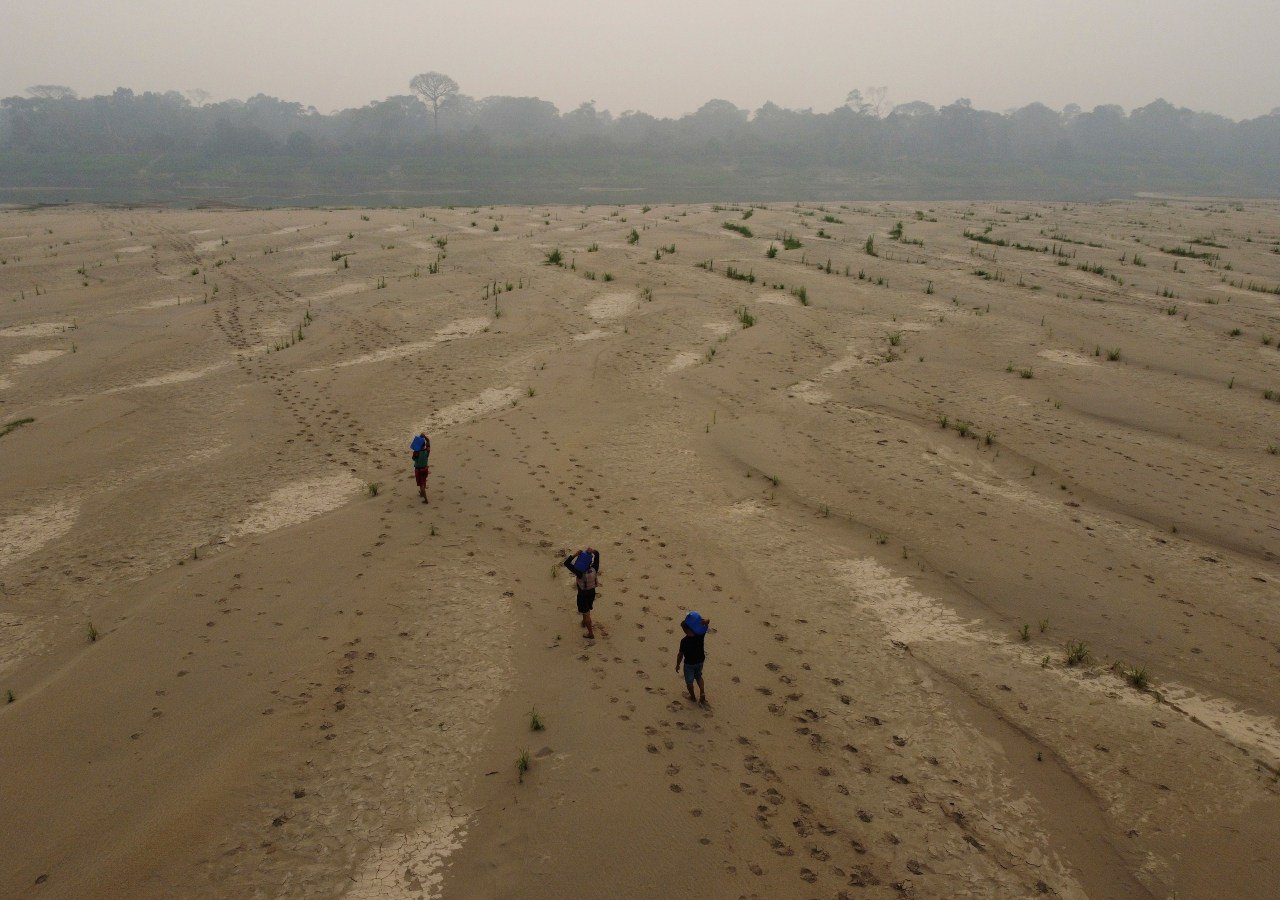
The report also forecasts hotter and drier conditions in the Amazon basin, a critical carbon sink. “People rely on the Amazon for water,” Seabrook said, “and the hotter, drier conditions should increase wildfire risk.” That could transform the rainforest from a buffer against climate change into a source of emissions, exacerbating the crisis.
Meanwhile, Africa’s Sahel region—historically dry—is likely to see above-normal rainfall, raising the risk of flooding, Seabrook added.
Nearly all short-term climate models predict a strong El Niño event forming soon, which could persist through 2028. That natural warming of the central Pacific typically spikes global temperatures, and Seabrook said 2027 is likely to break the 2024 heat record.
Warming May Be Speeding Up
If the next five years average more than 1.5°C, that would mean Earth has warmed a quarter of a degree Celsius in a single decade—faster than the previous rate of about 0.2°C per decade. Climate scientists are debating whether global warming is accelerating. “Which obviously is quite scary,” Seabrook said, adding that these projections would lend weight to those who see a speeded-up rate of change.
UN climate chief Simon Stiell did not mince words. “Despite the progress of recent years, it’s clear that global heating is still outpacing global efforts to contain it,” he said, pointing to baking temperatures in Europe and India as evidence of the “brutal human and economic impacts of humanity still burning colossal amounts of coal, oil and gas.”
Stiell added: “Whether it’s extreme heat, mega-storms, floods, massive wildfires or droughts hitting food supply and prices, every nation is already paying a huge price from this global climate crisis.”
As the world braces for another scorching decade, the report underscores the urgency of cutting emissions—even as political leaders in some countries, including the United States, continue to debate the pace of the energy transition. For now, the data is clear: the heat is coming, and it’s coming fast.