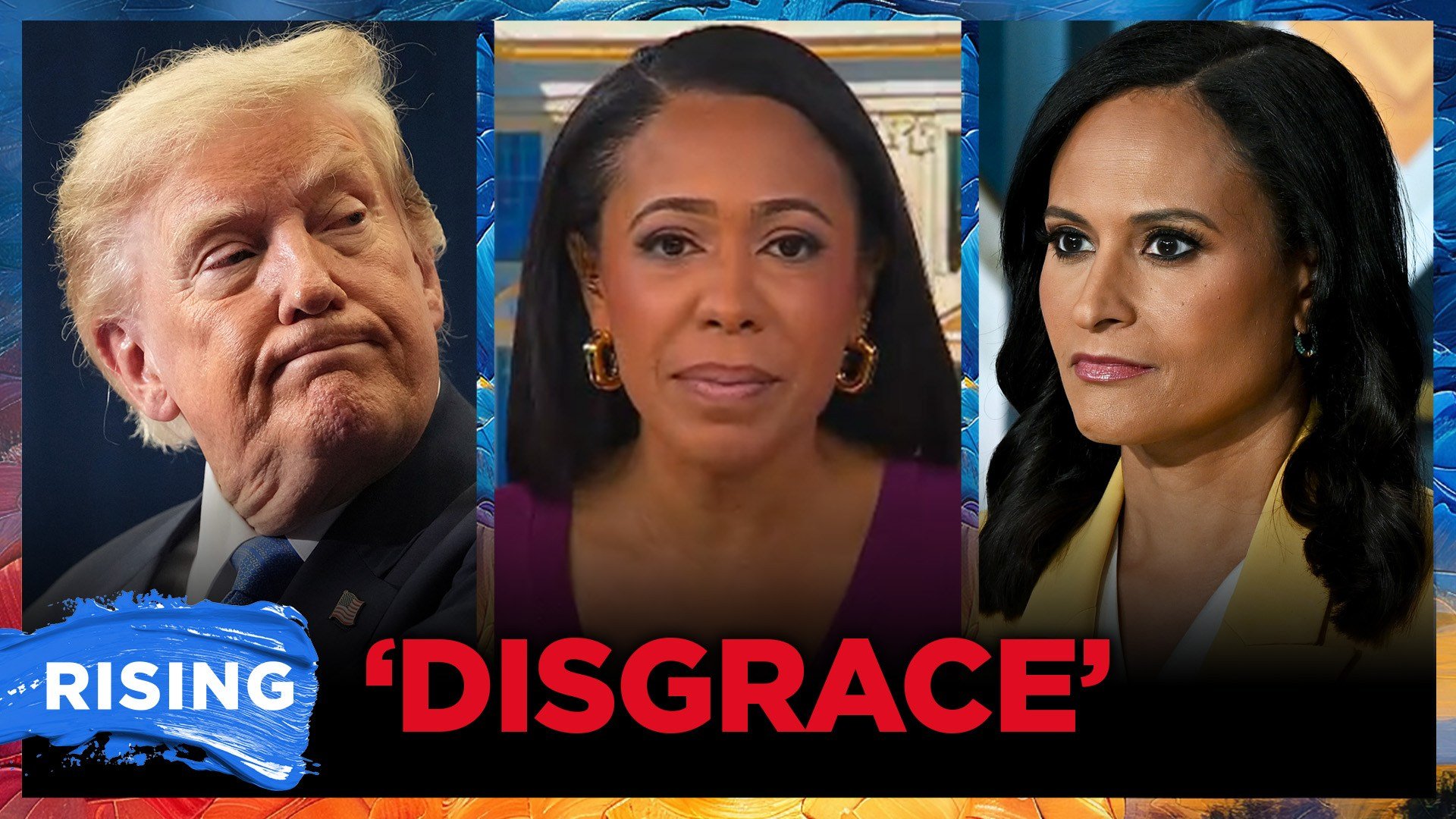
President Donald Trump escalated his war on the press over the weekend, suggesting that NBC News anchor Kristen Welker should face federal regulatory action for accurately describing his endorsement record in this year's primaries.
During a live shot with a local Washington, D.C., station before Sunday's edition of Meet the Press, Welker noted that Trump had seen "mixed results" with candidates he backed in recent races. She did not claim his endorsements were failing—she acknowledged his influence while pointing out some notable losses.
Trump responded on Truth Social, calling Welker the "Unpopular 'Hostess'" of "Meet the Fake Press" and accusing her of "purposeful inaccuracy." He then wrote that she "will be reported to the FCC for rebuke or punishment," and directly urged FCC Chair Brendan Carr to take this "threat to our country very seriously."
The president's broadside comes as his overall primary win rate remains high, but he has suffered high-profile setbacks, including former MyPillow CEO Mike Lindell's gubernatorial loss in Minnesota and Florida voters rebuking embattled GOP Rep. Cory Mills. Those defeats have fueled a narrative—one Trump rejects—that his political influence may be waning.
The FCC is a federal regulator, not the president's personal arbiter of whether a journalist's characterization of his record is flattering enough. Yet under Carr's leadership, the commission has already faced bipartisan criticism for what critics call weaponized enforcement. Late last year, several former FCC officials petitioned the agency to scrap its "news distortion policy," which Carr has invoked in threatening to crack down on mainstream media coverage critical of Trump.
Trump's public call for Carr to act feels less about accuracy and more about control, as the president seeks to bend independent institutions to his will. Carr, who took office in January 2025, has already opened investigations into NPR and PBS, ABC, and—following Trump's social media complaints—threatened the licenses of local broadcasters over their coverage of foreign conflicts like the Iran war. The pattern is unmistakable: the FCC is being used as a cudgel against outlets that displease the president.
This latest fight with Welker is also personal. Earlier this year, Trump sat for an interview with her and insisted the 2020 election was rigged. When Welker pressed him for evidence, he grew agitated, eventually shouting, "YOUR ELECTIONS ARE CROOKED AND YOU'RE CROOKED AND SO IS NBC, AND CNN. I'm done," and abruptly ended the session.
Press can be criticized, but the president cannot use the power of the federal government as a threat against a journalist simply because the coverage is unfavorable. The First Amendment exists precisely to protect speech that those in power find inconvenient. If Trump succeeds in turning the FCC into his personal grievance committee, every journalist covering him—and every network that employs them—should be on notice.