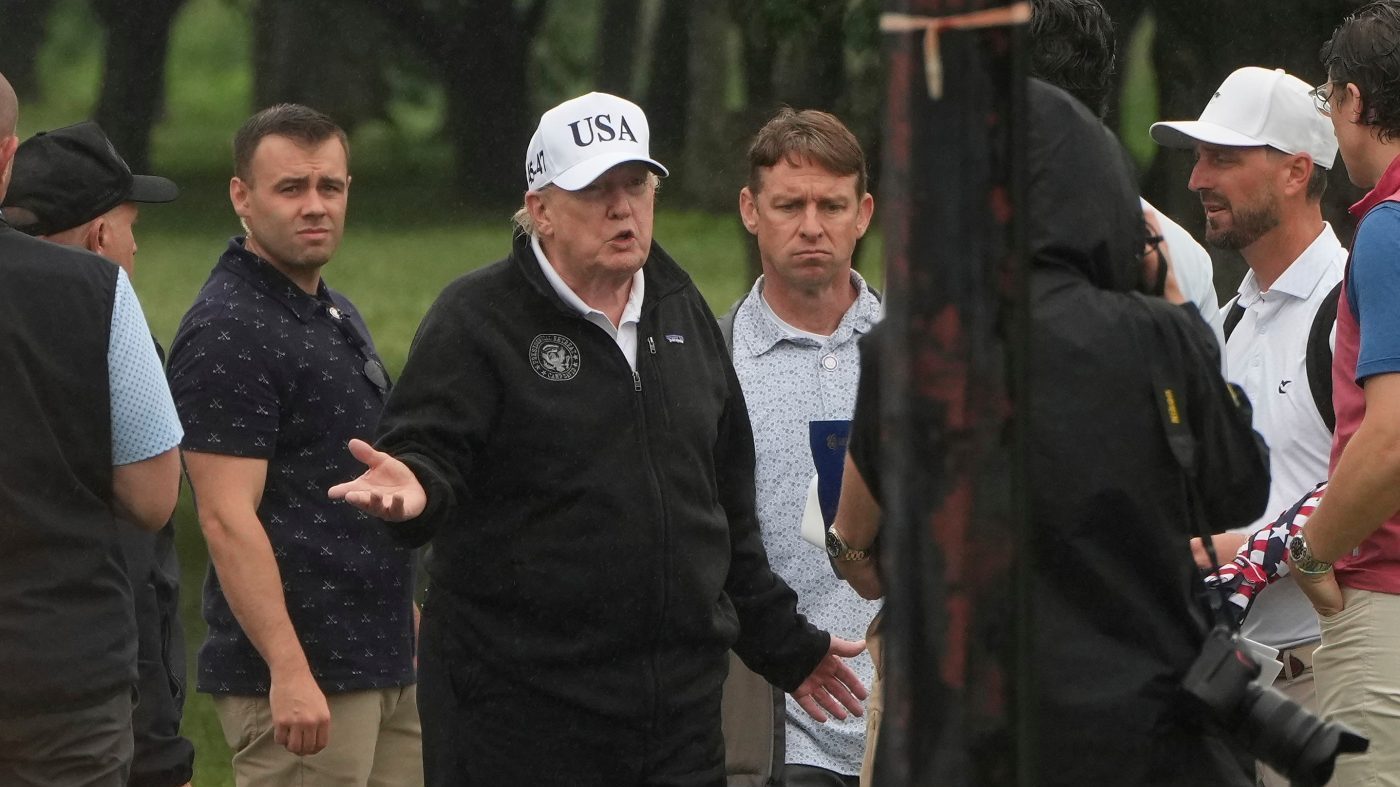
With the midterm elections just one week away, President Trump is taking his campaign blitz to Texas, holding rallies in Corpus Christi and Lubbock to bolster Republican chances in the Lone Star State. The president's visit is aimed at shoring up support for Governor Greg Abbott's reelection bid and state Attorney General Ken Paxton, who is running for the U.S. Senate.
The Texas trip is part of an aggressive travel schedule that has seen Trump on the trail nearly every day. Vice President Vance has also been crisscrossing the country, with a scheduled stop in Howell, Michigan on Tuesday to campaign for GOP Senate candidate Mike Rogers. The high-profile appearances underscore the party's urgency to maintain its congressional majorities, even as some polls suggest a challenging environment for Republicans.
Trump's midterm strategy includes a controversial new initiative: on Monday, ahead of a trip to Mississippi, he announced a $1 million reward for tips leading to arrests and convictions of voter fraud. The move, which echoes his ongoing concerns about election integrity, has drawn criticism from Democrats and voting rights advocates who say it could intimidate voters. The president has repeatedly claimed, without evidence, that widespread fraud is a threat, and this reward is seen as an attempt to amplify those claims.
Meanwhile, a federal appeals court on Monday declined to order California to set aside 20,000 mail ballots that Republicans argue are likely from noncitizens. The 2-1 ruling leaves the matter in the hands of a trial judge, who is scheduled to hold a hearing on Tuesday. The case is one of several legal battles over voting procedures that have emerged in the final days of the campaign, with Trump's allies pursuing a range of challenges in key states.
Tuesday also brings elections in Israel, where an estimated 67,000 Israelis are expected to vote. Trump endorsed his ally, Prime Minister Benjamin Netanyahu, earlier this month, and the outcome could have implications for U.S. foreign policy. Polls close at 4 p.m. EDT, and results are expected to be closely watched by the White House.
The Texas rallies come as some Republican strategists worry about the party's ability to mobilize its base, particularly in suburban districts where Trump's messaging on issues like immigration and crime may not resonate as strongly. A recent analysis suggests that rising gas prices could sink GOP hopes, as voters cite economic concerns as their top priority. Trump's focus on cultural grievances and election fraud may not be enough to overcome those anxieties.
In addition to the Texas swing, Trump has been active in other states, including a recent visit to Minnesota, where he has accused Democratic Senate candidate Rep. Dean Phillips of trying to rig the race. That accusation has been denied by Phillips' campaign, but it reflects the president's willingness to make unsubstantiated claims about election integrity.
Trump's red-state push is part of a broader effort to shore up GOP support as a Democratic wave looms. The president's rallies are designed to energize his base, but some analysts question whether they can expand the party's appeal. With control of Congress at stake, the next week will be critical for both parties.
As the campaign enters its final stretch, the legal and political battles over voting are likely to intensify. Trump's reward for voter fraud tips, the California ballot case, and his ongoing attacks on the electoral process are all part of a strategy that has drawn sharp partisan lines. Whether these tactics will help or hurt Republicans remains to be seen, but they are certain to dominate the news cycle leading up to Election Day.