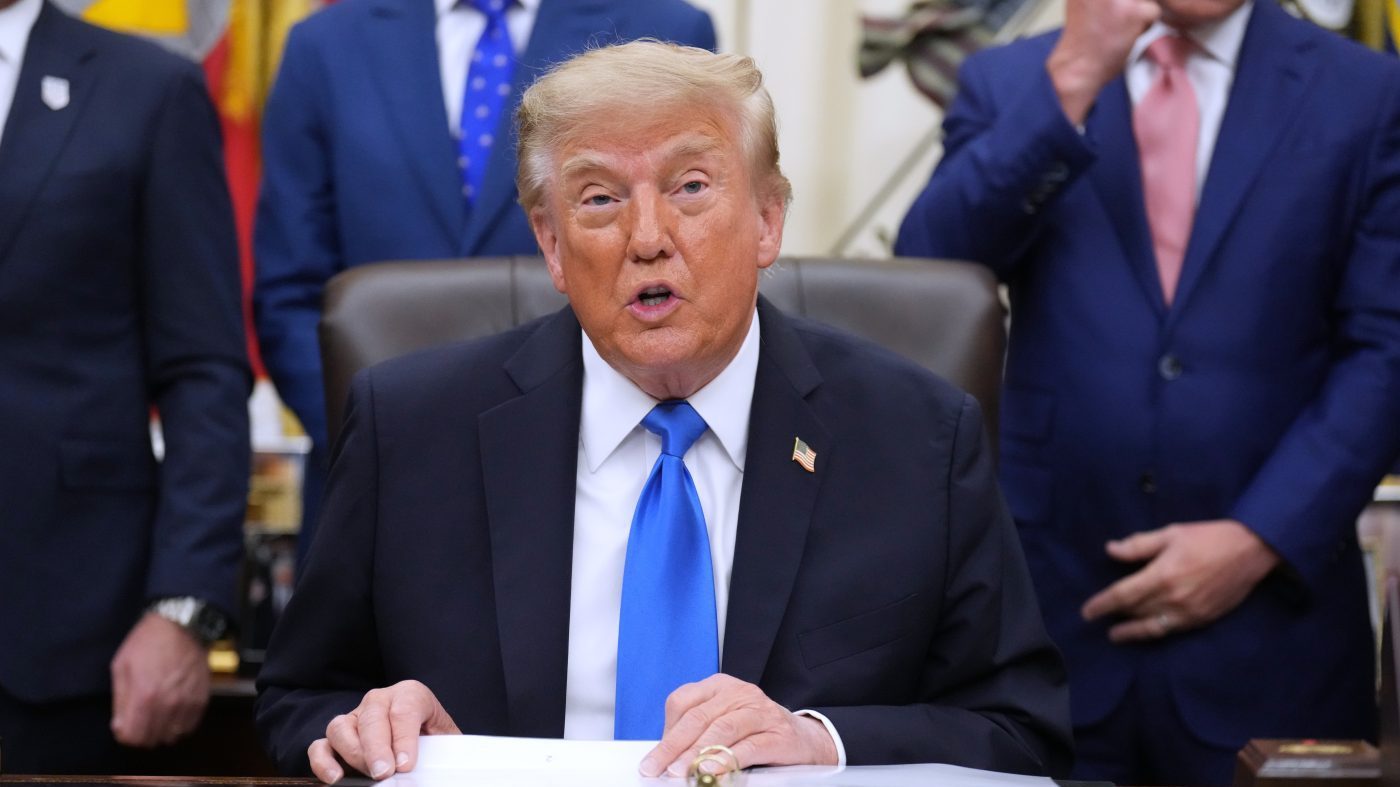
President Trump on Wednesday signed a short-term government funding measure into law, temporarily ending the threat of a shutdown and pushing the next fiscal showdown into December. The move locks in federal spending levels through at least Dec. 11, ensuring agencies remain open through the November midterms and into the holiday season.
The Continuing Appropriations and Extensions Act, 2027 cleared Congress with bipartisan support—90-6 in the Senate and 370-48 in the House—well ahead of the Sept. 30 deadline. Lawmakers opted for a stopgap rather than completing the full annual appropriations process, a familiar pattern that has become a hallmark of recent budget battles.
By signing the measure, Trump effectively postponed a potentially bruising funding fight until after voters head to the polls. But the reprieve is temporary. Come December, Congress will again face a deadline, this time with the added pressure of the holiday season and the political fallout of a post-midterm lame-duck session.
History of Funding Lapses
The new deadline evokes memories of past shutdowns. Last fall, a 43-day closure—the longest on record—stemmed from Democratic demands to extend Affordable Care Act premium subsidies that had since lapsed. More recently, the Department of Homeland Security operated without appropriated funds for 76 days from February to May, after Democrats pushed for changes to immigration enforcement tactics following the fatal shootings of Renee Good and Alex Pretti by federal officers in Minneapolis.
Both episodes caused widespread travel disruptions. Air traffic controllers and Transportation Security Administration officers went without pay during the fall 2025 impasse, and TSA officers again missed paychecks during the DHS funding lapse. Those experiences loomed over this week's vote, as lawmakers on both sides sought to avoid another costly shutdown.
Republican Divisions
Speaker Mike Johnson (R-La.) did not secure unanimous support from his conference. Nineteen House Republicans voted against the bill, objecting to Senate-added provisions, including a temporary delay of a ban on intoxicating hemp products. The dissent signals potential trouble ahead for GOP leadership as they navigate a narrow majority and internal fractures.
House Appropriations Committee Chair Tom Cole (R-Okla.) voted for the measure and defended the decision on the floor Tuesday. “When we passed our continuing resolution over here, we knew it would change when it got to the Senate,” Cole said. “Some of those changes I actually agree with, some of them I don’t. But they don’t really change the substance of the fact we bought the time that we need to get through the election cycle and hopefully the time that we need to get down to serious bargaining on the other side of it.”
Cole's remarks underscore the strategic calculus: avoid a shutdown before the midterms, then tackle long-term spending in a lame-duck session. However, that approach has drawn criticism from Democrats, who argue Republicans are failing to govern.
Democratic Criticism
Rep. Ted Lieu (D-Calif.), the No. 4 House Democrat, voted for the bill along with most of his caucus but voiced frustration. “We have a whole nother month left, and the Republicans who control the House, the Senate and the White House are basically waving the white flag of surrender and saying, ‘We don’t know how to govern, we don’t know how to pass appropriations bills,’” Lieu told reporters Tuesday. “It is not a good way to run our federal government. But it’s the only alternative that’s going to be before us, so I’ll be voting for it.”
The stopgap's passage comes as Republican leaders already face an uphill battle to retain control of the Senate, with some admitting the majority is at risk amid Trump's political headwinds. The president's recent moves, including a controversial pause on beef tariffs, have added to the turbulence. Meanwhile, Trump's allies are already launching midterm ad campaigns, signaling the high stakes of the upcoming elections.
With the government funded only through Dec. 11, lawmakers will return to Washington after the midterms to face another appropriations crisis. The timeline leaves little room for error, and the potential for a holiday shutdown remains a real possibility. As Cole noted, the hope is that the post-election period will allow for “serious bargaining,” but history suggests such optimism may be misplaced.