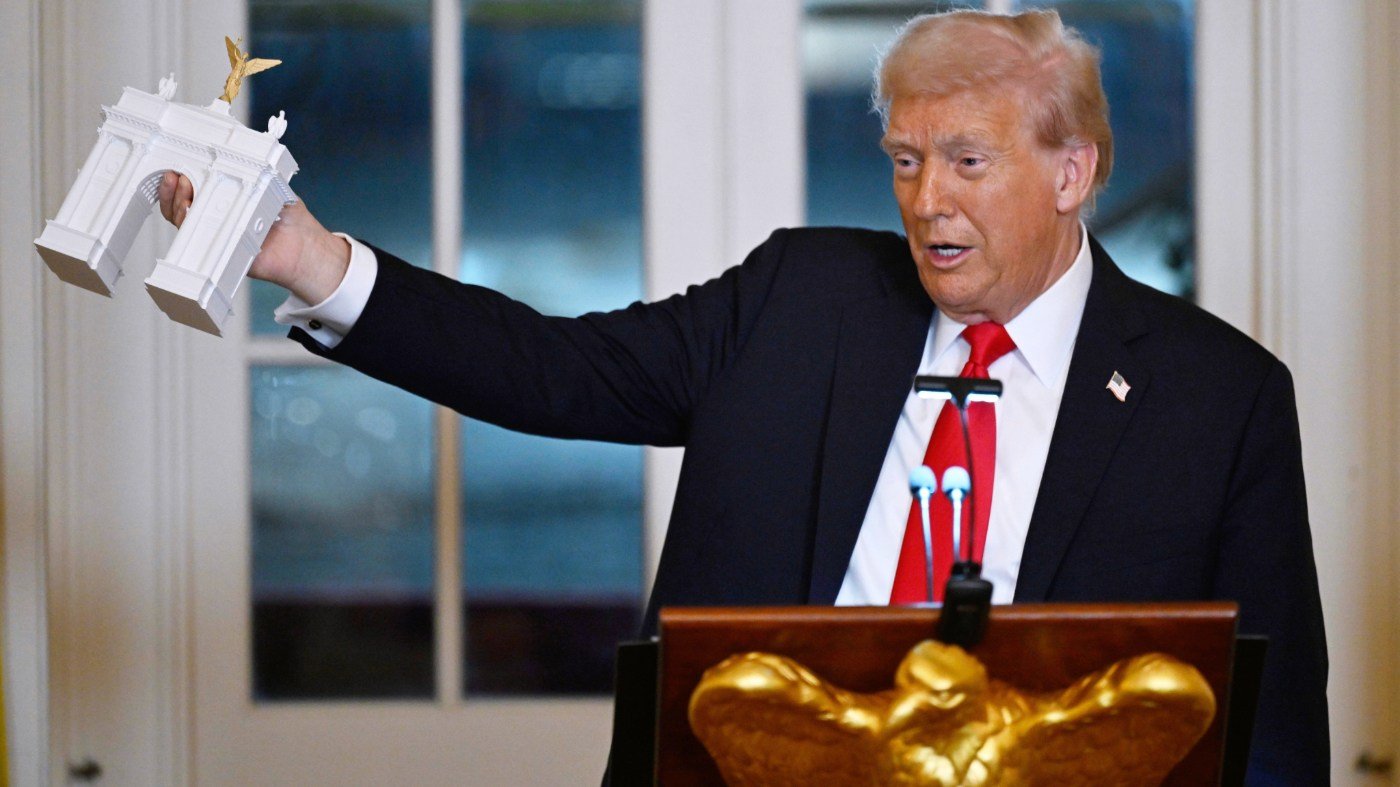
President Donald Trump has ordered the Kennedy Center closed and is threatening to demolish the iconic performing arts venue unless a court allows him to add his name to its facade. The move follows a judge's order that his name be removed from the building, escalating a bizarre standoff over one of the nation's premier cultural institutions.
The dispute is the latest in a series of norm-shattering actions by the administration, which has also targeted monuments and the press, drawing concerns from within his own party. But even by those standards, the assault on the Kennedy Center stands out. The center, conceived under Republican President Dwight Eisenhower and championed by Democratic President John F. Kennedy, has long symbolized bipartisan commitment to the arts.
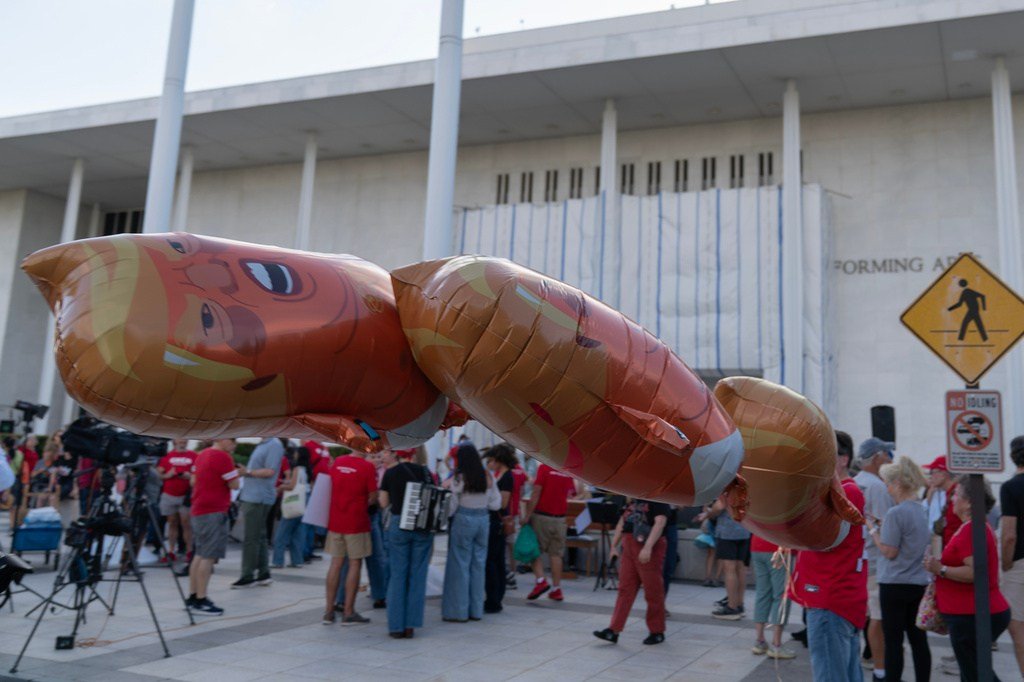
Trump's grievances with the institution are personal. After a court ruled his name must come down, his hand-picked board complied but left a tarp covering the front of the building. Following a severe storm that caused ceiling plaster to fall, the board declared the entire center unsafe and said renovations would not proceed unless the judge reversed the name removal. Trump then shut it down entirely.
The president has no record of supporting the arts. Before entering politics, he was a New York real estate developer and casino owner. During his first term, he visited the Kennedy Center once and skipped the Honors ceremonies in 2017, 2018, and 2019. In 2025, he fired public board members and replaced them with loyalists, who elected him chairman. He installed Richard Grenell to run the center, and most of its artwork was removed and replaced with pieces selected by Trump.
The consequences have been severe. Performing artists canceled engagements. The Washington Opera left. Donors withdrew. Ticket sales plummeted. Finances cratered. A recent performance of Porgy and Bess played to a half-empty house.
Critics say the closure is a mortal blow to a living memorial. George Stevens Jr., co-creator of the Kennedy Center Honors, told The World Signal: "For over half a century, the John F. Kennedy Center for the Performing Arts has thrived as a bipartisan institution providing grace and beauty in the nation's capital. The courts have spoken. The name Trump does not belong on our living memorial to a war hero, a martyred and revered president."
President Kennedy once said, "I look forward to an America that will not be afraid of grace and beauty." That vision is now under threat. The loss of the Kennedy Center would rob the Washington region of a premier showcase for music, dance, opera, theater, and film. It would also deal a lasting blow to one of the few remaining examples of bipartisan cooperation in the nation's capital.
As Trump continues to battle the press and reshape the media landscape, the Kennedy Center fight underscores a presidency increasingly defined by personal grievances over institutional stewardship. Congress renamed the center after Kennedy's assassination in 1963 and mandated it operate as a living memorial. Trump's demand to brand it with his own name—and his threat to destroy it if denied—tests that legacy as never before.