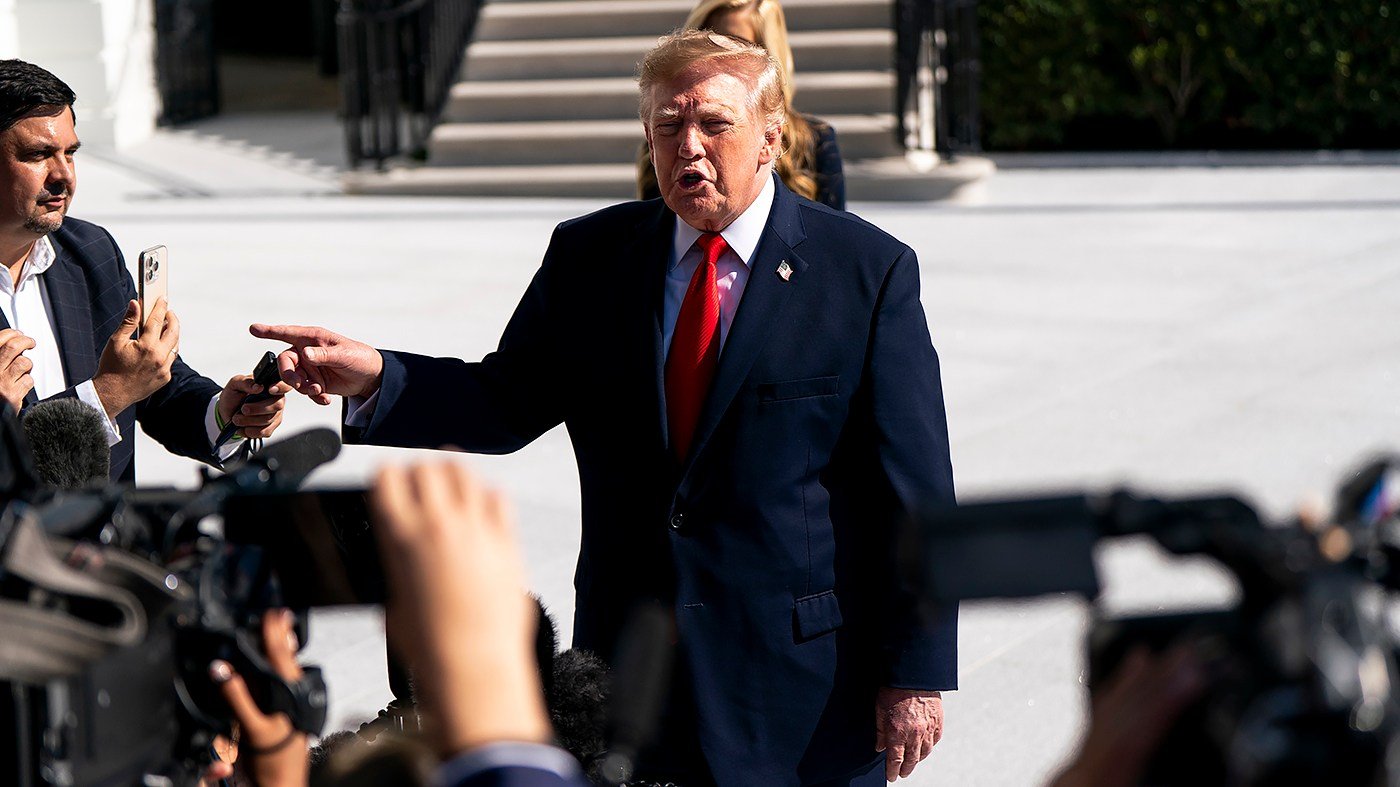
President Trump is blanketing battleground states with rallies and economic announcements aimed at shoring up Republican candidates, but his penchant for off-script remarks is threatening to overshadow the very message his party needs to counter voter anxiety over inflation and jobs.
During a Tuesday campaign stop in Alaska for Sen. Dan Sullivan, Trump touted a South Korean liquefied natural gas investment and pardoned two diesel mechanics convicted of Clean Air Act violations. But he also used the stage to attack Texas Democratic Senate nominee James Talarico—a candidate running 3,000 miles away—over his absence from the campaign trail.

The pattern repeated on Monday in Youngstown, Ohio, where Trump rallied for Sen. Jon Husted and gubernatorial nominee Vivek Ramaswamy. He announced that Cleveland would host a Navy submarine component repair center, a win for the state's defense economy. Yet much of the speech was devoted to immigration attacks and resurrecting debunked claims about Ohio's Haitian community, as well as jabs at Michigan Democratic Senate hopeful Abdul El-Sayed.
At a rally in Arizona on Wednesday, Trump told supporters that leakers should be shot and recounted a bizarre anecdote about borrowing a jet from Qatar's emir. These distractions come as Republicans are already struggling to message around economic data that continues to sour.
The Bureau of Labor Statistics reported Wednesday that the consumer price index rose 0.6% in September, up 3.7% year-over-year. September's jobs report also disappointed, with only 29,000 new positions added. One Republican strategist noted, "It's hard to fight the headlines sometimes... you're fighting headwinds, you're fighting a tough political environment, you're fighting what people already feel." The strategist added that Trump's message is "a listing of grievances" rather than economic reassurance.
Republican strategist Ron Bonjean acknowledged that Trump's scattershot approach has historically energized the base. "In the end what you get is a whole lot of Trump," he said, but he warned that such tactics risk alienating independent and swing voters. "Because of the high gasoline prices and the questions on affordability... having these single messages on projects that he's announcing in states, he would be better focused on that as opposed to trying to make the next wave of national headlines."
The president's midterm blitz has included rallies in Ohio, Alaska, Arizona, and Montana this week alone. Last week, he signed an executive order on red dye diesel in Nebraska, and last month he announced a $15 billion steel plant for Iowa—both moves aimed at key agricultural and industrial constituencies. The RNC's Natalie Baldassarre defended the strategy, saying Trump's policies "have created thousands of jobs and brought trillions in new investment to communities across America."
In Alaska, strategist Art Hackney, who supports Sullivan, downplayed concerns about Trump's messaging. "That's really not the point up here," he said. "Alaska is a resource state." But with the president's approval ratings slipping and the economy a top concern, the question remains whether Trump's flood-the-zone approach will help or hurt Republicans in the closing weeks. As Bonjean put it, "Right now, getting Republicans to the polls is a real urgency."