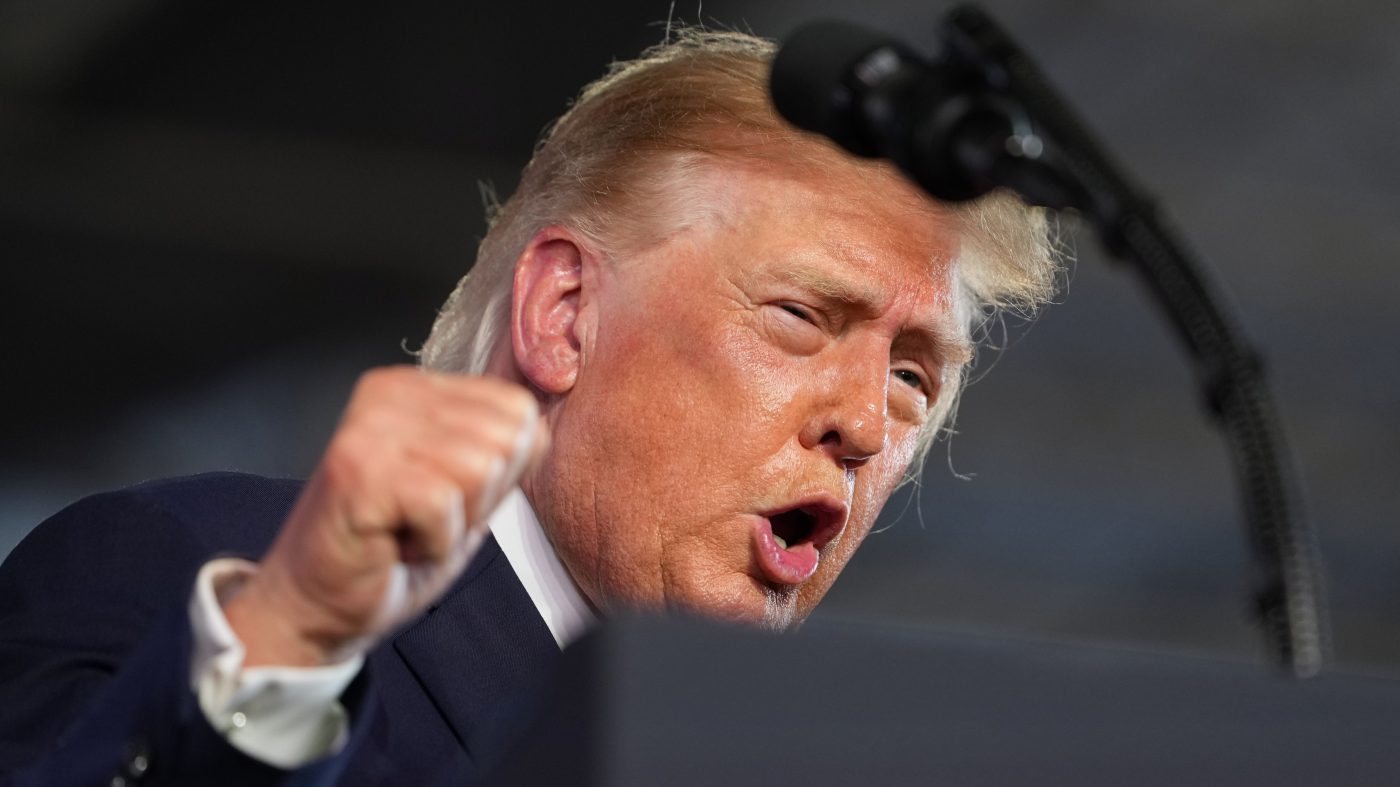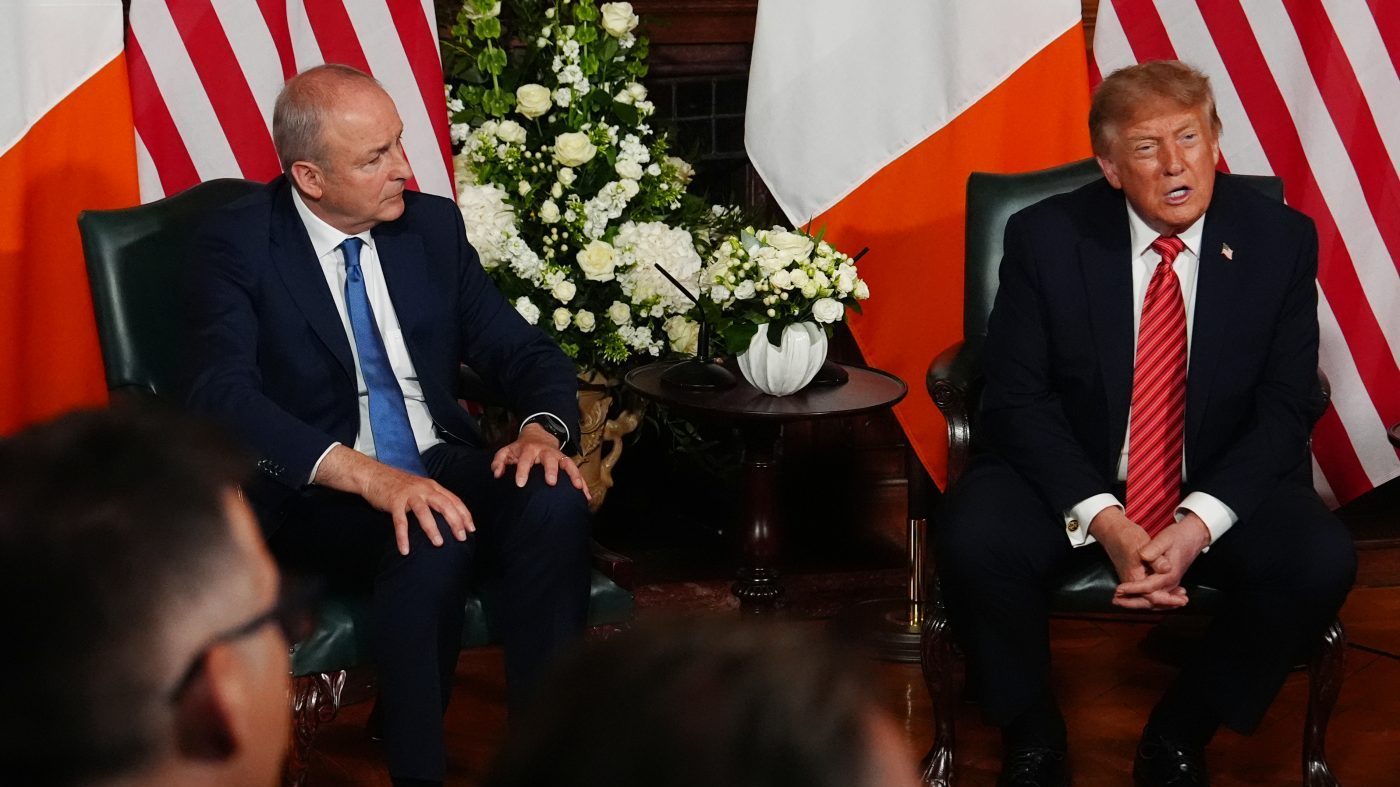
President Trump waded into sensitive political territory on Saturday, expressing optimism about the eventual unification of Ireland during a meeting with Irish Taoiseach Micheál Martin in Dublin. Trump, who was in the country for a golf tournament at his resort, said he would "love" to see the Republic of Ireland and Northern Ireland come together.
"I'd love to see it unified," Trump said. "I think that'd be a great feather in everybody's cap if that happened. It's going to happen eventually." He added, gesturing toward Martin, "You've got the right man over here to get it moving."
Trump acknowledged the role of the United Kingdom in any such change, noting that "the U.K. will have something to say about it, obviously." His remarks mark a departure from the careful neutrality that previous U.S. presidents have typically observed on this contentious issue.
The question of Irish reunification is deeply rooted in decades of violence known as "the Troubles," which ended with the Good Friday Agreement in 1998. That accord, which the U.S. helped broker, allows for a border poll if it appears a majority in Northern Ireland would support joining the Republic. The British government has said there is currently no such majority.
On Wednesday, U.K. Prime Minister Andy Burnham told Parliament that he was "not aware that there is majority support for another referendum" and added, "Until that changes, there will not be one."
Kemi Badenoch, leader of the U.K.'s Conservative Party, was quick to criticize Trump's comments. In a social media post, she wrote: "President Trump is shooting from the hip as usual, just like he did with Greenland and Canada becoming the 51st state. This sort of loose talk about the future of democratic countries is deeply unhelpful and creates unnecessary tension." She stressed that "Northern Ireland is part of the United Kingdom" and called for a government that would "defend the Union clearly and confidently."
Gavin Robinson, leader of the Democratic Unionist Party and a Member of Parliament for Northern Ireland, also pushed back. "President Trump knows better than most that elections matter," he said. "Northern Ireland's constitutional future will be decided by the people of Northern Ireland, not by commentary in London, Dublin or Washington." Robinson expressed confidence that residents "will continue to choose the UK and the security it offers."
The reaction underscores the delicate balance of Northern Ireland's politics, where nationalists seek unity with the Republic and unionists want to remain part of the U.K. Trump's intervention, while perhaps offhand, has injected fresh uncertainty into an already fraught debate. For more on Trump's recent political maneuvers, see his $5,000 pledge to voters.
Observers note that U.S. presidents have historically avoided direct commentary on Irish unity to avoid inflaming tensions. Trump's remarks may complicate diplomatic efforts, especially given his administration's close ties to the U.K. government. As the debate continues, all eyes will be on how both London and Dublin respond to Trump's unexpected intervention.