President Trump's latest campaign promise—a $5,000 check to every U.S. adult if Republicans take Congress in the midterms—has ignited a firestorm of criticism from fiscal conservatives and Democrats alike, forcing his own allies into a defensive crouch.
The proposal, which would carry a price tag of roughly $1.35 trillion given the 270 million adult population, has been dismissed by some as a blatant vote-buying scheme and by others as fiscally reckless. Rep. Chip Roy (R-Texas), a leading deficit hawk, took to social media to question the viability and morality of the plan. "Maybe some of us think dependency is evil & soul-sucking in all its forms," Roy wrote on X, echoing his long-held concerns about government handouts.
Former Rep. Bob Good (R-Va.), who once chaired the House Freedom Caucus, went further, labeling the dividend a "socialist vote-buying scheme." The criticism from within his own party underscores the ideological rift between Trump's populist instincts and traditional conservative principles.
This isn't the first time Trump has floated such a payout. He's repeatedly proposed a $2,000 tariff dividend and a $5,000 check funded by the Department of Government Efficiency (DOGE), neither of which has materialized. The recurring nature of these promises has led some to question whether they're serious policy or mere campaign theater.
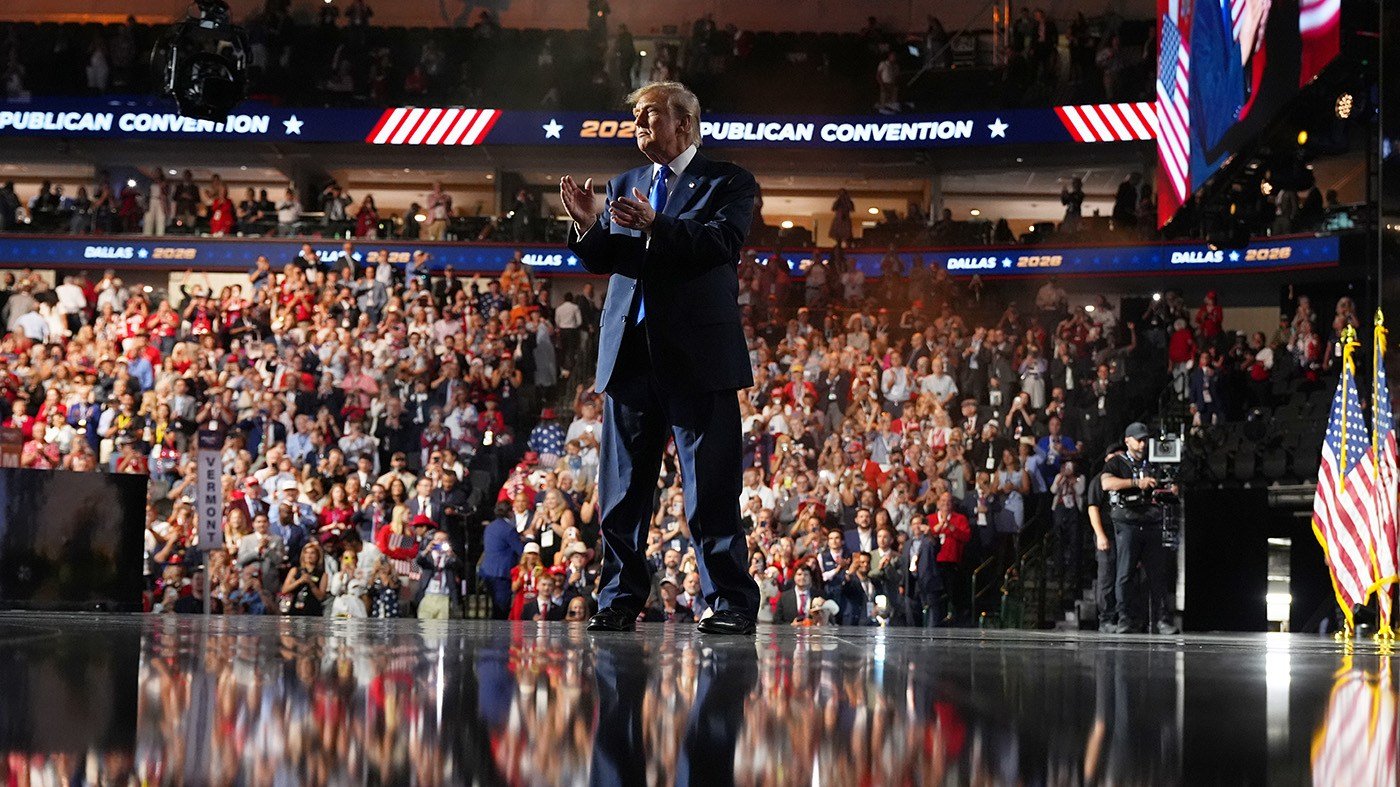
Marc Short, who served as Trump's legislative director in his first term and now chairs the board of Mike Pence's think tank, Advancing American Freedom, said the pledge marks a clear break from fiscal responsibility. "The president is a performer," Short said. "Having the pageantry of the convention, he's going to throw out something." He added that the plan amounts to "redistribution of wealth" and warned that Republicans can't outbid Democrats in promising government benefits.
Vice President Vance, however, defended the plan during a Fox News interview, framing it as a "dividend for American workers" funded by tariff revenue. "We're taking in an extraordinary amount of revenue because the president is standing up to foreign companies and countries who have been taking advantage of America's workers," Vance said. He insisted the idea isn't controversial, arguing that "if we continue to create wealth, that wealth is going to go back to the American people."
But critics remain unconvinced. Former Rep. Marjorie Taylor Greene (R-Ga.), now a vocal Trump critic, mocked the plan on X, writing, "$5,000 for the peasants will be in the mail after the election only if you vote Republican." Her sarcasm highlights the skepticism even among some former allies.
Not everyone opposes the idea. Sen. Bernie Moreno (R-Ohio) said he would introduce legislation to enact the "Trump Dividend" immediately after the midterms, and Breitbart's Washington bureau chief Matthew Boyle framed the choice as "Republicans giving you cash, and Democrats wanting to take everything away."
Andrew Yang, the former Democratic presidential candidate who championed universal basic income, offered a rare note of support, saying he's "always liked dividends to the American people."
One national Republican operative, speaking to The Hill, argued that the plan is being held to a double standard. "The whole concept of government handouts continues to get a ton of much-warranted criticism from the right, but it's interesting to see the level of scrutiny for this plan and not equal scrutiny for the endless handouts from the left," the operative said.
The backlash comes as Trump's team works to sell the plan to a skeptical electorate. For more on the specifics, see our breakdown of the dividend pledge. The debate also echoes broader tensions within the GOP over economic policy, as seen in Chip Roy's sharp rebuke and Fox News' questioning of Vance. Whether the promise survives contact with fiscal reality remains to be seen.