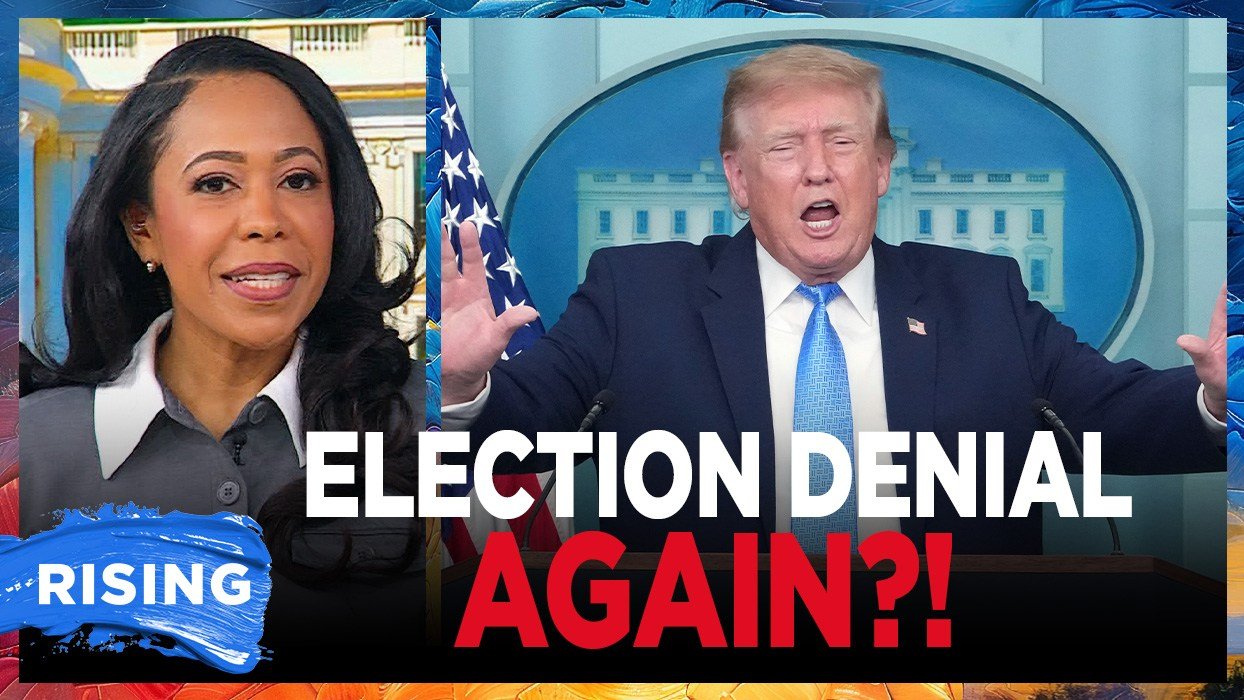
It took less than a week for former President Donald Trump to revert to his familiar post-election playbook. After Democrats swept both chambers of Congress, flipped at least seven Senate seats, and made notable gains in state legislatures, Trump took to his Truth Social platform on Monday to question the legitimacy of the results. In a post, he asked: "Does anybody really believe that this 'Election' was honest. How could the Polls be so wrong??? Some early voting 'dumps' were so large that it was impossible to win, no matter how many people went to vote. It's all about the machines, which are far more important than the voter!"
The statement marks a return to the baseless accusations that defined his post-2020 rhetoric, drawing immediate comparisons to his efforts to overturn that election. Trump offered no evidence for his claims, instead pointing to polling discrepancies and early vote counts as proof of fraud. His remarks come as Republicans grapple with a disappointing night that saw Democrats outperform expectations in key races.

While Trump is correct that polls were off, they were off in the opposite direction he suggests. In Georgia, Democrats beat final polling averages. In Texas, James Talarico's Senate victory over Ken Paxton exceeded polling projections by about nine points. South Carolina's Annie Andrews won a Republican-held Senate seat despite polls showing her opponent narrowly ahead. Mississippi's Scott Colom is running a competitive Senate race that could signal a major shift in a state dominated by conservatives for nearly 150 years.
Trump's specific grievance with Texas is puzzling. Governor Greg Abbott remains in office, and Republicans control the state legislature, so how could Democrats have rigged an election they didn't fully win? Gina Hinojosa defeated a three-term governor, but the GOP's redistricting efforts still held. There is no evidence of fraud, and Trump has not provided any.
This is not the first time Trump has made such claims. In an interview with Kristen Welker earlier this year, he insisted the 2020 election and California's primary were rigged. When Welker pressed for evidence, Trump replied, "All I have to do is look," before abruptly ending the interview.
Trump's history of undermining elections extends beyond 2020. After his 2016 victory, he falsely claimed millions of undocumented immigrants voted illegally. Following his 2020 loss to Joe Biden, he spent months alleging a stolen election, pressuring Georgia's Republican secretary of state to "find" votes, orchestrating a fake elector scheme across seven states, and demanding Vice President Mike Pence interfere with the electoral count. That culminated in the January 6 attack on the Capitol, which occurred as Congress certified Biden's win.
The current situation echoes that dangerous trajectory. Voters delivered a clear message on the economy, policy, and the country's direction, but Trump is once again casting doubt on the electoral process. As Republicans face a 2028 reckoning, the party must decide whether to break with Trump or risk another rout. Accepting results and adapting is the only way forward, or the party may face a repeat in 2028.
This column is an edited transcription of Lindsey Granger's on-air commentary for NewsNation and The Hill's "Rising."