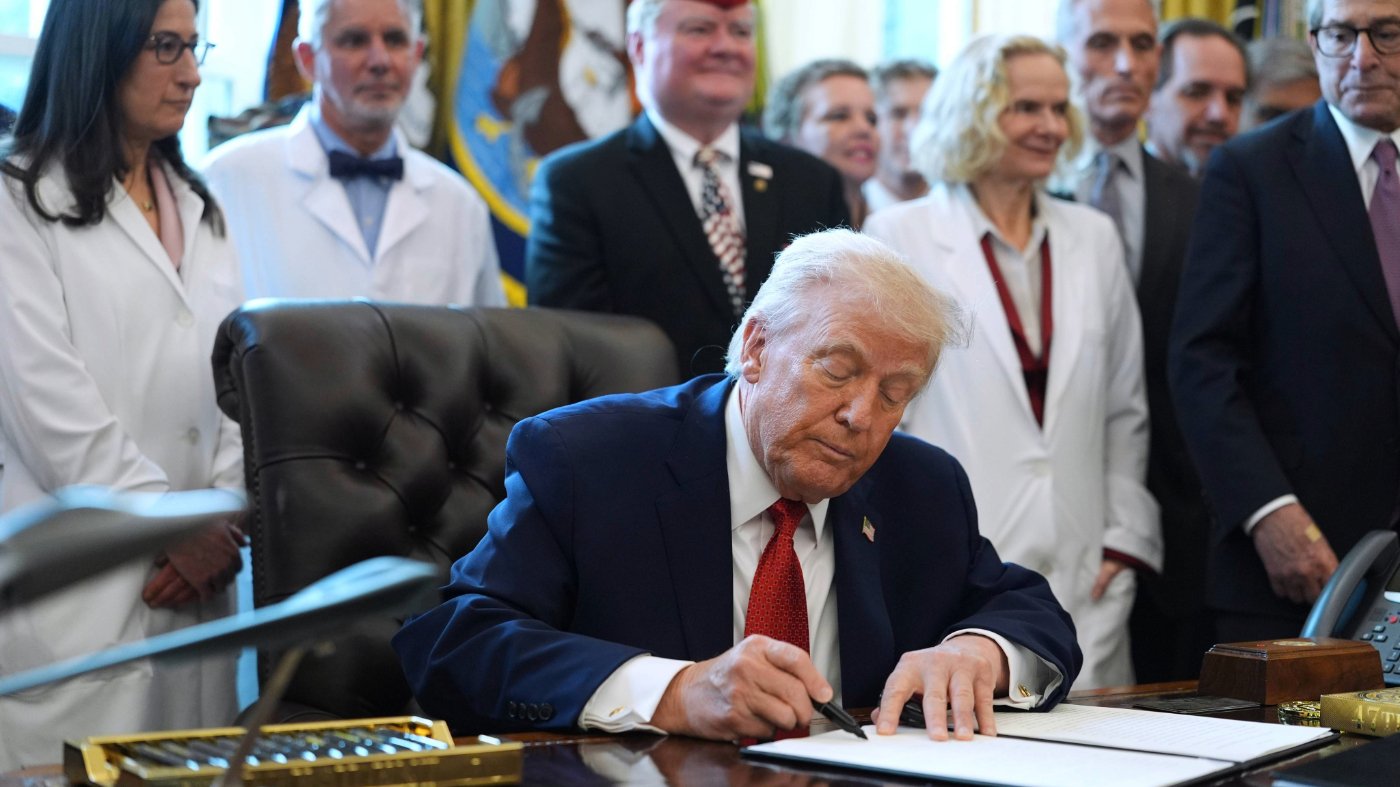
President Donald Trump took a cautious step toward easing federal marijuana restrictions this week, signing an executive order to reclassify cannabis from Schedule I to Schedule III under the Controlled Substances Act. The move, which Trump described as a response to a “very complicated subject,” stops well short of decriminalization or full legalization, leaving the drug illegal at the federal level for recreational use.
In a brief Oval Office appearance, Trump expressed frustration with the pace of the reclassification process, telling White House policy officials, “Will you get the rescheduling done, please?” He also complained to conservative podcaster Joe Rogan, who has advocated treating marijuana like alcohol, that he was being “slow-walked.” The order directs the Drug Enforcement Administration to expedite administrative hearings required for the change.
Under the new classification, marijuana would be placed in the same regulatory category as prescription painkillers like Tylenol with codeine, acknowledging its medical value while maintaining federal prohibition for recreational use. The shift marks one of the most significant federal policy changes on cannabis in decades, yet Trump emphasized, “Unless a drug is recommended by a doctor for medical reasons, just don’t do it.”
The announcement sent cannabis stocks soaring. Canopy Growth jumped 23 percent, and Tilray Brands surged 15 percent, as investors bet on a friendlier regulatory environment. But industry advocates had been frustrated by months of inaction since Trump first signaled support for rescheduling in December.
Acting Attorney General Todd Blanche immediately ordered fast-track hearings to implement the order, bypassing the typical administrative timeline. However, legal experts caution that the administration cannot circumvent required public health and safety reviews. Regina LaBelle, director of the Addiction and Public Policy Initiative at Georgetown University Law Center, stressed that Trump’s directive does not “negate the need for the analysis that [the Department of Health and Human Services] and DEA are obligated to follow.”
The policy shift arrives amid declining public support for full legalization. A 2022 Gallup poll found 60 percent of adults backed legalizing marijuana, including 46 percent of Republicans. But an Economist/YouGov poll this month reported just 53 percent support, with only 35 percent of Republicans in favor. Critics of legalization point to studies linking youth cannabis use to schizophrenia and a 2025 American College of Surgeons study showing over 40 percent of deceased drivers in motor vehicle crashes tested positive for recent marijuana use. In Colorado alone, 45 roadway fatalities in 2024 involved cannabis-impaired drivers.
Kevin Sabet, president of Smart Approaches to Marijuana, denounced the move as “an injustice to the American people of unprecedented proportions,” arguing that “policy is now being dictated by marijuana CEOs, psychedelics investors, and podcasters in active addiction.”
The financial stakes are undeniable. Marijuana companies donated at least $1 million to Trump’s inauguration, and industry leaders like Kim Rivers of Trulieve—often called the “Starbucks of weed”—have cultivated close ties to the administration. Trump acknowledged the pressure, saying, “I’ve never been inundated by so many people as I have about reclassifying marijuana.”
The reclassification does not resolve the broader tension between state and federal law. Twenty-four states, including several red states, have legalized recreational cannabis, and roughly 40 allow medical use. But federal prohibition remains on the books, creating a patchwork of inconsistent regulations. Trump’s order, while historic, leaves that fundamental conflict intact.