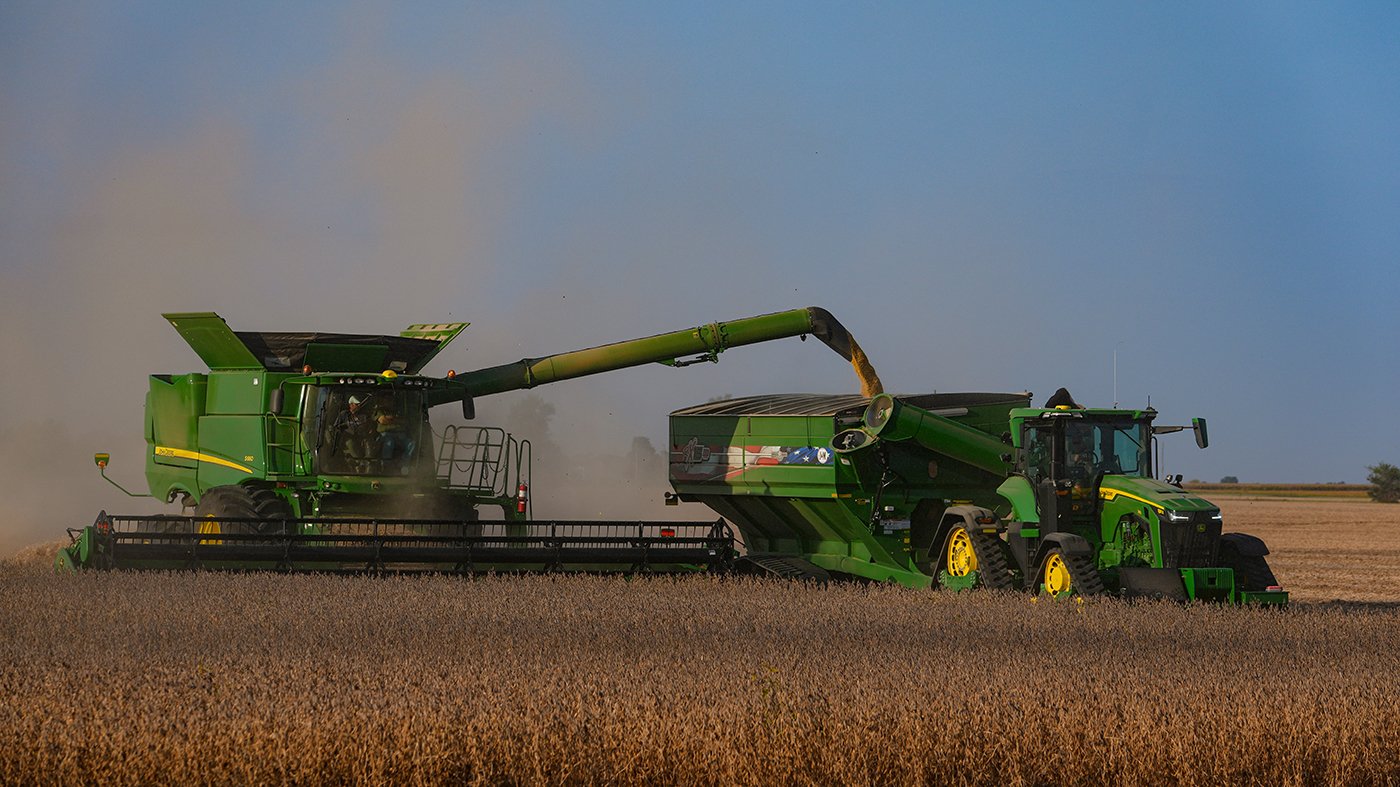
As the midterm elections approach, the Trump administration and Republican leaders are intensifying efforts to regain the trust of U.S. farmers—a key voting bloc that powered Trump’s 2016 and 2024 victories but has grown frustrated with rising costs linked to his trade policies and the ongoing Iran conflict.
During his return from Beijing, where he met with Chinese President Xi Jinping, Trump told reporters that farmers would be pleased with the agreements reached. “The farmers are going to be very happy. They’re going to be buying millions of dollars,” he said. In a Fox News interview, Trump added that Xi had agreed to purchase U.S. soybeans, oil, liquefied natural gas, and Boeing jets.
A White House official described the deals as a way to “help our farmers gain unprecedented access into Chinese markets.” U.S. Trade Representative Jamieson Greer predicted that China would commit $10 billion to agricultural purchases. Yet skepticism remains about whether Beijing will deliver on these promises, given past patterns of partial compliance.
“It’s a good step to hear that some agreements were reached,” said Brian Reisinger, a rural policy expert. “But the question with China is always the devil being in the details—are they going to follow through, and can those commitments be part of a broader framework with fair and enforceable trade standards?” He noted that farmers are in a tough spot, relying on America’s biggest adversary as its top agricultural buyer.
Republican lawmakers had pressed for tangible wins ahead of the trip. Sen. Steve Daines (R-Mont.) hoped for deals on Boeing, beef, and beans. Sen. Chuck Grassley (R-Iowa) said he spoke with Greer before the journey, emphasizing agriculture’s importance. Soybeans, the top U.S. export to China, along with beef and corn, are central to these negotiations.
China had slashed purchases of U.S. agricultural goods in retaliation for Trump’s sweeping tariffs, aiming to hurt a pro-Trump constituency. Treasury Secretary Scott Bessent claimed that soybeans are “really all taken care of” under the October trade agreement, which required China to buy at least 25 million metric tons annually for three years. However, Trump acknowledged that extending the tariff truce was not discussed, stating, “We didn’t discuss tariffs. They’re paying substantial tariffs.”
The political stakes are high. Republicans fear that farm communities may stay home in November rather than defect to Democrats. “The question for the midterms is whether farmers see the economic results they need to feel compelled to vote,” Reisinger said. “These areas won’t flip Democratic, but turnout depends on whether leaders are seen as fighting for their economic well-being.” Concerns about low turnout are compounded by Trump’s absence from the ballot, which historically depresses his base’s enthusiasm.
Daniel Swift, a senior research analyst at the Foundation for Defense of Democracies, cautioned that one-time purchase commitments won’t solve farmers’ structural problems. “A soybean farmer needs consistent market access to make long-term investment decisions,” he said. “No farmer is going to change their behavior for a one-time purchase—it’s too damn expensive.”
Compounding the pressure, the Senate is poised to take up a House-passed farm bill that aims to expand rural investments, restore regulatory certainty, and improve forest management. But the timeline remains uncertain, leaving farmers in limbo as the midterms loom.