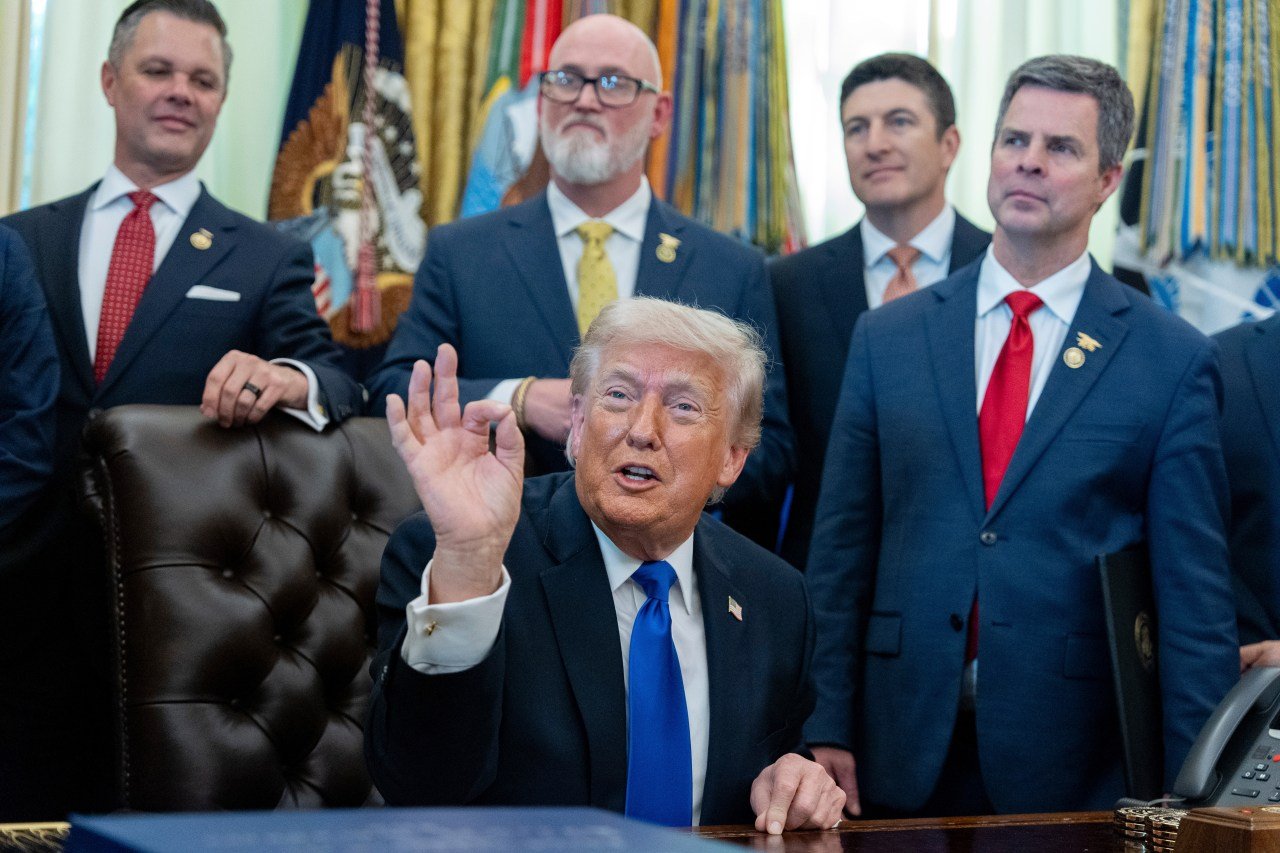
President Donald Trump on Thursday signed a key permit for the Bridger Pipeline Expansion, a major new oil pipeline that will transport Canadian crude into the United States. The project, which has been nicknamed “Keystone Light” due to its resemblance to the contentious Keystone XL pipeline, marks a sharp reversal from the Biden administration’s climate-focused energy policies.
The three-foot-wide pipeline is designed to carry up to 550,000 barrels of oil per day from Canada through Montana and Wyoming, where it will connect with existing infrastructure. At peak capacity, the 650-mile pipeline would move about two-thirds the volume of the Keystone XL project, which was partially built before President Joe Biden canceled its permit on his first day in office in 2021, citing climate change.
“Slightly different from the last administration. They wouldn’t sign a pipeline deal. And we have pipelines going up,” Trump said after signing the approval for the cross-border segment between Saskatchewan and northeastern Montana. The move underscores Trump’s ongoing push to expand fossil fuel infrastructure, a central plank of his energy agenda.
The Bridger Pipeline Expansion still requires additional state and federal environmental approvals before construction can begin, with company officials targeting a fall 2027 start and completion by late 2028 or early 2029. Trump’s term ends January 20, 2029, potentially insulating the project from a future administration’s reversal if it is completed before then.
Environmental groups, including the Montana Environmental Information Center and WildEarth Guardians, have vowed to fight the project over spill risks. “The biggest concern we see right now is the concern inherent in all pipeline projects which is the risk of spills,” said Jenny Harbine, an attorney with Earthjustice. “Pipelines rupture and leak. It’s just a fact of pipelines.”
Bridger Pipeline LLC, a subsidiary of True Company, has a history of major accidents. In 2015, more than 50,000 gallons of crude spilled into the Yellowstone River, fouling a Montana city’s drinking water. A 2022 diesel spill in Wyoming released 45,000 gallons, and a 2016 North Dakota spill dumped over 600,000 gallons into the Little Missouri River. Subsidiaries of True agreed to a $12.5 million civil penalty to settle a federal lawsuit over those incidents.
Company spokesperson Bill Salvin said Bridger Pipeline has since developed an AI-based leak detection system to speed up response times. The company also plans to bore 30 to 40 feet beneath major rivers like the Yellowstone and Missouri to reduce accident risks. “We designed the pipeline with integrity and safety in mind,” Salvin said. “We have emergency response plans should something happen where oil happens to get out of the line, which is fairly rare.”
The pipeline would not cross any Native American reservations, a key difference from Keystone XL, which faced strong opposition from tribes. More than 70% of the route follows existing pipeline corridors, and 80% is on private land. The permit also authorizes transport of gasoline, kerosene, diesel, and liquefied petroleum gas, though Salvin said the company remains focused on crude oil for now.
The approval comes as Trump continues to flex his energy executive authority, contrasting with Biden’s climate policies. In related developments, Trump's UFC Flag Day event at the White House sparked controversy, and Federal Reserve Chair Powell defied Trump's calls to resign, signaling ongoing tensions within the administration.