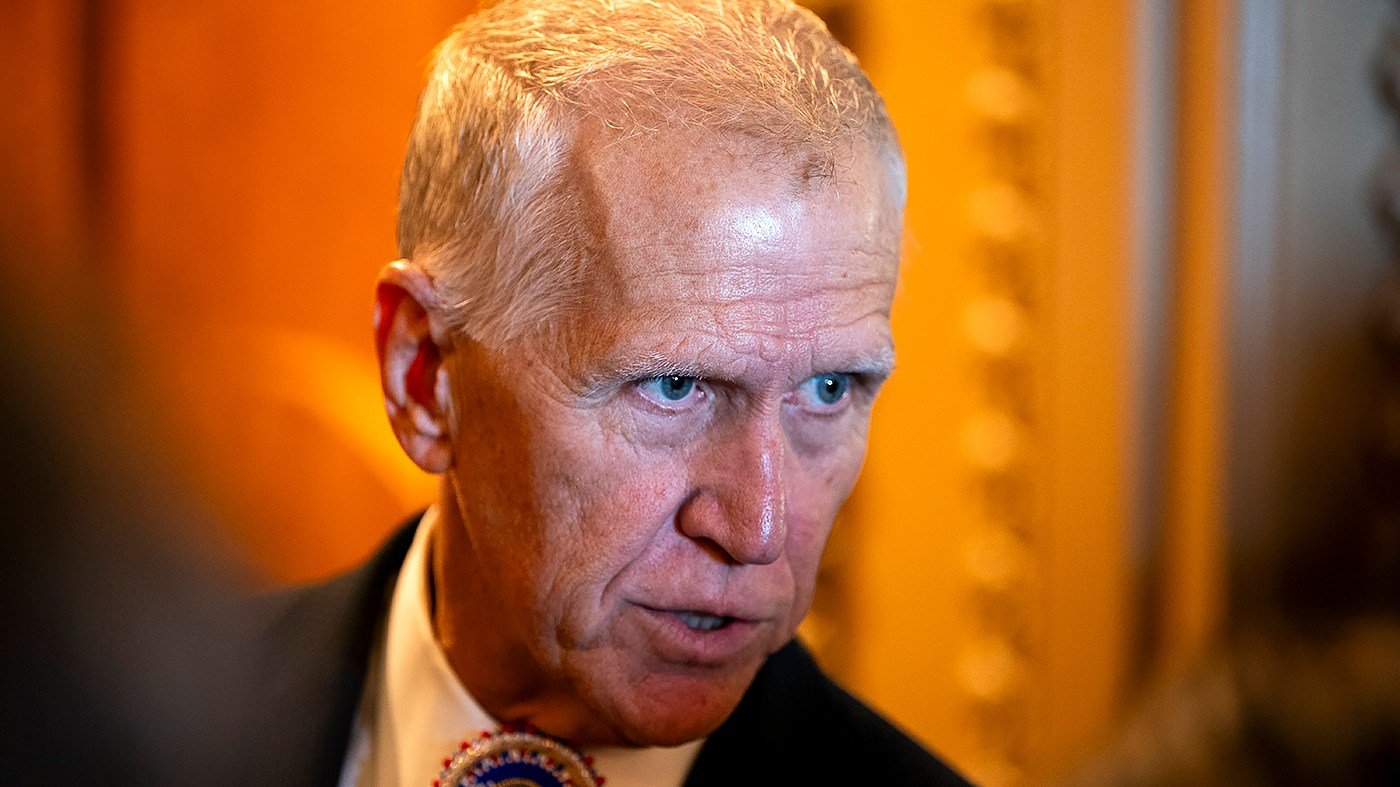
Sen. Thom Tillis (R-N.C.) on Tuesday pushed back against concerns about Senate Minority Leader Mitch McConnell's mental fitness, insisting the Kentucky Republican remains sharp despite his prolonged absence from the chamber following a recent fall.
In an interview on MS NOW's "State of Play," Tillis drew a direct contrast between McConnell and former President Biden, who has faced his own questions about age and stamina. "The difference between the Biden situation and the Mitch situation is I've had conversations with Mitch," Tillis said.
"That man's brain is as sharp as it ever was," the North Carolina senator added. "His body's failing him because he's had a lifelong struggle with polio. Now, people are telling me, when I can have a coherent discussion with him — I met with him a week or so, a couple of weeks ago — 'Mitch, how are you doing?' He spent probably less than 30 seconds talking about that, and he immediately jumped to, 'What are we going to do to help Ukraine? What are we going to do to save the Senate and keep the filibuster?'"
McConnell, 84, returned to the Senate last month to cast his first vote since mid-June, ending months of rehabilitation after a fall at his home. His extended absence and the limited updates from his office fueled weeks of speculation about whether he would resume his duties before his term concludes next year.
The episode has reignited broader debates about the advanced age of many lawmakers and whether term limits are needed. Recent polling shows a majority of voters support imposing term limits on Congress, a sentiment that has grown as several senior senators remain in office well into their 80s.
McConnell, who first entered the Senate in 1985, is among the longest-serving senators in U.S. history. He has announced he will not seek reelection, with his term ending in January.
Tillis's comments come as McConnell has been a central figure in intra-party battles over foreign aid and legislative strategy. His focus on Ukraine funding and preserving the filibuster, as described by Tillis, underscores his continued engagement with key policy fights despite his physical limitations.
The defense comes amid ongoing scrutiny of lawmakers' health and their ability to serve. While some have called for more transparency about medical conditions, others, like Tillis, argue that mental acuity should be the primary measure.
This is not the first time Tillis has waded into these waters. He has previously clashed with former President Trump over party discipline and has been a vocal supporter of McConnell's leadership style. His endorsement of a candidate in North Carolina's open Senate race also shows his continued influence in shaping the GOP's future.
As McConnell prepares to leave office, his legacy and his final months in the Senate will likely be shaped by the same issues he raised with Tillis: the war in Ukraine, the future of the filibuster, and the direction of the Republican Party. Tillis's remarks suggest that, at least in his view, McConnell remains a formidable force in those debates.