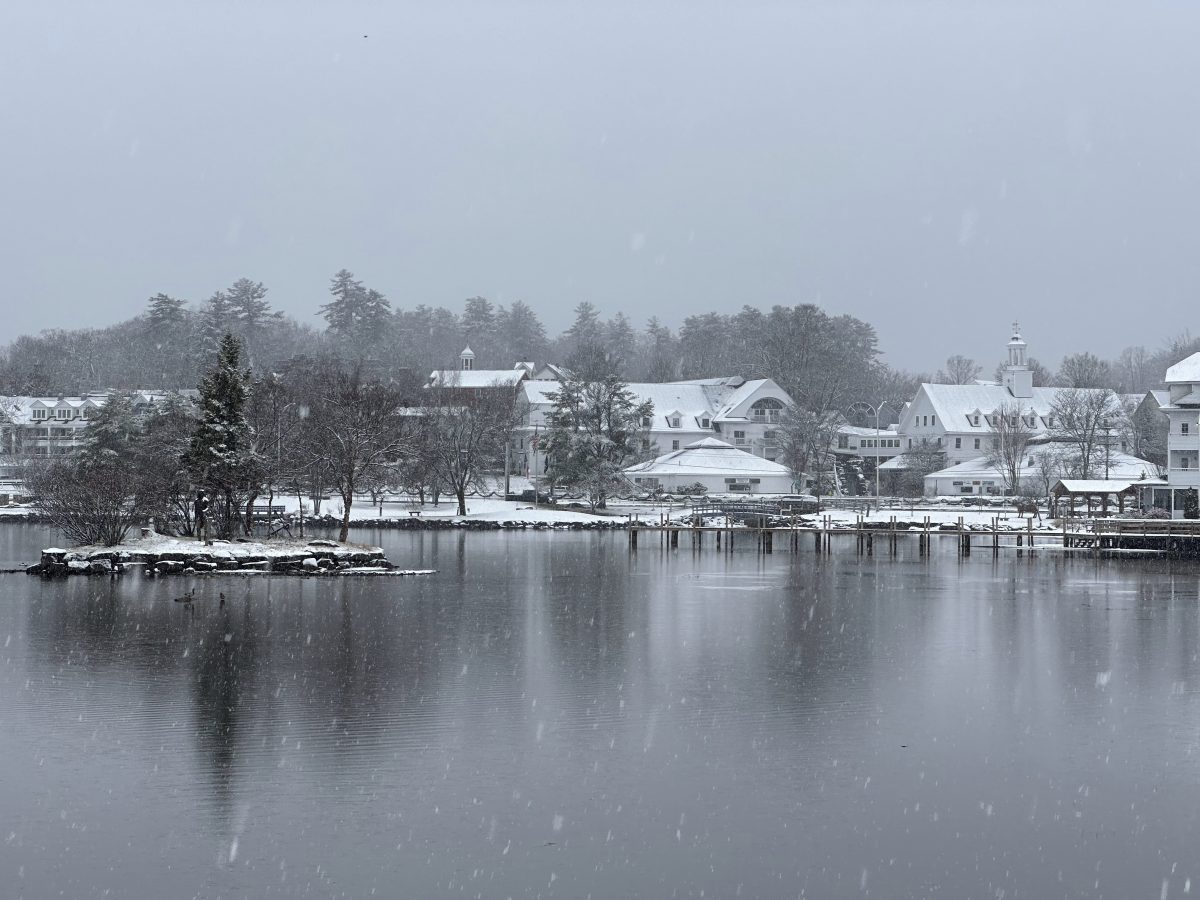
With Thanksgiving still over a month out, travelers planning ahead are getting an early glimpse of potential weather conditions. Both the Farmers' Almanac and the Old Farmer's Almanac have released their holiday week forecasts, offering conflicting visions for the period from Nov. 23 through Thanksgiving Day.
The Farmers' Almanac anticipates no "major nationwide storm" during that window, a relief for the millions expected to hit the roads and skies. It projects cooler-than-normal temperatures across most of the country, with the Southeast standing out as "mild and pleasant." Snow is likely in the northern Plains, Rockies, Midwest, and Northeast, while rain could dampen the Pacific Northwest and Southwest. The Southern Plains, meanwhile, should escape "major storminess."
Across town, the Old Farmer's Almanac paints a warmer picture. It sees above-average temperatures in the West, along the East Coast, and through New England, as well as in the Pacific Northwest's coastal areas. The central U.S., stretching from Minnesota and Wisconsin down to the Gulf, is expected to run cooler. That publication also flags snow chances in the northern Midwest and rain potential in the Northwest, New England, Texas, and the Southeast.
Notably, neither almanac predicts a blockbuster storm for the holiday week. But their divergent regional outlooks underscore the inherent uncertainty of long-range forecasting, a point both publications concede. The Farmers' Almanac advises readers to consult the National Weather Service and NOAA's Weather Prediction Center closer to the holiday for more refined guidance.
Federal meteorologists, for their part, avoid making specific event predictions this far out. The National Weather Service's long-range products focus on broad probabilities rather than pinpointing a Thanksgiving Day storm. NOAA's Climate Prediction Center, however, released its early winter outlook and a 30-day forecast covering parts of November.
Those federal maps suggest nearly the entire country has an elevated chance of above-average warmth in November. The southern half of the U.S. also shows a higher probability of above-normal precipitation. Hawaii, though not depicted in the mainland graphics, is likely to see warmer and drier conditions from November through January, per the CPC.
These patterns align with expectations from the ongoing El Niño, which has been compared to the historic 1997 event. That comparison has raised stakes for potential extreme winter weather, as El Niño's 1997 mirror suggests heightened variability. The almanacs and NOAA both factor El Niño data into their calculations, though their methodologies differ sharply.
Sandi Duncan, editor of the Farmers' Almanac, acknowledged the limits of any forecast. "While no forecast can claim perfect accuracy, our predictions have proven useful for generations of planners and outdoor enthusiasts," she told Nexstar last year. "We continuously refine our method but acknowledge that Mother Nature always has the final say."
For now, travelers should prepare for a week that could feature regional snow and rain, but no coast-to-coast blowout. As the holiday nears, the shrinking daylight and shifting weather patterns will become clearer. Those flying should also keep an eye on broader economic signals—like wholesale inflation's recent jump—which could affect travel costs. And with most voters feeling lawmakers are out of touch on monthly expenses, any weather-related disruptions could add to the holiday squeeze.