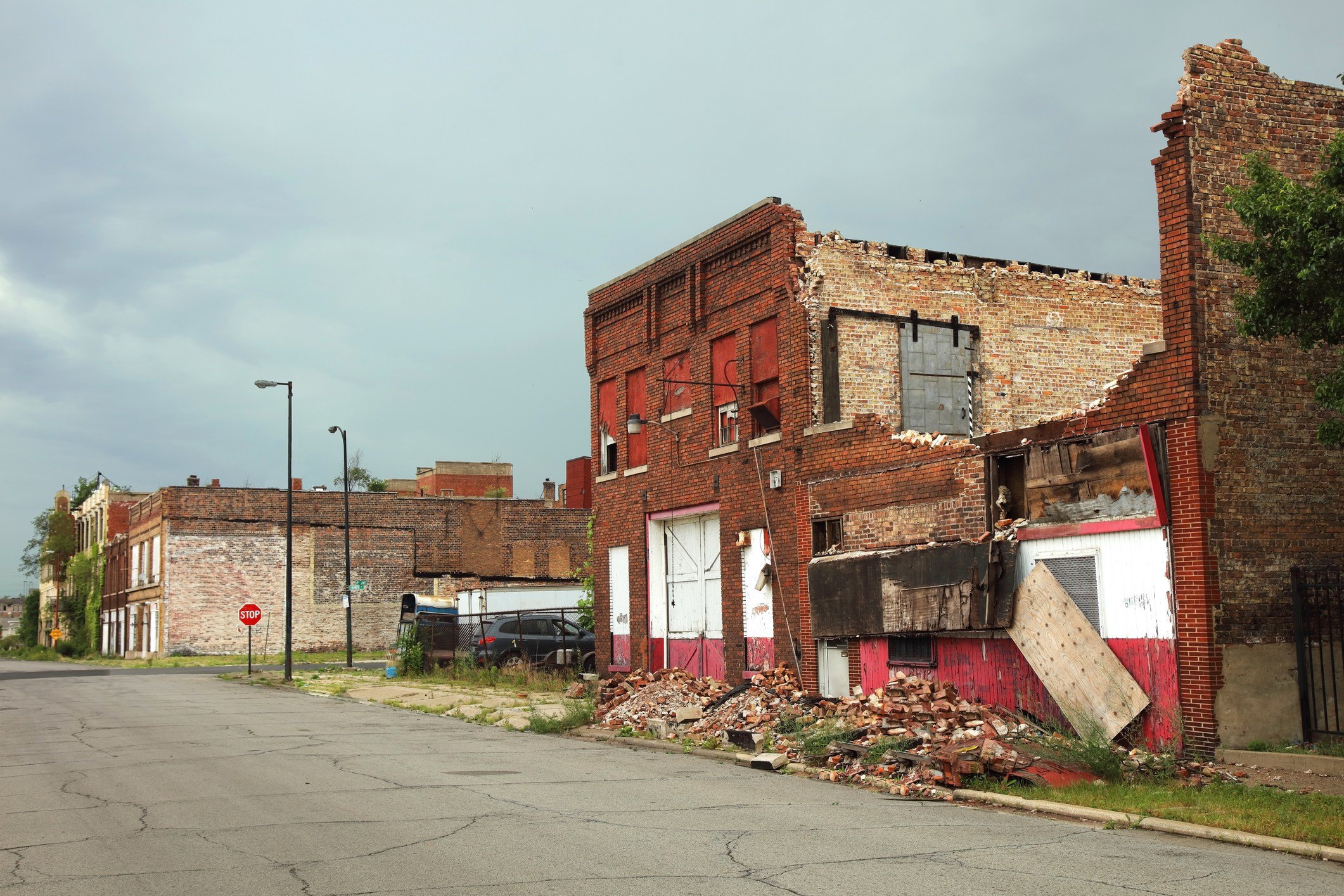
In Gary, Indiana, officials are preparing to raze the long-abandoned Gordon's Department Store, a once-thriving downtown anchor. The demolition is part of a broader $80 million initiative to eliminate roughly 7,000 vacant and deteriorated properties across a city that has lost more than half its population since 1960.
For real estate professionals, clearing such structures is often seen as a necessary precursor to renewal. Gary isn't just creating empty lots—it's making room for new housing, offices, transit, and private investment that can't flourish amid blocks of unsafe, obsolete buildings.

Gary's approach reflects a reality many older American communities face: revitalization sometimes means preserving the past, sometimes adapting it, and sometimes removing what no longer serves a purpose. Federal tax policy, however, often works against all three options. The current code discourages demolition of obsolete structures, offers insufficient support for preservation in hard-hit areas, and makes many commercial-to-residential conversions financially unviable.
Under Section 280B of the tax code, when a building is demolished, the owner cannot deduct or depreciate the demolition costs, nor can they claim the remaining tax basis as a loss. Instead, those amounts get added to the land's basis, which isn't depreciable. This creates an economically irrational outcome: a building may be vacant and income-less, and once it's gone, it ceases to exist—yet the owner can't recover its remaining value or removal costs until the land is sold, potentially decades later.
The tax code effectively rewards keeping economically dead buildings and penalizes removal and new investment. As Gary illustrates, this is a Main Street issue that Congress should address. Lawmakers should allow owners to deduct the remaining basis of a demolished structure and the qualified costs of removal. At minimum, these amounts should be added to the depreciable basis of the replacement property rather than locked indefinitely in non-depreciable land.
Such a policy would include safeguards: owners might be required to begin redevelopment within a set period, comply with a locally approved plan, and repay the benefit if the land is simply held vacant. These rules wouldn't reimburse cities like Gary for public demolition programs, but they would enable private owners and developers to participate, stretching scarce public dollars and making cleared sites more likely to return to productive, tax-paying use.
Demolition is only part of the solution. Many older buildings deserve preservation rather than removal. The bipartisan Historic Tax Credit Growth and Opportunity Act would strengthen the federal Historic Tax Credit, making it easier to use, improving its value for smaller projects, and eliminating provisions that reduce its economic benefit. The credit has already supported hundreds of billions in rehabilitation investment and millions of jobs, much of it in distressed areas.
Congress should also enhance this legislation with a temporary boost for historic projects in severely distressed communities. A five-year increase in the credit, with a larger benefit for projects that create housing, would attract private capital while buildings are still recoverable. Eligibility should recognize conditions like those in Gary—major population loss, high vacancy, and persistent unemployment.
Some buildings can't retain their original purpose but can serve a new one. Empty offices, hotels, department stores, and institutional buildings can sometimes be converted into housing. These projects are challenging, though: deep floor plates, environmental issues, and building-code requirements often create costs that ordinary rents can't support, let alone affordability. The bipartisan Revitalizing Downtowns and Main Streets Act (H.R. 2410) would create a tax credit for converting older commercial buildings into housing. That's the right concept, but modifications are needed to ensure the credit is substantial and predictable enough to change investment decisions.
Congress should make the credit by-right for projects meeting objective criteria, so developers, lenders, and investors know upfront whether a project qualifies. The credit should also be temporary—a defined five-year window would control costs while creating urgency, encouraging owners to act before buildings deteriorate further and before the housing shortage worsens.
Together, these policies would form a coherent framework: preserve buildings that can serve again, convert those that can meet a new need, and clear those that cannot—while requiring the land to be rebuilt. They would support housing production, protect historic resources, and allow communities to remove dangerous properties without an extra federal tax penalty.
Gary is confronting conditions that built up over generations. Its recovery won't happen overnight or through a single demolition. But the city is doing the hard work of deciding what should remain, what should be transformed, and what must be cleared—and the federal tax code should support that effort, not stand in its way.