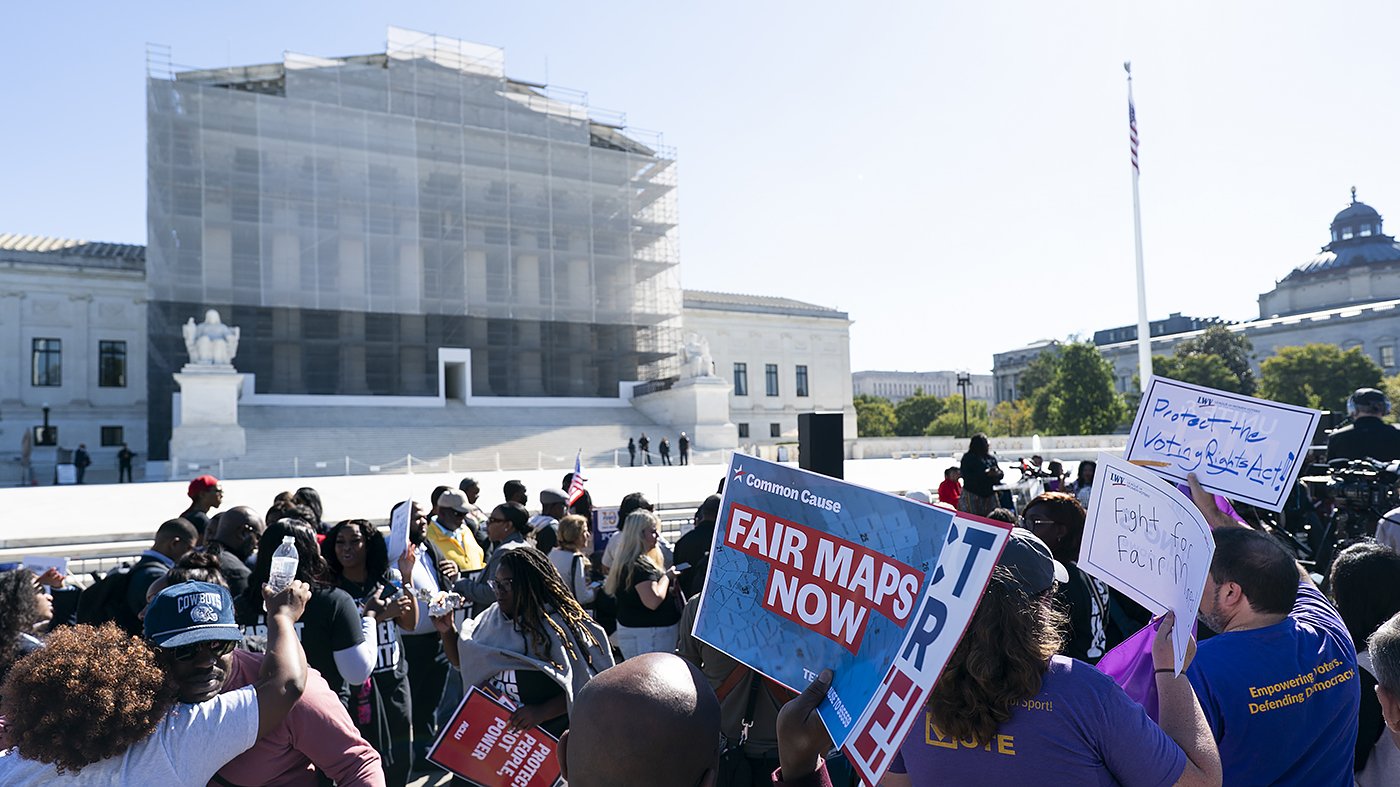
Two leading nonpartisan election forecasters have flagged seven congressional districts that could swing Republican after the Supreme Court narrowed key Voting Rights Act protections for majority-minority districts. The ruling, which struck down Louisiana's current map as an illegal racial gerrymander, opens the door for GOP-controlled legislatures in the South to redraw boundaries before the 2026 midterms.
Both Cook Political Report and Sabato's Crystal Ball—published by the University of Virginia's Center for Politics—say the decision puts at risk every Democratic-held seat in Alabama, Mississippi, Tennessee, and South Carolina. In Louisiana, Democratic Representatives Troy Carter and Cleo Fields could see their districts redrawn, with Fields' 6th District already declared unconstitutional by the high court.
Immediate Impact Uncertain
The analysts caution that the effects may not materialize in time for the November elections. States would need to move candidate filing deadlines and possibly primary dates to implement new maps. Amy Walter and Matthew Klein of Cook Political Report wrote, “A new map by the GOP legislature is almost certain to result in at least one Republican pickup, though it’s unclear whether that can occur in time for the 2026 election.” They added, “There are still a lot of unanswered questions swirling around this decision, especially its impact on the 2026 midterm election.”
Kyle Kondik, managing editor of Sabato's Crystal Ball, echoed that uncertainty: “The decision may or may not have a major, immediate impact on 2026, but its ripple effects will be felt more deeply in subsequent elections.”
Districts on the Chopping Block
The seven vulnerable seats include Louisiana's 2nd District (Carter) and 6th District (Fields); Alabama's 2nd and 7th Districts (Shomari Figures and Terri Sewell); Mississippi's 2nd District (Bennie Thompson); Tennessee's 9th District (Steve Cohen); and South Carolina's 6th District (Jim Clyburn). All are held by Democrats in states where Republicans control the redistricting process.
State Reactions Vary
Louisiana Governor Jeff Landry signaled Thursday that the state will move forward with redistricting ahead of the November election, and The Washington Post reported he may postpone the state's May 16 primary. Tennessee has already called a special session to push through a new map. However, Walter and Klein noted that “it’s not clear that those states’ current GOP governors and legislators are eager to rush this process, which is likely to result in even more legal wrangling. They could instead punt until 2027.”
Still, they added, “pressure from the White House and other GOP leaders in their states may ultimately compel them to push through a new map by any means necessary before the midterms.” The Supreme Court ruling has already sparked new redistricting battles across the South.
Broader Implications
Kondik warned against assuming the status quo will hold: “Given the overall redistricting environment, we would expect Republicans to push hard where they have the opportunity to do so, be it for 2026 or beyond. Expect the unexpected, and don’t assume that doors that seem closed for 2026 will remain closed.” The GOP has celebrated the ruling as a potential midterm game-changer, while Democrats decry it as an assault on minority voting power.
The coming days will reveal how states respond, but the ruling has already injected fresh uncertainty into the 2026 landscape. As Kondik put it, “We’ll know more in the coming days as states react to this ruling.”