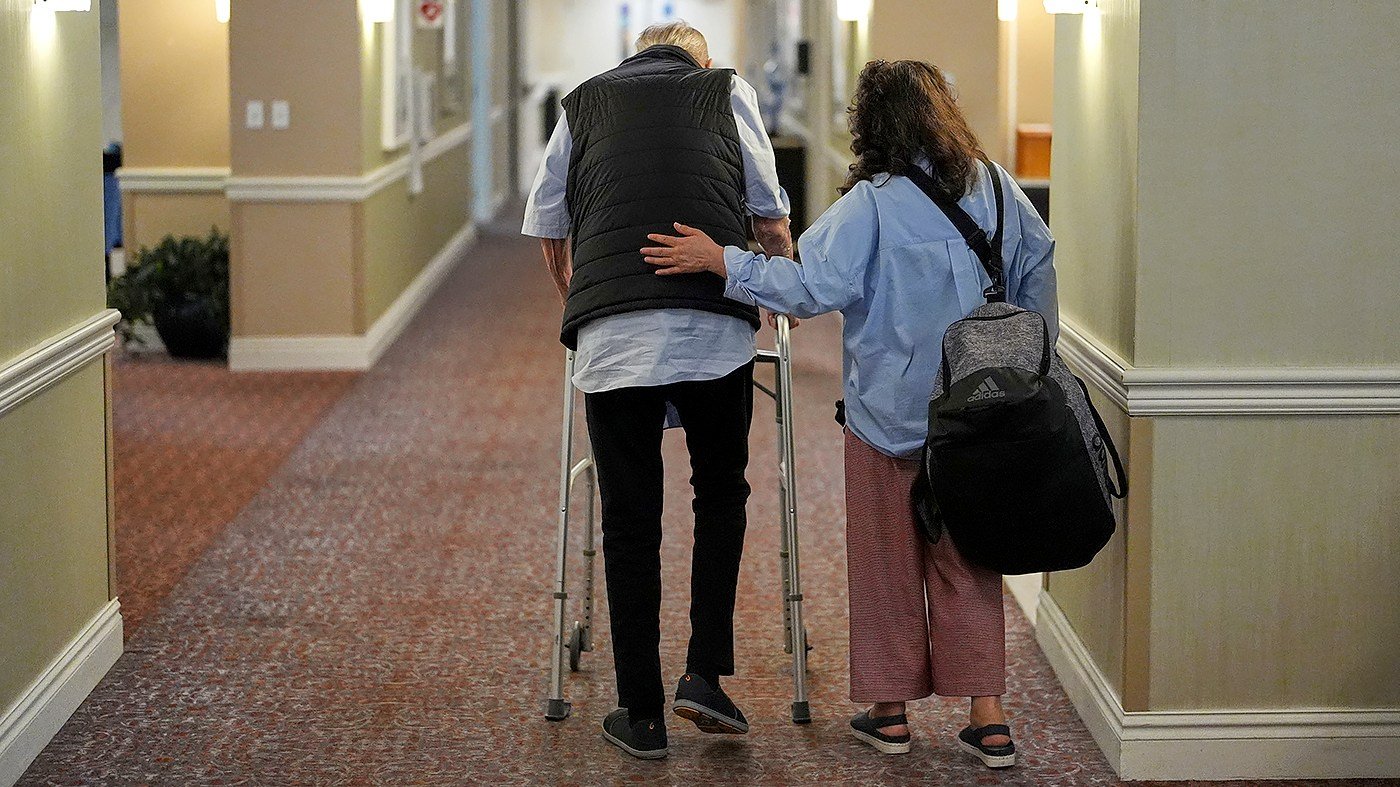
A viral Saturday Night Live sketch about the burdens of unpaid caregiving has injected new energy into a bipartisan congressional effort to ease the financial strain on family caregivers.
The Nov. 14 sketch, titled "Sister," features comedian John Mulaney as a son who suggests his sister should quit her job and move in to care for their aging father, rather than paying for professional help. The bit has drawn over 9 million views on YouTube and sparked widespread conversation about the disproportionate role women play in unpaid care.

Blaire Bryant, vice president of the National Alliance for Caregiving, said the sketch resonated deeply with her own experience. "I really resonated with it because I am the sister too," she said. "It really makes you reflect on the fact that this is a common experience, a shared experience."
Anne Hubbard, chief public policy officer at the American Parkinson Disease Association, said the sketch "struck a chord" for many women across the country who are balancing caregiving with work and family. "They're taking care of their children, they're taking care of aging parents, and managing that balancing act all while potentially also holding down a career is a significant challenge," she said.
The attention comes as lawmakers consider the Lowering Costs for Caregivers Act, a bipartisan measure that would allow family caregivers to use tax-free flexible spending accounts or health savings accounts to cover a parent's medical expenses. The bill has support from more than 100 organizations, including the National Alliance for Caregiving and the American Parkinson Disease Association, which signed a letter urging Congress to act.
Catherine Finley, leader of the Families and Caregivers Economic Security (FACES) Coalition, called the legislation a "first step" toward meaningful relief. "It's not going to change the world for a caregiver, but every little bit is really meaningful," she said. "From the coalition's perspective, we'd like to see Congress take that first step and get something done to recognize the financial toll on caregivers, and then we build from there."
According to an AARP study, adult caregivers spend an average of about $11,500 per year—roughly 31 percent of household income—on caregiving costs. Megan O'Reilly, AARP's vice president of government affairs, called the bill "common sense" and noted its strong bipartisan support. "Years ago, you had to talk to someone about what is a family caregiver. Today, we don't have to do that," she said. "We've made tremendous progress in elevating the issue and the sense of urgency, and so I think we're at the time to deliver relief for caregivers."
The renewed focus on caregiving also highlights broader policy gaps. A KFF poll released last week found that 32 percent of women report being caregivers, compared with 26 percent of men, and that women take on a larger share of the emotional and physical toll. Shannon Schumacher, a senior survey analyst at KFF, noted that while all caregivers experience strain, "women are more likely to spend time providing care and are doing slightly different types of care."
Bryant said the bill is only a starting point. "It also starts with recognizing that caregivers, many caregivers, are still also working, so how do we build out support through the workforce to better support that ability to work and care at the same time?" she said. "The Lowering Cost for Caregivers Act puts money in the pockets of caregivers, but we have an additional ecosystem of supports that need to happen and reforms that need to happen to better support family caregivers."
O'Reilly said she hopes Congress will also focus on strengthening long-term care systems and expanding Medicare coverage for hearing, dental, and vision services—priorities Democrats have outlined for the next session. The bipartisan healthcare deal discussions could provide a window for such measures, though the immediate focus remains on the caregiver bill.