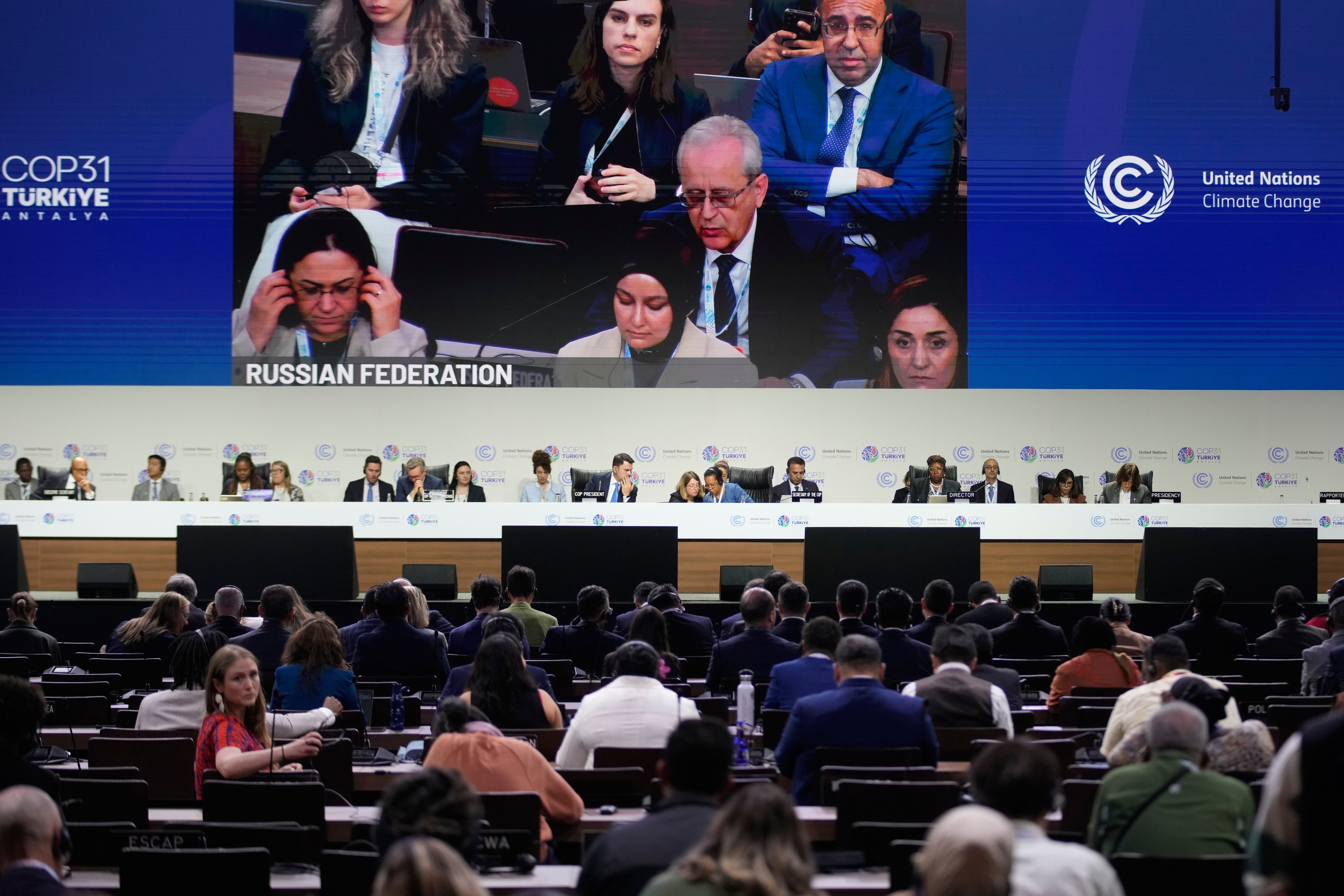
The latest United Nations climate summit in Turkey ended without a final agreement after two days of overtime, underscoring the deep divisions among nations on how to tackle global warming. More than 130 countries and numerous U.S. states have pledged to reach net-zero emissions, mostly by 2050, yet throughout the two-week talks, negotiators sidestepped the most fundamental question: What would that actually cost, and what would it buy?
Now, a new interactive website—NetZeroCostBenefit.com—built by Bjorn Lomborg, president of the Copenhagen Consensus and a visiting fellow at Stanford's Hoover Institution, aims to answer that question with hard numbers. The site draws on the same climate model used by the UN's own climate reports, along with cost estimates from hundreds of economic models and damage assessments from leading climate economists.

What the numbers show
The analysis finds that achieving global net-zero by 2050 would cost between 3% and 19% of global GDP in 2050, depending on the model. Using the middle estimate of 7.2% of GDP lost, the price tag is staggering: $255 trillion in today's dollars over the century. But the climate benefits—the avoided damages from warming—amount to only $24 trillion. That's a return of just 9 cents for every dollar spent.
For the United States alone, the picture is equally stark. If the U.S. reaches net-zero by 2050 while the rest of the world continues current policies, global temperatures in 2100 would drop by just 0.14°F—a change so small it would be imperceptible. Yet Americans would feel the economic pain: $1.2 trillion in losses in 2045 alone, and a cumulative $12.7 trillion from 2027 to 2100. The global climate benefit from U.S. action? Under $2 trillion. That's 15 cents per dollar spent.
Why the math doesn't add up
Lomborg argues that the problem isn't that countries act alone—it's that the policy itself is a bad deal. “The math doesn't improve with pooling,” he says. “Each nation ends up doing much less good for the world than what it puts in by adopting the net-zero goal.”
Fossil fuels remain cheap and abundant, supplying more than 80% of global energy, and emissions rose again last year. At the pace of the last half-century, they won't be phased out by 2050—they'd last until 2997.
None of this dismisses climate change as harmless. It is a real challenge, and Lomborg advocates for a smarter approach: invest heavily in green-energy research and development so clean energy eventually outcompetes fossil fuels on price. Instead, he says, politicians continue to push expensive, inefficient policies as if economies could run on “sunshine and good intentions.”
The failure of the Turkey summit, he notes, is symptomatic of a broader refusal to confront these trade-offs. “Across 31 climate summits, delegates have ignored this reality,” he says. “Now, anyone can run the numbers.”
The website allows users to explore the cost-benefit for any country or group, making the data transparent and verifiable. It uses the MAGICC climate model, which is central to UN reports, and draws on cost estimates from nearly a thousand economic models compiled by the UN's climate panel. Only three of those models achieve net-zero from today's emissions, reflecting the difficulty and expense.
For policymakers, the message is clear: net-zero by 2050 is an extraordinarily costly goal with minimal climate payoff. The debate, now armed with concrete figures, is unlikely to fade.