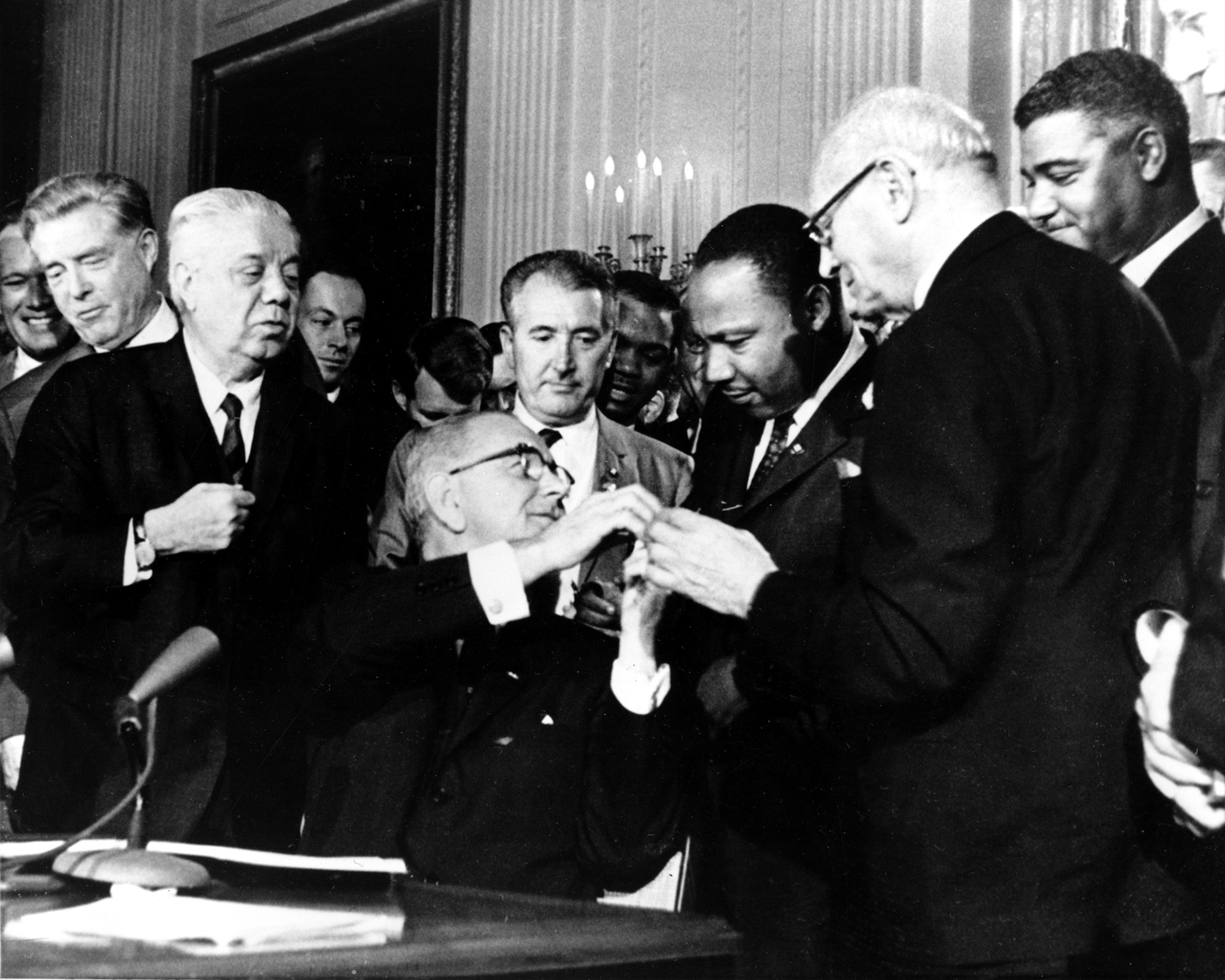
In 1964 and 1965, Congress passed landmark legislation that transformed American society. The Civil Rights Act and the Voting Rights Act were triumphs of moral force and legislative will. But they were not constitutional amendments. That choice—to legislate rather than entrench—has left the rights of millions dependent on the shifting composition of the Supreme Court and the whims of future majorities.
The erosion of voting protections is not an accident. It is the logical consequence of a structural vulnerability built into the system from the start. The Warren Court upheld those statutes boldly, but the Rehnquist and Roberts Courts have steadily narrowed them. In 2013, Shelby County v. Holder gutted the Voting Rights Act's preclearance formula, eliminating federal oversight that had blocked thousands of discriminatory voting changes. With each court, the same statutory language means something different. Rights survive only as long as justices permit.

Women's rights advocates understood this earlier. The Equal Rights Amendment, first introduced in 1923 and passed by Congress in 1972, was a push for constitutional entrenchment. It has never been ratified. The forces that benefit from statutory vulnerability blocked it then and block it now.
The 14th Amendment granted citizenship to formerly enslaved people. It did not grant them the right to vote, equal access to public accommodations, or protection from discrimination in employment, housing, and education. Congress did. And what Congress gives, Congress can take away—or the courts can dismantle.
This structural vulnerability extends beyond race. The Americans with Disabilities Act, marriage equality, reproductive rights, women's workplace protections—none rests on constitutional text. Each depends on a statute or judicial interpretation. The same mechanism that could unmake protections you oppose can unmake protections you support.
Both Parties Benefit From Instability
Both parties are guilty. Both have gerrymandered when in power and exploited the statutory vulnerabilities that persist. Neither has pushed for constitutional amendments to lock these protections in permanently. The current system serves them both. It keeps voters perpetually mobilized and perpetually afraid, dependent on the next election and the next court decision.
While Republicans and Democrats argue loudly over which party threatens which rights, both have spent 60 years in deliberate inaction on the one mechanism that would secure these protections permanently. Neither has moved to constitutionalize what it claims to defend. Both benefit from the instability. Each blames the other and fundraises on crisis. The American people lose.
You hear the argument every election cycle: Vote for us, or they will take away your rights. Nobody asks the harder question: Why are your rights still vulnerable to being taken away? Most Americans have never been told the answer. They have been told that elections matter, that the right candidates will protect them. They have not been told that their protections rest on statute, not the Constitution, and that statutes are always one court decision away from collapse.
Why has neither party moved? Because a constitutional amendment would end the game. It would make these protections permanent, beyond manipulation and beyond leverage. Both parties prefer to keep playing chicken.
The Framers understood this when they drafted Article Five. They knew statutes could be repealed. They built constitutional amendments into the founding document precisely because ordinary legislation, however transformative, survives only as long as future majorities choose to enforce it. As James Madison wrote in Federalist 43, the amendment power “guards equally against that extreme facility which would render the Constitution too mutable; and that extreme difficulty which might perpetuate its discovered faults.”
Yet most Americans do not even know Article Five exists. Two hundred and fifty years after the founding, that is no longer acceptable. The choice made in 1964 cannot be unmade. The choice before us now is whether we will finally make the one we should have made then: to secure our rights in the Constitution itself.
Meanwhile, international crises and domestic policy failures continue to distract from this fundamental structural issue. But the vulnerability remains, and it will not be solved by the next election alone.