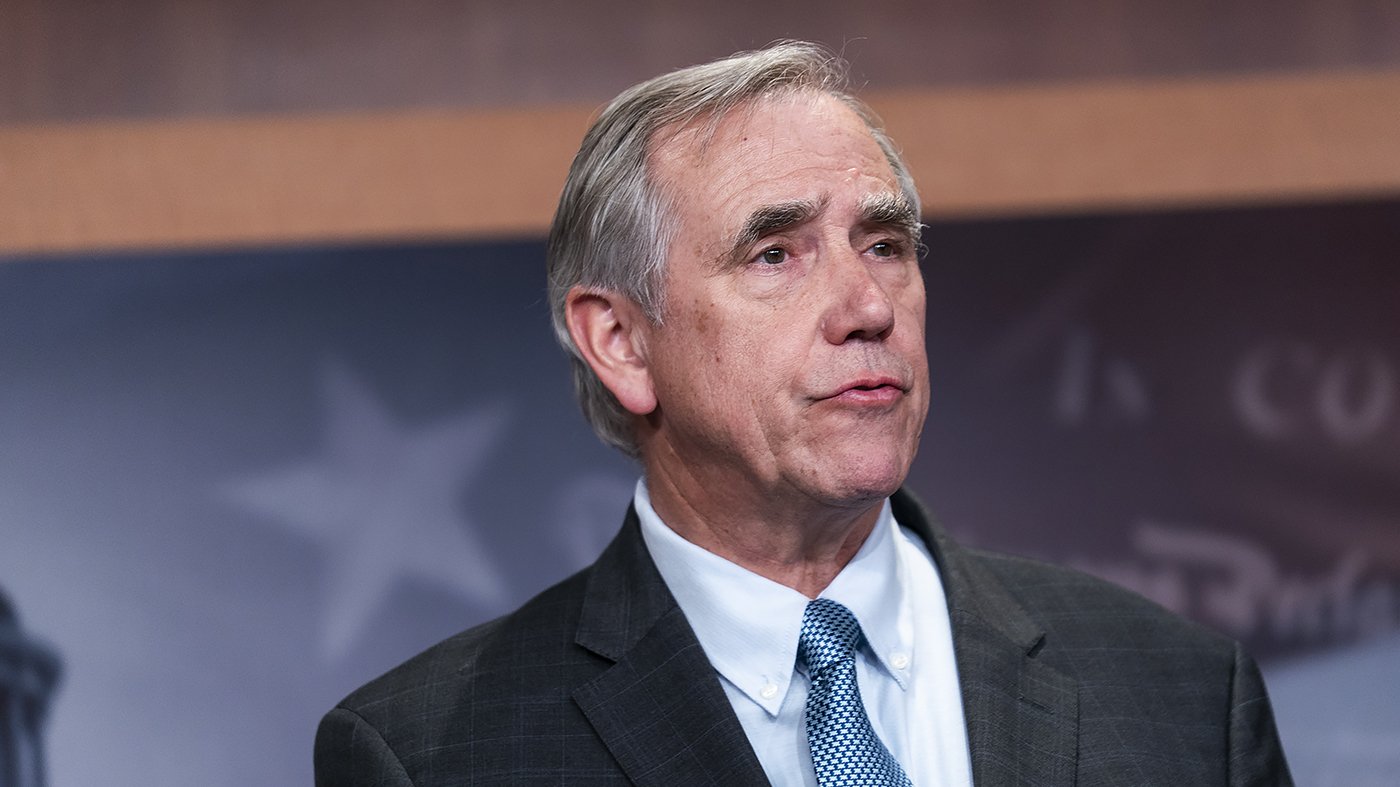
In a rare bipartisan move, six Republican senators sided with Democrats on Wednesday to advance an amendment that would have blocked President Trump's ambitious 90,000-square-foot White House ballroom project unless Congress explicitly approved it. The measure, sponsored by Sen. Jeff Merkley (D-Ore.), aimed to give lawmakers sole authority over construction of the new ballroom and prohibit any federal funds or private donations from being used without congressional sign-off.
The amendment was introduced during a vote-a-rama on Republicans' budget reconciliation bill focused on immigration enforcement. It needed 60 votes to overcome a procedural point of order, but fell short with a 52-47 tally.

The six GOP defectors were Sens. Susan Collins (Maine), Jon Husted (Ohio), Jerry Moran (Kan.), Lisa Murkowski (Alaska), Dan Sullivan (Alaska), and Thom Tillis (N.C.). Their votes highlighted growing unease within the party over the ballroom's cost and lack of transparency.
Notably, Collins, Husted, and Sullivan are facing tough reelection battles this fall. Recent polling underscores their vulnerability: a Fox News survey of Ohio voters from late May to early June showed Husted trailing former Sen. Sherrod Brown (D-Ohio). In Maine, a UMASS Lowell/YouGov poll found Democratic challenger Graham Platner leading Collins 48 percent to 43 percent. An Alaska Survey Research poll in March had Democrat Mary Peltola ahead of Sullivan.
The ballroom controversy has been simmering for weeks. Senate Republicans earlier stripped a provision from the reconciliation bill that would have provided up to $1 billion in federal funding for the project, which included security upgrades to the White House. That initial inclusion sparked strong pushback from GOP senators who viewed it as an unnecessary and extravagant expense.
Merkley's amendment would have barred any spending on the ballroom—whether from federal coffers or private donors—until Congress passed authorizing legislation. Supporters argued it was a matter of fiscal responsibility and congressional oversight, while opponents saw it as an attempt to undermine presidential prerogatives.
The vote marks the latest instance of GOP senators crossing the aisle to constrain Trump's initiatives. Earlier this year, three Republicans joined Democrats to block Trump's anti-weaponization fund, and Sens. Bill Cassidy (R-La.) and Cory Booker (D-N.J.) urged a judge to halt the $1.8 billion program. The pattern suggests a small but persistent bloc of Senate Republicans willing to break with their party on high-profile spending issues.
Despite the amendment's defeat, the ballroom's future remains uncertain. With funding stripped from the reconciliation bill and bipartisan skepticism lingering, the project could face an uphill battle in Congress. For now, the six GOP defectors have signaled that they will demand accountability before any grand new addition to the White House complex moves forward.